
About This Book
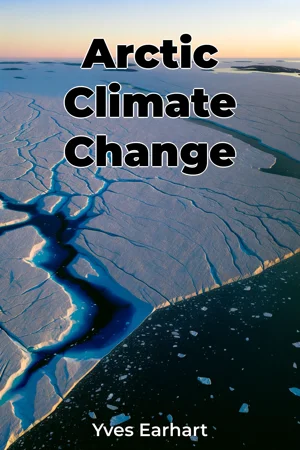
"Arctic Climate Change" presents a comprehensive analysis of the rapid environmental transformations occurring in Earth's northernmost regions, where temperature increases are happening at twice the global rate. Through detailed scientific research and long-term observational data, this book examines the interconnected systems affecting Arctic ecosystems and their worldwide implications. The work is structured around three core themes: the accelerating pace of Arctic ice melt, the cascading effects on native wildlife populations, and the broader implications for global climate patterns. These themes are explored through current research findings, historical climate data, and direct observations from Arctic research stations. The book begins with foundational climate science, explaining the unique characteristics of Arctic systems and their role in global climate regulation. This background provides readers with essential context about albedo effects, thermohaline circulation, and permafrost mechanics. The text then progresses through detailed examinations of specific changes, including the reduction in sea ice extent, alterations in snow cover patterns, and shifting behavioral patterns of Arctic species. Central to the book's argument is the demonstration that Arctic changes serve as early indicators of global climate trends. Through analysis of ice core data, satellite observations, and field research, the author presents evidence that Arctic transformations are not isolated events but rather harbingers of broader climatic shifts. This argument is supported by extensive data from multiple scientific disciplines, including glaciology, marine biology, and atmospheric sciences. The research presented draws from various sources, including: - Long-term temperature and ice extent records - Satellite imagery spanning four decades - Wildlife population surveys - Indigenous knowledge and observations - Ocean current measurements - Atmospheric composition data The book makes important connections to oceanography, showing how Arctic changes influence global ocean currents, and to atmospheric sciences, demonstrating effects on Northern Hemisphere weather patterns. These interdisciplinary links help readers understand the far-reaching consequences of Arctic climate change. Written in a clear, academic style that remains accessible to educated general readers, the text balances technical detail with practical explanations. It is particularly relevant for environmental scientists, climate researchers, policy makers, and students in related fields, though it remains valuable for any reader seeking to understand climate change impacts. The scope encompasses both current changes and projected future scenarios, focusing primarily on developments from the mid-20th century to present day predictions for the next century. While the book addresses global implications, it maintains its primary focus on the Arctic region to provide depth and specificity to the analysis. The work acknowledges ongoing debates in climate science, particularly regarding feedback loop mechanisms and the rate of change predictions. It addresses these controversies through careful presentation of available evidence and competing hypotheses, allowing readers to understand the current state of scientific discussion. Practical applications of this knowledge are presented for various stakeholders, from policy makers considering environmental regulations to researchers designing new studies. The book includes specific sections on monitoring methodologies, conservation strategies, and adaptation planning. This volume stands out through its integration of traditional ecological knowledge with modern scientific methods, providing a more complete understanding of Arctic systems. It maintains scientific objectivity while clearly communicating the urgency of Arctic climate change, supported by extensive peer-reviewed research and current observational data.
"Arctic Climate Change" presents a comprehensive analysis of the rapid environmental transformations occurring in Earth's northernmost regions, where temperature increases are happening at twice the global rate. Through detailed scientific research and long-term observational data, this book examines the interconnected systems affecting Arctic ecosystems and their worldwide implications. The work is structured around three core themes: the accelerating pace of Arctic ice melt, the cascading effects on native wildlife populations, and the broader implications for global climate patterns. These themes are explored through current research findings, historical climate data, and direct observations from Arctic research stations. The book begins with foundational climate science, explaining the unique characteristics of Arctic systems and their role in global climate regulation. This background provides readers with essential context about albedo effects, thermohaline circulation, and permafrost mechanics. The text then progresses through detailed examinations of specific changes, including the reduction in sea ice extent, alterations in snow cover patterns, and shifting behavioral patterns of Arctic species. Central to the book's argument is the demonstration that Arctic changes serve as early indicators of global climate trends. Through analysis of ice core data, satellite observations, and field research, the author presents evidence that Arctic transformations are not isolated events but rather harbingers of broader climatic shifts. This argument is supported by extensive data from multiple scientific disciplines, including glaciology, marine biology, and atmospheric sciences. The research presented draws from various sources, including: - Long-term temperature and ice extent records - Satellite imagery spanning four decades - Wildlife population surveys - Indigenous knowledge and observations - Ocean current measurements - Atmospheric composition data The book makes important connections to oceanography, showing how Arctic changes influence global ocean currents, and to atmospheric sciences, demonstrating effects on Northern Hemisphere weather patterns. These interdisciplinary links help readers understand the far-reaching consequences of Arctic climate change. Written in a clear, academic style that remains accessible to educated general readers, the text balances technical detail with practical explanations. It is particularly relevant for environmental scientists, climate researchers, policy makers, and students in related fields, though it remains valuable for any reader seeking to understand climate change impacts. The scope encompasses both current changes and projected future scenarios, focusing primarily on developments from the mid-20th century to present day predictions for the next century. While the book addresses global implications, it maintains its primary focus on the Arctic region to provide depth and specificity to the analysis. The work acknowledges ongoing debates in climate science, particularly regarding feedback loop mechanisms and the rate of change predictions. It addresses these controversies through careful presentation of available evidence and competing hypotheses, allowing readers to understand the current state of scientific discussion. Practical applications of this knowledge are presented for various stakeholders, from policy makers considering environmental regulations to researchers designing new studies. The book includes specific sections on monitoring methodologies, conservation strategies, and adaptation planning. This volume stands out through its integration of traditional ecological knowledge with modern scientific methods, providing a more complete understanding of Arctic systems. It maintains scientific objectivity while clearly communicating the urgency of Arctic climate change, supported by extensive peer-reviewed research and current observational data.
"Arctic Climate Change" offers a compelling examination of the dramatic environmental transformations unfolding in Earth's northernmost regions, where temperatures are rising at twice the global average. This comprehensive work investigates three critical aspects: the accelerating Arctic ice melt, its effects on native wildlife, and the far-reaching implications for global climate patterns. Through a masterful blend of historical climate data, satellite observations, and field research, the book reveals how Arctic changes serve as early warning signals for broader climatic shifts worldwide. The book progresses logically from foundational climate science concepts, such as albedo effects and thermohaline circulation, to detailed analyses of specific environmental changes. It combines traditional ecological knowledge with modern scientific methods, drawing from an impressive array of sources including four decades of satellite imagery, indigenous observations, and extensive wildlife population surveys. Particularly noteworthy is its examination of how Arctic transformations influence global ocean currents and Northern Hemisphere weather patterns. Written in an accessible academic style, this volume stands out for its interdisciplinary approach, connecting insights from glaciology, marine biology, and atmospheric sciences. The author carefully balances technical detail with practical explanations, making complex concepts understandable while maintaining scientific rigor. The book's unique value lies in its comprehensive treatment of Arctic climate change as both a regional phenomenon and a global concern, supported by extensive peer-reviewed research and current observational data.
Book Details
ISBN
9788233938741
Publisher
Publifye AS
Your Licenses
You don't own any licenses for this book
Purchase a license below to unlock this book and download the EPUB.
Purchase License
Select a tier to unlock this book
Need bulk licensing?
Contact us for enterprise agreements.