
About This Book
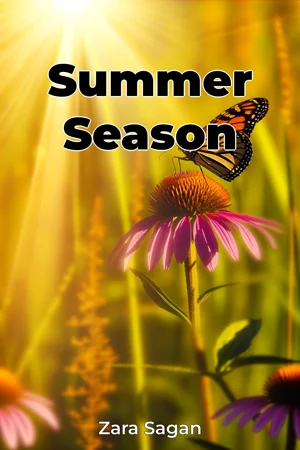
"Summer Season" explores the intricate biological transformations and adaptations that occur during the warmest months of the year, examining the complex relationships between plants, animals, and humans during this period of heightened activity and growth. The book presents three primary themes: the physiological responses of organisms to increased temperatures and longer daylight hours, the ecological interconnections that emerge during summer, and the evolutionary adaptations that enable species to thrive in this season. These topics are particularly relevant as climate change affects seasonal patterns worldwide. Drawing from current research in phenology, ecology, and environmental science, the text provides comprehensive coverage of summer's biological significance. The book begins by establishing the astronomical and meteorological foundations of seasonal changes, then progresses through increasingly complex biological systems. The central thesis maintains that summer represents a critical period of biological optimization, where species have evolved sophisticated strategies to capitalize on abundant resources while managing environmental stresses. This understanding is essential for conservation efforts and agricultural practices. The content is structured in three main sections. The first examines plant responses, including photosynthetic adjustments, reproductive timing, and water management strategies. The second focuses on animal adaptations, from behavioral modifications to metabolic changes. The third section analyzes human physiological and behavioral responses to summer conditions, including circadian rhythm adjustments and temperature regulation. Supporting evidence comes from long-term ecological studies, satellite data tracking seasonal changes, and recent molecular research revealing genetic mechanisms behind seasonal adaptations. The book incorporates case studies from various global ecosystems, providing diverse perspectives on summer biology. The work connects biology with climatology, psychology, and agricultural science, demonstrating how summer patterns influence multiple disciplines. It particularly emphasizes the relationships between seasonal changes and global food security. The book employs a systematic approach, using detailed illustrations and data visualizations to explain complex biological processes. The writing maintains an academic foundation while remaining accessible to educated general readers interested in natural sciences. Target readers include biology students, environmental scientists, and informed individuals seeking to understand seasonal impacts on living systems. The content serves both academic and practical purposes, offering insights for researchers and applicable knowledge for agricultural professionals. The scope encompasses temperate and subtropical regions, acknowledging geographical variations in summer patterns. While focusing primarily on current understanding, the book addresses emerging research questions about how climate change may alter traditional summer biological patterns. Practical applications include agricultural timing optimization, wildlife management strategies, and human health considerations during summer conditions. The text provides evidence-based recommendations for adapting to summer conditions across various contexts. The book addresses ongoing scientific debates regarding phenological shifts due to climate change and their impacts on species interactions. It presents current research while acknowledging areas of scientific uncertainty. Throughout, the text maintains a clear focus on empirical evidence and scientific methodology, avoiding sensationalism while highlighting the significance of summer processes in biological systems. This approach ensures readers gain a solid understanding of how summer influences life processes across scales, from molecular to ecosystem levels.
"Summer Season" explores the intricate biological transformations and adaptations that occur during the warmest months of the year, examining the complex relationships between plants, animals, and humans during this period of heightened activity and growth. The book presents three primary themes: the physiological responses of organisms to increased temperatures and longer daylight hours, the ecological interconnections that emerge during summer, and the evolutionary adaptations that enable species to thrive in this season. These topics are particularly relevant as climate change affects seasonal patterns worldwide. Drawing from current research in phenology, ecology, and environmental science, the text provides comprehensive coverage of summer's biological significance. The book begins by establishing the astronomical and meteorological foundations of seasonal changes, then progresses through increasingly complex biological systems. The central thesis maintains that summer represents a critical period of biological optimization, where species have evolved sophisticated strategies to capitalize on abundant resources while managing environmental stresses. This understanding is essential for conservation efforts and agricultural practices. The content is structured in three main sections. The first examines plant responses, including photosynthetic adjustments, reproductive timing, and water management strategies. The second focuses on animal adaptations, from behavioral modifications to metabolic changes. The third section analyzes human physiological and behavioral responses to summer conditions, including circadian rhythm adjustments and temperature regulation. Supporting evidence comes from long-term ecological studies, satellite data tracking seasonal changes, and recent molecular research revealing genetic mechanisms behind seasonal adaptations. The book incorporates case studies from various global ecosystems, providing diverse perspectives on summer biology. The work connects biology with climatology, psychology, and agricultural science, demonstrating how summer patterns influence multiple disciplines. It particularly emphasizes the relationships between seasonal changes and global food security. The book employs a systematic approach, using detailed illustrations and data visualizations to explain complex biological processes. The writing maintains an academic foundation while remaining accessible to educated general readers interested in natural sciences. Target readers include biology students, environmental scientists, and informed individuals seeking to understand seasonal impacts on living systems. The content serves both academic and practical purposes, offering insights for researchers and applicable knowledge for agricultural professionals. The scope encompasses temperate and subtropical regions, acknowledging geographical variations in summer patterns. While focusing primarily on current understanding, the book addresses emerging research questions about how climate change may alter traditional summer biological patterns. Practical applications include agricultural timing optimization, wildlife management strategies, and human health considerations during summer conditions. The text provides evidence-based recommendations for adapting to summer conditions across various contexts. The book addresses ongoing scientific debates regarding phenological shifts due to climate change and their impacts on species interactions. It presents current research while acknowledging areas of scientific uncertainty. Throughout, the text maintains a clear focus on empirical evidence and scientific methodology, avoiding sensationalism while highlighting the significance of summer processes in biological systems. This approach ensures readers gain a solid understanding of how summer influences life processes across scales, from molecular to ecosystem levels.
"Summer Season" offers a comprehensive exploration of the biological world during the warmest months, examining how organisms adapt and thrive during this period of intense activity. The book masterfully weaves together three fundamental themes: physiological responses to warmth and extended daylight, complex ecological relationships, and evolutionary adaptations that enable species survival. Through a systematic approach combining detailed illustrations and data visualizations, readers discover how summer patterns influence everything from plant photosynthesis to human circadian rhythms. The text progresses logically from basic astronomical and meteorological foundations to increasingly sophisticated biological systems. Starting with plant responses, including their reproductive timing and water management strategies, it moves through animal adaptations and culminates in human physiological responses to summer conditions. Drawing from current research in phenology and environmental science, the book presents compelling evidence from long-term ecological studies and satellite data tracking, making complex concepts accessible to both academic and general audiences. What sets this work apart is its timely connection to climate change and its impact on seasonal patterns worldwide. The book bridges multiple disciplines, from biology to climatology, while maintaining a strong focus on practical applications for agriculture, wildlife management, and human health. By incorporating case studies from various global ecosystems and addressing emerging research questions, it provides a valuable resource for understanding how summer's biological processes affect life at every scale, from molecular to ecosystem levels.
Book Details
ISBN
9788233938673
Publisher
Publifye AS
Your Licenses
You don't own any licenses for this book
Purchase a license below to unlock this book and download the EPUB.
Purchase License
Select a tier to unlock this book
Need bulk licensing?
Contact us for enterprise agreements.