
About This Book
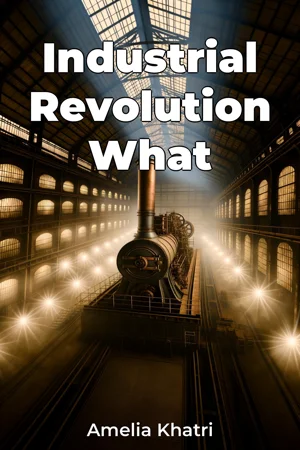
"Industrial Revolution What" examines the transformative period of mechanization and societal change that reshaped human civilization from the mid-18th through the 19th century. The book analyzes how technological innovations fundamentally altered manufacturing, commerce, and daily life, creating ripples that continue to influence modern society. The work centers on three primary themes: the technological breakthroughs that enabled mass production, the reorganization of labor and business practices, and the profound social changes that emerged from industrialization. These interconnected elements form the foundation for understanding how society transitioned from manual production methods to machine manufacturing. The book begins by establishing the pre-industrial context, describing agricultural societies and cottage industries that dominated before 1750. This baseline helps readers understand the magnitude of changes that followed. The narrative then explores key innovations like the steam engine, spinning jenny, and power loom, explaining their technical principles and their cascading effects on productivity and manufacturing capabilities. A significant portion focuses on the evolution of business practices, including the emergence of factories, new management systems, and the standardization of production processes. The text examines how these changes affected workers, from specialized craftsmen to factory laborers, and how new economic structures emerged to support industrial growth. The social impact receives thorough analysis through documented accounts of urbanization, changing family dynamics, and the emergence of new social classes. The book uses primary sources, including worker diaries, factory records, and contemporary observations, to illustrate how industrialization affected daily life, working conditions, and living standards. Interdisciplinary connections link technological advancement to economic theory, urban development, and environmental impact. The work draws from archaeology, economics, and social history to provide a comprehensive view of the period's transformation. The writing maintains an analytical approach while remaining accessible to general readers interested in technology and history. Technical concepts are explained clearly, with practical examples and illustrations to aid understanding. The book addresses ongoing debates about industrialization's benefits and drawbacks, including discussions of labor rights, environmental consequences, and economic inequality. It examines how different regions and countries experienced industrialization at varying paces and with different outcomes. The target audience includes students, business professionals, and readers interested in understanding how technological change drives societal transformation. The work is particularly relevant for those seeking insights into current technological disruptions and their potential societal impacts. Real-world applications include frameworks for understanding technological disruption, lessons for managing organizational change, and insights into how societies adapt to rapid technological advancement. The scope encompasses the period from 1750 to 1900, focusing primarily on developments in Europe and North America while acknowledging global impacts. The book maintains objectivity when discussing controversial topics like child labor, working conditions, and wealth distribution, presenting various perspectives supported by historical evidence. Throughout the text, examples of similar patterns in modern technological transitions help readers connect historical events to contemporary challenges. The work concludes by examining how industrial revolution principles continue to influence current technological and social transformations, offering readers tools to understand and navigate ongoing changes in their own era.
"Industrial Revolution What" examines the transformative period of mechanization and societal change that reshaped human civilization from the mid-18th through the 19th century. The book analyzes how technological innovations fundamentally altered manufacturing, commerce, and daily life, creating ripples that continue to influence modern society. The work centers on three primary themes: the technological breakthroughs that enabled mass production, the reorganization of labor and business practices, and the profound social changes that emerged from industrialization. These interconnected elements form the foundation for understanding how society transitioned from manual production methods to machine manufacturing. The book begins by establishing the pre-industrial context, describing agricultural societies and cottage industries that dominated before 1750. This baseline helps readers understand the magnitude of changes that followed. The narrative then explores key innovations like the steam engine, spinning jenny, and power loom, explaining their technical principles and their cascading effects on productivity and manufacturing capabilities. A significant portion focuses on the evolution of business practices, including the emergence of factories, new management systems, and the standardization of production processes. The text examines how these changes affected workers, from specialized craftsmen to factory laborers, and how new economic structures emerged to support industrial growth. The social impact receives thorough analysis through documented accounts of urbanization, changing family dynamics, and the emergence of new social classes. The book uses primary sources, including worker diaries, factory records, and contemporary observations, to illustrate how industrialization affected daily life, working conditions, and living standards. Interdisciplinary connections link technological advancement to economic theory, urban development, and environmental impact. The work draws from archaeology, economics, and social history to provide a comprehensive view of the period's transformation. The writing maintains an analytical approach while remaining accessible to general readers interested in technology and history. Technical concepts are explained clearly, with practical examples and illustrations to aid understanding. The book addresses ongoing debates about industrialization's benefits and drawbacks, including discussions of labor rights, environmental consequences, and economic inequality. It examines how different regions and countries experienced industrialization at varying paces and with different outcomes. The target audience includes students, business professionals, and readers interested in understanding how technological change drives societal transformation. The work is particularly relevant for those seeking insights into current technological disruptions and their potential societal impacts. Real-world applications include frameworks for understanding technological disruption, lessons for managing organizational change, and insights into how societies adapt to rapid technological advancement. The scope encompasses the period from 1750 to 1900, focusing primarily on developments in Europe and North America while acknowledging global impacts. The book maintains objectivity when discussing controversial topics like child labor, working conditions, and wealth distribution, presenting various perspectives supported by historical evidence. Throughout the text, examples of similar patterns in modern technological transitions help readers connect historical events to contemporary challenges. The work concludes by examining how industrial revolution principles continue to influence current technological and social transformations, offering readers tools to understand and navigate ongoing changes in their own era.
"Industrial Revolution What" offers a comprehensive exploration of the transformative period that reshaped human civilization through mechanization and technological innovation. This engaging analysis reveals how the shift from manual production to machine manufacturing fundamentally altered not just how things were made, but the very fabric of society itself. The book expertly weaves together three crucial threads: the revolutionary technological breakthroughs like the steam engine and power loom, the emergence of new business and labor practices, and the profound social transformations that followed. Beginning with a snapshot of pre-1750 agricultural societies, the narrative guides readers through the cascading effects of industrialization, using primary sources such as worker diaries and factory records to bring the era to life. The book's interdisciplinary approach combines technical explanations with compelling human stories, making complex concepts accessible while maintaining scholarly rigor. Particularly fascinating are the detailed accounts of how urbanization reshaped family dynamics and created entirely new social classes, while factory systems revolutionized traditional work patterns. The text draws powerful parallels between historical developments and contemporary technological disruptions, offering valuable insights for modern readers grappling with similar patterns of rapid change. Through clear explanations and practical examples, readers gain a deep understanding of how technological advancement drives societal transformation, making this work especially relevant for those interested in the intersection of technology, business, and social change.
Book Details
ISBN
9788233938581
Publisher
Publifye AS
Your Licenses
You don't own any licenses for this book
Purchase a license below to unlock this book and download the EPUB.
Purchase License
Select a tier to unlock this book
Need bulk licensing?
Contact us for enterprise agreements.