
About This Book
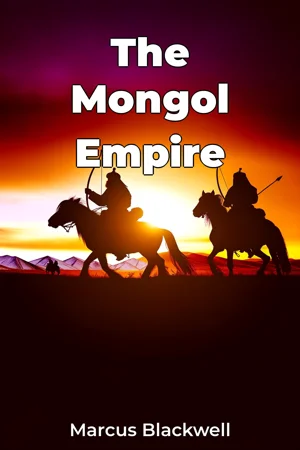
"The Mongol Empire" presents a detailed examination of how a nomadic society transformed into history's largest contiguous land empire, challenging conventional narratives about military organization, cultural adaptation, and governmental administration in medieval warfare. The book explores three primary themes: the evolution of Mongol military tactics and strategy, their administrative systems that governed diverse populations, and the cultural innovations that emerged from their conquests. These topics provide readers with a comprehensive understanding of how the Mongols maintained control over territories spanning from Korea to Eastern Europe. Beginning with Genghis Khan's unification of disparate tribes in the late 12th century, the work analyzes the sophisticated military machine that enabled Mongol expansion. The text examines their revolutionary cavalry tactics, including the development of the compound bow and the creation of the tümen system - a decimal-based military organization that maximized mobility and communication. The central argument posits that Mongol success stemmed not merely from military prowess but from their ability to adapt and incorporate diverse cultural and administrative practices from conquered territories. This thesis is supported through extensive analysis of primary sources, including The Secret History of the Mongols, Persian historical accounts, and archaeological evidence from military campaigns. The book's structure follows a chronological progression, beginning with the formation of the empire, moving through its rapid expansion, and concluding with its division into four major khanates. Key chapters focus on military innovations, governmental structures, and the Pax Mongolica's impact on Eurasian trade and cultural exchange. Research draws from multilingual sources, including recently translated documents and archaeological findings from across the former Mongol territories. The work incorporates diplomatic correspondence, trade records, and architectural evidence to construct a comprehensive picture of Mongol governance and military operations. The text connects military history with economics, sociology, and environmental studies, demonstrating how Mongol campaigns were influenced by and affected climate patterns, trade routes, and social structures across Eurasia. This interdisciplinary approach provides readers with a nuanced understanding of how military conquests shaped medieval globalization. Written in an academic yet accessible style, the book maintains scholarly rigor while engaging general readers interested in military history and medieval studies. The narrative employs detailed battle accounts, biographical sketches, and analytical commentary to illuminate complex historical processes. The work is particularly relevant for military historians, strategic studies scholars, and readers interested in understanding how nomadic societies impacted world history. It addresses ongoing debates about the nature of medieval warfare, the role of nomadic peoples in state formation, and the development of international trade networks. The book's scope encompasses the entire Mongol Empire period (1206-1368), focusing primarily on military and administrative aspects while acknowledging limitations in source materials from certain regions and periods. It challenges several historical misconceptions, including the notion that Mongol success relied solely on brutality and numerical superiority. Current military leaders and historians can apply insights from Mongol organizational systems and adaptive strategies to understand modern military logistics and cross-cultural governance. The work also contributes to debates about the role of nomadic peoples in world history and the development of military technologies. Through careful analysis of primary sources and recent archaeological discoveries, this military history offers readers a thorough understanding of how the Mongols created and maintained their empire through innovative military tactics, adaptive governance, and cultural integration.
"The Mongol Empire" presents a detailed examination of how a nomadic society transformed into history's largest contiguous land empire, challenging conventional narratives about military organization, cultural adaptation, and governmental administration in medieval warfare. The book explores three primary themes: the evolution of Mongol military tactics and strategy, their administrative systems that governed diverse populations, and the cultural innovations that emerged from their conquests. These topics provide readers with a comprehensive understanding of how the Mongols maintained control over territories spanning from Korea to Eastern Europe. Beginning with Genghis Khan's unification of disparate tribes in the late 12th century, the work analyzes the sophisticated military machine that enabled Mongol expansion. The text examines their revolutionary cavalry tactics, including the development of the compound bow and the creation of the tümen system - a decimal-based military organization that maximized mobility and communication. The central argument posits that Mongol success stemmed not merely from military prowess but from their ability to adapt and incorporate diverse cultural and administrative practices from conquered territories. This thesis is supported through extensive analysis of primary sources, including The Secret History of the Mongols, Persian historical accounts, and archaeological evidence from military campaigns. The book's structure follows a chronological progression, beginning with the formation of the empire, moving through its rapid expansion, and concluding with its division into four major khanates. Key chapters focus on military innovations, governmental structures, and the Pax Mongolica's impact on Eurasian trade and cultural exchange. Research draws from multilingual sources, including recently translated documents and archaeological findings from across the former Mongol territories. The work incorporates diplomatic correspondence, trade records, and architectural evidence to construct a comprehensive picture of Mongol governance and military operations. The text connects military history with economics, sociology, and environmental studies, demonstrating how Mongol campaigns were influenced by and affected climate patterns, trade routes, and social structures across Eurasia. This interdisciplinary approach provides readers with a nuanced understanding of how military conquests shaped medieval globalization. Written in an academic yet accessible style, the book maintains scholarly rigor while engaging general readers interested in military history and medieval studies. The narrative employs detailed battle accounts, biographical sketches, and analytical commentary to illuminate complex historical processes. The work is particularly relevant for military historians, strategic studies scholars, and readers interested in understanding how nomadic societies impacted world history. It addresses ongoing debates about the nature of medieval warfare, the role of nomadic peoples in state formation, and the development of international trade networks. The book's scope encompasses the entire Mongol Empire period (1206-1368), focusing primarily on military and administrative aspects while acknowledging limitations in source materials from certain regions and periods. It challenges several historical misconceptions, including the notion that Mongol success relied solely on brutality and numerical superiority. Current military leaders and historians can apply insights from Mongol organizational systems and adaptive strategies to understand modern military logistics and cross-cultural governance. The work also contributes to debates about the role of nomadic peoples in world history and the development of military technologies. Through careful analysis of primary sources and recent archaeological discoveries, this military history offers readers a thorough understanding of how the Mongols created and maintained their empire through innovative military tactics, adaptive governance, and cultural integration.
"The Mongol Empire" offers a groundbreaking exploration of how a nomadic society transformed into history's largest contiguous land empire, focusing on three critical elements: military innovation, administrative systems, and cultural adaptation. The book challenges traditional perspectives by demonstrating that Mongol success stemmed not just from military might, but from their remarkable ability to incorporate diverse cultural practices and governing techniques from conquered territories spanning from Korea to Eastern Europe. Through meticulous analysis of primary sources, including The Secret History of the Mongols and Persian historical accounts, the book reveals fascinating insights into the Mongols' revolutionary military organization. The tümen system, a decimal-based structure that maximized mobility and communication, alongside their mastery of cavalry tactics and the compound bow, showcases their military sophistication. The narrative progresses chronologically from Genghis Khan's initial unification of tribes through the empire's expansion and eventual division into four khanates. What sets this military history apart is its interdisciplinary approach, connecting warfare with economics, sociology, and environmental studies. Drawing from newly translated documents and archaeological findings, the book demonstrates how Mongol campaigns both influenced and were shaped by climate patterns, trade routes, and social structures across Eurasia. This comprehensive examination provides military historians, strategic studies scholars, and general readers with a nuanced understanding of how nomadic societies impacted medieval globalization through innovative military tactics and adaptive governance.
Book Details
ISBN
9788233938567
Publisher
Publifye AS
Your Licenses
You don't own any licenses for this book
Purchase a license below to unlock this book and download the EPUB.
Purchase License
Select a tier to unlock this book
Need bulk licensing?
Contact us for enterprise agreements.