
About This Book
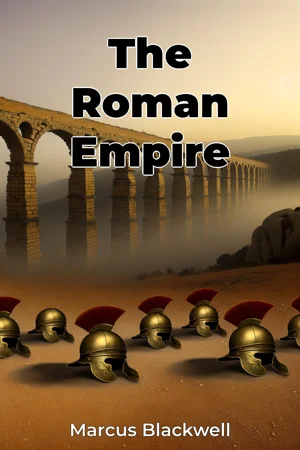
"The Roman Empire" examines one of history's most influential civilizations, tracing its evolution from a small Italian settlement to a vast empire that shaped the modern world. This comprehensive analysis delves into the military, political, and social structures that enabled Rome to dominate the ancient world for over five centuries. The book presents three fundamental aspects of Roman imperial power: the military system that conquered and maintained territories, the administrative framework that governed diverse populations, and the cultural mechanisms that sustained Roman authority. These elements worked in concert to create a empire whose influences persist in modern law, governance, and military strategy. Beginning with the transition from Republic to Empire under Augustus, the narrative explores how Rome developed its distinctive approach to territorial control. The book examines the Roman military's dual role as both a conquering force and a civilizing influence, demonstrating how legions served as vectors of Roman culture and technology throughout conquered territories. Central to the work's thesis is the argument that Rome's success stemmed from its adaptive capacity to absorb and integrate diverse peoples while maintaining core Roman institutions. This pragmatic approach to empire-building created a sustainable model of governance that survived numerous internal and external challenges. The content progresses through several key phases of imperial development. The first section analyzes the systems of military organization and logistics that enabled Roman expansion. The second examines administrative structures and legal frameworks that facilitated governance. The final section explores the decline and transformation of imperial power, offering insights into why some Roman institutions endured while others failed. Supporting evidence draws from archaeological findings, contemporary Roman histories, and administrative records. The book incorporates recent scholarly research, including updated interpretations of Roman military documents and new archaeological data from frontier regions. The work connects military history with economics, showing how Roman expansion created trade networks that enhanced imperial wealth and stability. It also explores links between Roman engineering and military success, demonstrating how technological advancement supported imperial power. This book stands out through its integrated analysis of military and civilian aspects of Roman imperial power, offering a holistic view of how these elements interconnected to create a durable empire. The writing maintains an academic rigor while remaining accessible to general readers interested in military history and ancient civilizations. The target audience includes military history enthusiasts, students of ancient history, and readers interested in understanding how complex political systems develop and maintain power. The book particularly appeals to those seeking insights into how military and civilian institutions interact in successful empires. Within military history genres, the work adheres to conventions of detailed tactical analysis while placing military developments within broader historical contexts. It covers the period from 27 BCE to 476 CE, focusing primarily on the western empire while acknowledging eastern developments. The book addresses ongoing debates about the nature of Roman imperialism, the effectiveness of frontier defense systems, and the causes of imperial decline. It presents multiple scholarly viewpoints while maintaining clear arguments based on available evidence. Readers can apply insights from Roman military organization, logistics, and administration to understand modern institutional structures and international relations. The book demonstrates how many contemporary military and political challenges parallel those faced by Roman administrators. The work maintains objectivity when analyzing controversial topics such as the role of Christianity in imperial decline and the effectiveness of different emperors' military strategies. It presents multiple perspectives while building arguments based on documented evidence rather than speculation.
"The Roman Empire" examines one of history's most influential civilizations, tracing its evolution from a small Italian settlement to a vast empire that shaped the modern world. This comprehensive analysis delves into the military, political, and social structures that enabled Rome to dominate the ancient world for over five centuries. The book presents three fundamental aspects of Roman imperial power: the military system that conquered and maintained territories, the administrative framework that governed diverse populations, and the cultural mechanisms that sustained Roman authority. These elements worked in concert to create a empire whose influences persist in modern law, governance, and military strategy. Beginning with the transition from Republic to Empire under Augustus, the narrative explores how Rome developed its distinctive approach to territorial control. The book examines the Roman military's dual role as both a conquering force and a civilizing influence, demonstrating how legions served as vectors of Roman culture and technology throughout conquered territories. Central to the work's thesis is the argument that Rome's success stemmed from its adaptive capacity to absorb and integrate diverse peoples while maintaining core Roman institutions. This pragmatic approach to empire-building created a sustainable model of governance that survived numerous internal and external challenges. The content progresses through several key phases of imperial development. The first section analyzes the systems of military organization and logistics that enabled Roman expansion. The second examines administrative structures and legal frameworks that facilitated governance. The final section explores the decline and transformation of imperial power, offering insights into why some Roman institutions endured while others failed. Supporting evidence draws from archaeological findings, contemporary Roman histories, and administrative records. The book incorporates recent scholarly research, including updated interpretations of Roman military documents and new archaeological data from frontier regions. The work connects military history with economics, showing how Roman expansion created trade networks that enhanced imperial wealth and stability. It also explores links between Roman engineering and military success, demonstrating how technological advancement supported imperial power. This book stands out through its integrated analysis of military and civilian aspects of Roman imperial power, offering a holistic view of how these elements interconnected to create a durable empire. The writing maintains an academic rigor while remaining accessible to general readers interested in military history and ancient civilizations. The target audience includes military history enthusiasts, students of ancient history, and readers interested in understanding how complex political systems develop and maintain power. The book particularly appeals to those seeking insights into how military and civilian institutions interact in successful empires. Within military history genres, the work adheres to conventions of detailed tactical analysis while placing military developments within broader historical contexts. It covers the period from 27 BCE to 476 CE, focusing primarily on the western empire while acknowledging eastern developments. The book addresses ongoing debates about the nature of Roman imperialism, the effectiveness of frontier defense systems, and the causes of imperial decline. It presents multiple scholarly viewpoints while maintaining clear arguments based on available evidence. Readers can apply insights from Roman military organization, logistics, and administration to understand modern institutional structures and international relations. The book demonstrates how many contemporary military and political challenges parallel those faced by Roman administrators. The work maintains objectivity when analyzing controversial topics such as the role of Christianity in imperial decline and the effectiveness of different emperors' military strategies. It presents multiple perspectives while building arguments based on documented evidence rather than speculation.
"The Roman Empire" offers a comprehensive look at how Rome rose from a small settlement to dominate the ancient world for over five centuries. It explores the interconnected military, political, and social structures that fueled Roman imperial power. One intriguing fact is how Roman legions not only conquered territories but also spread Roman culture and technology, acting as a civilizing influence. The book emphasizes Rome's adaptive capacity to integrate diverse peoples while maintaining its core institutions. The book uniquely blends military history with economic and administrative insights, illustrating how Roman expansion created trade networks and enhanced imperial wealth. It progresses through key phases of imperial development, including military organization, administrative structures, and the eventual decline, drawing on archaeological findings and contemporary Roman histories to support its arguments. This approach offers a holistic view of how Rome's military and civilian aspects intertwined to create a durable empire.
Book Details
ISBN
9788233938550
Publisher
Publifye AS
Your Licenses
You don't own any licenses for this book
Purchase a license below to unlock this book and download the EPUB.
Purchase License
Select a tier to unlock this book
Need bulk licensing?
Contact us for enterprise agreements.