
About This Book
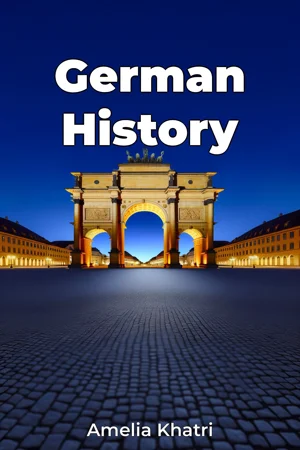
"German History" presents a comprehensive examination of the forces, decisions, and events that shaped one of Europe's most influential nations, addressing the fundamental question: How did Germany evolve from a collection of disparate states to become a central force in global affairs? The book systematically analyzes three pivotal aspects of German development: the formation of German national identity from medieval times through unification, the impact of industrialization and social reform on German society, and Germany's role in shaping 20th-century European history. These interconnected themes provide readers with a framework for understanding Germany's complex historical trajectory. The narrative begins with the Holy Roman Empire and traces Germany's evolution through key periods including the Protestant Reformation, the Thirty Years' War, and the rise of Prussia. It examines how linguistic, cultural, and political factors contributed to the emergence of German nationalism, leading to unification under Bismarck in 1871. The book draws upon primary sources, including diplomatic correspondence, personal diaries, and government documents, to provide readers with direct insights into historical events. The central argument posits that Germany's historical development represents a unique case study in nation-building, where cultural and intellectual movements played equally important roles as political and military actions. This thesis is supported through careful analysis of social, economic, and political transformations across centuries. Structured chronologically, the content progresses through distinct periods, with specific attention to the Reformation's impact on German society, the consequences of the Industrial Revolution, and Germany's role in both World Wars. The book incorporates recent historiographical debates and new archival findings, particularly regarding the Weimar Republic and the Third Reich. The research methodology combines traditional historical analysis with insights from sociology, economics, and political science. It integrates archaeological evidence, demographic data, and economic statistics to present a multifaceted view of German development. The interdisciplinary approach connects German history to European studies, international relations, and social theory, demonstrating how Germany's experience informs modern understanding of nationalism and state formation. Written in an academic yet accessible style, the book maintains scholarly rigor while engaging general readers interested in European history. It addresses ongoing historiographical debates about German exceptionalism and the origins of twentieth-century conflicts, while avoiding oversimplification of complex historical processes. The target audience includes university students, history enthusiasts, and readers seeking to understand contemporary Germany's role in European affairs. The book provides context for current debates about European integration, national identity, and economic leadership in the EU. While covering the breadth of German history, the book focuses particularly on the period from 1500 to the present, acknowledging that earlier medieval history receives less detailed treatment. It examines controversial topics such as the debate over German national identity, the causes of World War I, and the process of post-war reconciliation. Readers will gain practical insights into how historical forces shape national development, the relationship between industrial growth and social change, and the challenges of rebuilding society after conflict. The book provides valuable context for understanding contemporary German politics, economic policies, and diplomatic positions within the European Union.
"German History" presents a comprehensive examination of the forces, decisions, and events that shaped one of Europe's most influential nations, addressing the fundamental question: How did Germany evolve from a collection of disparate states to become a central force in global affairs? The book systematically analyzes three pivotal aspects of German development: the formation of German national identity from medieval times through unification, the impact of industrialization and social reform on German society, and Germany's role in shaping 20th-century European history. These interconnected themes provide readers with a framework for understanding Germany's complex historical trajectory. The narrative begins with the Holy Roman Empire and traces Germany's evolution through key periods including the Protestant Reformation, the Thirty Years' War, and the rise of Prussia. It examines how linguistic, cultural, and political factors contributed to the emergence of German nationalism, leading to unification under Bismarck in 1871. The book draws upon primary sources, including diplomatic correspondence, personal diaries, and government documents, to provide readers with direct insights into historical events. The central argument posits that Germany's historical development represents a unique case study in nation-building, where cultural and intellectual movements played equally important roles as political and military actions. This thesis is supported through careful analysis of social, economic, and political transformations across centuries. Structured chronologically, the content progresses through distinct periods, with specific attention to the Reformation's impact on German society, the consequences of the Industrial Revolution, and Germany's role in both World Wars. The book incorporates recent historiographical debates and new archival findings, particularly regarding the Weimar Republic and the Third Reich. The research methodology combines traditional historical analysis with insights from sociology, economics, and political science. It integrates archaeological evidence, demographic data, and economic statistics to present a multifaceted view of German development. The interdisciplinary approach connects German history to European studies, international relations, and social theory, demonstrating how Germany's experience informs modern understanding of nationalism and state formation. Written in an academic yet accessible style, the book maintains scholarly rigor while engaging general readers interested in European history. It addresses ongoing historiographical debates about German exceptionalism and the origins of twentieth-century conflicts, while avoiding oversimplification of complex historical processes. The target audience includes university students, history enthusiasts, and readers seeking to understand contemporary Germany's role in European affairs. The book provides context for current debates about European integration, national identity, and economic leadership in the EU. While covering the breadth of German history, the book focuses particularly on the period from 1500 to the present, acknowledging that earlier medieval history receives less detailed treatment. It examines controversial topics such as the debate over German national identity, the causes of World War I, and the process of post-war reconciliation. Readers will gain practical insights into how historical forces shape national development, the relationship between industrial growth and social change, and the challenges of rebuilding society after conflict. The book provides valuable context for understanding contemporary German politics, economic policies, and diplomatic positions within the European Union.
"German History" offers a compelling exploration of Germany's transformation from fragmented medieval states to a dominant European power, focusing on three critical aspects: national identity formation, industrialization's impact, and Germany's pivotal role in 20th-century Europe. The book skillfully weaves together cultural, political, and social elements to demonstrate how Germany's unique path to nationhood was shaped by intellectual movements as much as military might. Beginning with the Holy Roman Empire, the narrative traces Germany's evolution through transformative periods including the Protestant Reformation and the rise of Prussia, culminating in unification under Bismarck in 1871. The author draws extensively from primary sources, including diplomatic correspondence and personal diaries, to provide authentic insights into historical events. The book's interdisciplinary approach combines traditional historical analysis with perspectives from sociology, economics, and political science, offering readers a comprehensive understanding of German development. The work stands out for its thorough examination of how linguistic, cultural, and political factors contributed to German nationalism, while also addressing controversial topics such as German exceptionalism and the origins of both World Wars. Through careful analysis of social and economic transformations, readers gain valuable context for understanding contemporary Germany's role in European affairs, making this an essential resource for anyone interested in European history or modern international relations.
Book Details
ISBN
9788233938536
Publisher
Publifye AS
Your Licenses
You don't own any licenses for this book
Purchase a license below to unlock this book and download the EPUB.
Purchase License
Select a tier to unlock this book
Need bulk licensing?
Contact us for enterprise agreements.