
About This Book
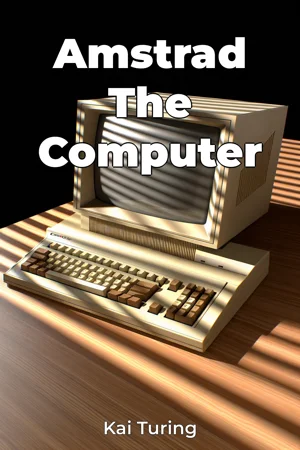
"Amstrad: The Computer" chronicles the remarkable journey of one of Britain's most significant contributions to the 1980s personal computer revolution. This comprehensive examination traces how Alan Sugar's Amstrad company transformed from a consumer electronics business into a major force in the home computer market, fundamentally altering the accessibility of personal computing for millions of users. The book centers on three pivotal aspects of the Amstrad phenomenon: the development and technical specifications of the Amstrad CPC (Color Personal Computer) series, the business strategies that enabled mass-market penetration, and the lasting impact on computer literacy in Europe. These elements combine to present a detailed analysis of how Amstrad achieved substantial market share against established competitors like Commodore and Sinclair. Beginning with Alan Sugar's initial vision in 1984, the narrative explores how Amstrad identified a crucial gap in the market: the need for an affordable, all-in-one computer system that included the monitor, keyboard, and storage device. This integrated approach marked a significant departure from contemporary offerings and forms the book's central thesis: that Amstrad's success stemmed from prioritizing practical user needs over technical sophistication. The content progresses through several key phases, including the initial launch of the CPC 464, the subsequent development of the PCW word processor series, and the company's expansion into IBM-compatible computers. Technical specifications are presented alongside market analysis, providing readers with both engineering insights and business context. The book incorporates primary source materials, including internal company documents, contemporary reviews, and interviews with key personnel involved in Amstrad's computer division. Research methodology combines technical documentation analysis, market data from the 1980s, and first-hand accounts from software developers, retailers, and users. This multi-faceted approach provides a thorough examination of how Amstrad's computers influenced both the technology sector and broader society. The book makes significant connections to retail economics, educational policy, and social mobility, demonstrating how Amstrad's affordable computers contributed to increased computer literacy among middle and working-class families. It examines how the company's approach to manufacturing and distribution challenged established industry norms and influenced future computer marketing strategies. Written in an analytical style that balances technical detail with accessible explanations, the book serves both technology enthusiasts and business readers. While maintaining academic rigor, the narrative remains engaging through the use of case studies and specific examples of how Amstrad's computers were used in homes, schools, and small businesses. The target audience includes technology historians, computer enthusiasts, business strategists, and readers interested in British industrial history. The book provides particular value to those studying the democratization of technology and the evolution of personal computing. Within its scope, the work focuses primarily on Amstrad's computer division from 1984 to 1990, acknowledging but not extensively covering the company's other product lines. It addresses contemporary debates about the role of price versus performance in technology adoption and the impact of integrated hardware solutions on market development. The book concludes by examining Amstrad's legacy in modern computing, drawing parallels between its integrated approach and current trends in consumer technology. It provides insights relevant to current technology business practices while documenting a crucial period in personal computing history.
"Amstrad: The Computer" chronicles the remarkable journey of one of Britain's most significant contributions to the 1980s personal computer revolution. This comprehensive examination traces how Alan Sugar's Amstrad company transformed from a consumer electronics business into a major force in the home computer market, fundamentally altering the accessibility of personal computing for millions of users. The book centers on three pivotal aspects of the Amstrad phenomenon: the development and technical specifications of the Amstrad CPC (Color Personal Computer) series, the business strategies that enabled mass-market penetration, and the lasting impact on computer literacy in Europe. These elements combine to present a detailed analysis of how Amstrad achieved substantial market share against established competitors like Commodore and Sinclair. Beginning with Alan Sugar's initial vision in 1984, the narrative explores how Amstrad identified a crucial gap in the market: the need for an affordable, all-in-one computer system that included the monitor, keyboard, and storage device. This integrated approach marked a significant departure from contemporary offerings and forms the book's central thesis: that Amstrad's success stemmed from prioritizing practical user needs over technical sophistication. The content progresses through several key phases, including the initial launch of the CPC 464, the subsequent development of the PCW word processor series, and the company's expansion into IBM-compatible computers. Technical specifications are presented alongside market analysis, providing readers with both engineering insights and business context. The book incorporates primary source materials, including internal company documents, contemporary reviews, and interviews with key personnel involved in Amstrad's computer division. Research methodology combines technical documentation analysis, market data from the 1980s, and first-hand accounts from software developers, retailers, and users. This multi-faceted approach provides a thorough examination of how Amstrad's computers influenced both the technology sector and broader society. The book makes significant connections to retail economics, educational policy, and social mobility, demonstrating how Amstrad's affordable computers contributed to increased computer literacy among middle and working-class families. It examines how the company's approach to manufacturing and distribution challenged established industry norms and influenced future computer marketing strategies. Written in an analytical style that balances technical detail with accessible explanations, the book serves both technology enthusiasts and business readers. While maintaining academic rigor, the narrative remains engaging through the use of case studies and specific examples of how Amstrad's computers were used in homes, schools, and small businesses. The target audience includes technology historians, computer enthusiasts, business strategists, and readers interested in British industrial history. The book provides particular value to those studying the democratization of technology and the evolution of personal computing. Within its scope, the work focuses primarily on Amstrad's computer division from 1984 to 1990, acknowledging but not extensively covering the company's other product lines. It addresses contemporary debates about the role of price versus performance in technology adoption and the impact of integrated hardware solutions on market development. The book concludes by examining Amstrad's legacy in modern computing, drawing parallels between its integrated approach and current trends in consumer technology. It provides insights relevant to current technology business practices while documenting a crucial period in personal computing history.
"Amstrad: The Computer" delves into the fascinating transformation of a British consumer electronics company into a pioneering force in 1980s personal computing. The book explores how Alan Sugar's vision of creating affordable, all-in-one computer systems revolutionized home computing accessibility, challenging established players like Commodore and Sinclair. Through a combination of smart business strategy and innovative product design, Amstrad identified and filled a crucial market gap by integrating the monitor, keyboard, and storage device into a single, user-friendly package. The narrative traces Amstrad's evolution from the launch of the CPC 464 through the development of the PCW word processor series and into IBM-compatible computers. Drawing from internal company documents, contemporary reviews, and interviews with key personnel, the book provides a comprehensive analysis of how Amstrad's approach to manufacturing and distribution disrupted industry norms. Particularly noteworthy is how the company's focus on practical user needs over technical sophistication helped democratize computer access for middle and working-class families. Through detailed technical specifications, market analysis, and real-world case studies, the book illustrates how Amstrad's influence extended beyond mere product development to impact computer literacy, educational policy, and social mobility in Europe. The author skillfully balances technical detail with accessible explanations, making this historical account valuable for both technology enthusiasts and business readers interested in understanding how Amstrad's integrated approach to computing continues to influence modern technology trends.
Book Details
ISBN
9788233938321
Publisher
Publifye AS
Your Licenses
You don't own any licenses for this book
Purchase a license below to unlock this book and download the EPUB.
Purchase License
Select a tier to unlock this book
Need bulk licensing?
Contact us for enterprise agreements.