
About This Book
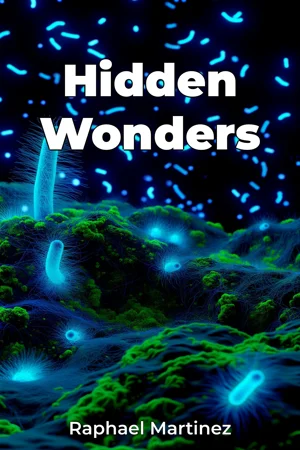
"Hidden Wonders" challenges our fundamental understanding of the natural world by revealing scientific phenomena that operate silently but significantly in our daily lives. This comprehensive exploration bridges the gap between common observation and deep scientific insight, offering readers a new lens through which to view their environment. The book examines three primary topics: microscopic ecosystems that sustain life on Earth, the invisible forces shaping geological processes, and the subtle interactions between organisms that maintain ecological balance. These interconnected subjects demonstrate how seemingly insignificant natural mechanisms have far-reaching implications for life on our planet. Drawing from decades of research across multiple scientific disciplines, the work presents evidence gathered through advanced imaging technologies, long-term field studies, and data from international research stations. The findings incorporate recent discoveries in microbiology, geology, and environmental science, providing readers with current scientific understanding while acknowledging areas where research continues. The central thesis posits that Earth's most influential natural processes often occur beyond immediate human perception, yet understanding these mechanisms is crucial for addressing current environmental challenges and advancing scientific knowledge. This argument is developed through systematic examination of hidden natural phenomena and their ripple effects throughout various ecosystems. The book's structure progresses from the microscopic to the macroscopic. It begins by examining soil microorganisms and their role in maintaining plant life, moves through underground water systems and their influence on surface ecosystems, and culminates in exploring atmospheric processes that connect seemingly separate biomes. Each chapter builds upon previous information, creating a comprehensive understanding of Earth's interconnected systems. The work incorporates research from leading scientific institutions, featuring data from electron microscopy, satellite imaging, and advanced sensor networks. These sources are complemented by case studies from diverse geographical locations, providing readers with global perspective on local phenomena. The content connects environmental science with chemistry, physics, and biology, while also drawing relevant parallels to climate science and ecology. This interdisciplinary approach helps readers understand how various scientific fields converge in explaining natural phenomena. The writing maintains an accessible technical style, explaining complex concepts through clear prose and carefully chosen analogies. While the book includes necessary scientific terminology, each technical concept is thoroughly explained for readers with basic scientific literacy. "Hidden Wonders" serves both general science readers and environmental professionals, offering different levels of engagement. For general readers, it provides an accessible entry point into environmental science, while professionals will find value in its synthesis of current research and emerging theories. The book addresses ongoing scientific debates regarding ecosystem resilience, climate change impacts, and conservation strategies. It presents multiple viewpoints where scientific consensus is still developing, allowing readers to understand the complexity of these issues. The scope encompasses both micro and macro scales of natural processes, though it primarily focuses on phenomena that can be observed within human timescales. This limitation helps maintain focus while acknowledging longer-term processes that influence Earth's systems. Practical applications include improved understanding of conservation needs, informed decision-making about environmental issues, and enhanced appreciation for natural processes. The book provides readers with tools to better understand scientific news and environmental policies. This work stands out through its integration of cutting-edge research, clear explanation of complex systems, and practical approach to understanding hidden natural processes. It offers readers both theoretical knowledge and practical insights, making scientific concepts relevant to daily life while maintaining rigorous academic standards.
"Hidden Wonders" challenges our fundamental understanding of the natural world by revealing scientific phenomena that operate silently but significantly in our daily lives. This comprehensive exploration bridges the gap between common observation and deep scientific insight, offering readers a new lens through which to view their environment. The book examines three primary topics: microscopic ecosystems that sustain life on Earth, the invisible forces shaping geological processes, and the subtle interactions between organisms that maintain ecological balance. These interconnected subjects demonstrate how seemingly insignificant natural mechanisms have far-reaching implications for life on our planet. Drawing from decades of research across multiple scientific disciplines, the work presents evidence gathered through advanced imaging technologies, long-term field studies, and data from international research stations. The findings incorporate recent discoveries in microbiology, geology, and environmental science, providing readers with current scientific understanding while acknowledging areas where research continues. The central thesis posits that Earth's most influential natural processes often occur beyond immediate human perception, yet understanding these mechanisms is crucial for addressing current environmental challenges and advancing scientific knowledge. This argument is developed through systematic examination of hidden natural phenomena and their ripple effects throughout various ecosystems. The book's structure progresses from the microscopic to the macroscopic. It begins by examining soil microorganisms and their role in maintaining plant life, moves through underground water systems and their influence on surface ecosystems, and culminates in exploring atmospheric processes that connect seemingly separate biomes. Each chapter builds upon previous information, creating a comprehensive understanding of Earth's interconnected systems. The work incorporates research from leading scientific institutions, featuring data from electron microscopy, satellite imaging, and advanced sensor networks. These sources are complemented by case studies from diverse geographical locations, providing readers with global perspective on local phenomena. The content connects environmental science with chemistry, physics, and biology, while also drawing relevant parallels to climate science and ecology. This interdisciplinary approach helps readers understand how various scientific fields converge in explaining natural phenomena. The writing maintains an accessible technical style, explaining complex concepts through clear prose and carefully chosen analogies. While the book includes necessary scientific terminology, each technical concept is thoroughly explained for readers with basic scientific literacy. "Hidden Wonders" serves both general science readers and environmental professionals, offering different levels of engagement. For general readers, it provides an accessible entry point into environmental science, while professionals will find value in its synthesis of current research and emerging theories. The book addresses ongoing scientific debates regarding ecosystem resilience, climate change impacts, and conservation strategies. It presents multiple viewpoints where scientific consensus is still developing, allowing readers to understand the complexity of these issues. The scope encompasses both micro and macro scales of natural processes, though it primarily focuses on phenomena that can be observed within human timescales. This limitation helps maintain focus while acknowledging longer-term processes that influence Earth's systems. Practical applications include improved understanding of conservation needs, informed decision-making about environmental issues, and enhanced appreciation for natural processes. The book provides readers with tools to better understand scientific news and environmental policies. This work stands out through its integration of cutting-edge research, clear explanation of complex systems, and practical approach to understanding hidden natural processes. It offers readers both theoretical knowledge and practical insights, making scientific concepts relevant to daily life while maintaining rigorous academic standards.
"Hidden Wonders" unveils the invisible yet crucial mechanisms that shape our natural world, offering readers a fascinating journey through Earth's most influential but rarely seen processes. From microscopic soil organisms to complex atmospheric systems, the book reveals how seemingly imperceptible phenomena profoundly impact life on our planet. Through advanced imaging technologies and comprehensive research data, readers discover the intricate web of connections between underground water systems, microbial communities, and broader ecosystem dynamics. The book's brilliance lies in its systematic progression from microscopic to macroscopic scales, beginning with the hidden world of soil microorganisms and their vital role in sustaining plant life, before expanding to larger geological and atmospheric processes. Each chapter builds upon previous knowledge, weaving together insights from microbiology, geology, and environmental science to create a comprehensive understanding of Earth's interconnected systems. What sets this work apart is its ability to bridge the gap between everyday observation and deep scientific understanding, making complex concepts accessible through clear prose and carefully chosen analogies. Using real-world case studies and data from leading scientific institutions, the book demonstrates how understanding these hidden natural processes is essential for addressing current environmental challenges. While maintaining scientific rigor, it presents information in an engaging way that serves both general readers and environmental professionals, offering practical insights into conservation needs and environmental decision-making. This interdisciplinary approach helps readers appreciate the delicate balance of natural systems and their far-reaching implications for our planet's future.
Book Details
ISBN
9788233938031
Publisher
Publifye AS
Your Licenses
You don't own any licenses for this book
Purchase a license below to unlock this book and download the EPUB.
Purchase License
Select a tier to unlock this book
Need bulk licensing?
Contact us for enterprise agreements.