
About This Book
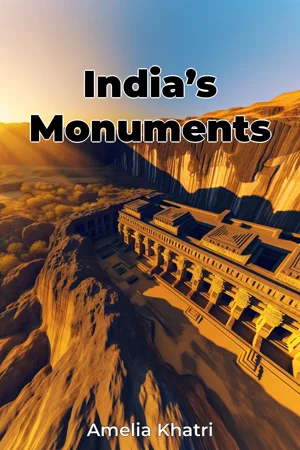
"India's Monuments" examines how architectural heritage serves as a living chronicle of the subcontinent's 5,000-year civilization, revealing the intricate interplay between power, culture, and artistic expression across different epochs. The book navigates through three primary themes: the evolution of architectural styles from ancient Buddhist caves to Mughal mausoleums, the technological and engineering achievements that enabled these constructions, and the socio-political forces that shaped their creation. These monuments, ranging from the rock-cut temples of Ellora to the precision-engineered observatories of Jaipur, demonstrate how each ruling dynasty left its distinct mark on India's architectural landscape. The narrative begins with the earliest surviving structures from the Indus Valley Civilization, proceeding chronologically through major historical periods. Each chapter analyzes specific monuments within their historical context, examining construction techniques, architectural innovations, and the cultural significance of these structures. The book demonstrates how monuments served multiple purposes: as seats of power, centers of learning, symbols of religious devotion, and markers of technological advancement. Central to the book's argument is the premise that India's monuments are not merely static structures but dynamic repositories of historical information that illuminate broader patterns of social organization, religious practice, and technological capability. This thesis is supported by archaeological findings, architectural documentation, historical records, and recent technological surveys using ground-penetrating radar and 3D mapping. The content is organized into four main sections: Ancient and Classical Period (3300 BCE - 550 CE), Medieval Period (550-1200 CE), Islamic Period (1200-1800 CE), and Colonial to Modern Period (1800-present). Each section examines key monuments through multiple lenses: architectural design, engineering methods, cultural significance, and historical impact. The research draws from archaeological surveys, architectural plans, historical manuscripts, traveler accounts, and contemporary conservation reports. The book incorporates recent findings from the Archaeological Survey of India and international research institutions, providing updated perspectives on familiar monuments. The work connects architecture with various disciplines including engineering, mathematics, astronomy, and religious studies. For instance, it explores how astronomical principles influenced temple architecture and how Islamic geometric patterns incorporated advanced mathematical concepts. The book employs a systematic approach to monument analysis, introducing a framework that considers physical structure, historical context, cultural significance, and conservation status. This methodology provides readers with tools to understand and evaluate historical architecture beyond mere aesthetic appreciation. Written in an academic yet accessible style, the text balances scholarly insight with clear explanations suitable for both specialists and general readers interested in architecture, history, or Indian culture. The target audience includes architects, historians, conservation specialists, and educated general readers seeking comprehensive understanding of India's architectural heritage. The book serves as both a scholarly reference and a practical guide for those visiting these monuments. While focusing primarily on major monuments, the book acknowledges regional variations and lesser-known structures that contributed to India's architectural diversity. It addresses ongoing debates in architectural history, including questions of dating, attribution, and cultural influence. Practical applications include guidance for conservation efforts, architectural study, and heritage tourism. The book concludes with discussions on contemporary challenges in monument preservation and the role of architectural heritage in modern India. The work maintains objectivity while addressing historically contested issues, such as the impact of different rulers on architectural development and the integration of various cultural influences in Indian architecture.
"India's Monuments" examines how architectural heritage serves as a living chronicle of the subcontinent's 5,000-year civilization, revealing the intricate interplay between power, culture, and artistic expression across different epochs. The book navigates through three primary themes: the evolution of architectural styles from ancient Buddhist caves to Mughal mausoleums, the technological and engineering achievements that enabled these constructions, and the socio-political forces that shaped their creation. These monuments, ranging from the rock-cut temples of Ellora to the precision-engineered observatories of Jaipur, demonstrate how each ruling dynasty left its distinct mark on India's architectural landscape. The narrative begins with the earliest surviving structures from the Indus Valley Civilization, proceeding chronologically through major historical periods. Each chapter analyzes specific monuments within their historical context, examining construction techniques, architectural innovations, and the cultural significance of these structures. The book demonstrates how monuments served multiple purposes: as seats of power, centers of learning, symbols of religious devotion, and markers of technological advancement. Central to the book's argument is the premise that India's monuments are not merely static structures but dynamic repositories of historical information that illuminate broader patterns of social organization, religious practice, and technological capability. This thesis is supported by archaeological findings, architectural documentation, historical records, and recent technological surveys using ground-penetrating radar and 3D mapping. The content is organized into four main sections: Ancient and Classical Period (3300 BCE - 550 CE), Medieval Period (550-1200 CE), Islamic Period (1200-1800 CE), and Colonial to Modern Period (1800-present). Each section examines key monuments through multiple lenses: architectural design, engineering methods, cultural significance, and historical impact. The research draws from archaeological surveys, architectural plans, historical manuscripts, traveler accounts, and contemporary conservation reports. The book incorporates recent findings from the Archaeological Survey of India and international research institutions, providing updated perspectives on familiar monuments. The work connects architecture with various disciplines including engineering, mathematics, astronomy, and religious studies. For instance, it explores how astronomical principles influenced temple architecture and how Islamic geometric patterns incorporated advanced mathematical concepts. The book employs a systematic approach to monument analysis, introducing a framework that considers physical structure, historical context, cultural significance, and conservation status. This methodology provides readers with tools to understand and evaluate historical architecture beyond mere aesthetic appreciation. Written in an academic yet accessible style, the text balances scholarly insight with clear explanations suitable for both specialists and general readers interested in architecture, history, or Indian culture. The target audience includes architects, historians, conservation specialists, and educated general readers seeking comprehensive understanding of India's architectural heritage. The book serves as both a scholarly reference and a practical guide for those visiting these monuments. While focusing primarily on major monuments, the book acknowledges regional variations and lesser-known structures that contributed to India's architectural diversity. It addresses ongoing debates in architectural history, including questions of dating, attribution, and cultural influence. Practical applications include guidance for conservation efforts, architectural study, and heritage tourism. The book concludes with discussions on contemporary challenges in monument preservation and the role of architectural heritage in modern India. The work maintains objectivity while addressing historically contested issues, such as the impact of different rulers on architectural development and the integration of various cultural influences in Indian architecture.
"India's Monuments" presents a comprehensive journey through 5,000 years of architectural heritage, showcasing how India's built environment serves as a living record of its civilization. The book masterfully weaves together the evolution of architectural styles, engineering achievements, and socio-political influences that shaped these magnificent structures, from ancient Buddhist caves to Mughal mausoleums. Through a chronological exploration spanning four major periods - Ancient and Classical, Medieval, Islamic, and Colonial to Modern - the book reveals fascinating insights into how each ruling dynasty left its distinctive mark on India's architectural landscape. Readers discover how the precision-engineered observatories of Jaipur incorporated advanced astronomical principles, and how Islamic geometric patterns merged sophisticated mathematical concepts with artistic expression. The narrative particularly shines in its analysis of how monuments served multiple purposes, functioning as centers of power, learning, and religious devotion while showcasing period-specific technological capabilities. What sets this work apart is its multidisciplinary approach, combining archaeological findings, architectural documentation, and cutting-edge technological surveys to present a complete picture of India's monumental heritage. The book's systematic framework for monument analysis provides readers with practical tools for understanding historical architecture beyond aesthetic appreciation, making it valuable for both specialists and general readers interested in architecture, history, or Indian culture. The inclusion of recent research findings and contemporary conservation challenges ensures its relevance to modern discussions about architectural preservation.
Book Details
ISBN
9788233937928
Publisher
Publifye AS
Your Licenses
You don't own any licenses for this book
Purchase a license below to unlock this book and download the EPUB.
Purchase License
Select a tier to unlock this book
Need bulk licensing?
Contact us for enterprise agreements.