
About This Book
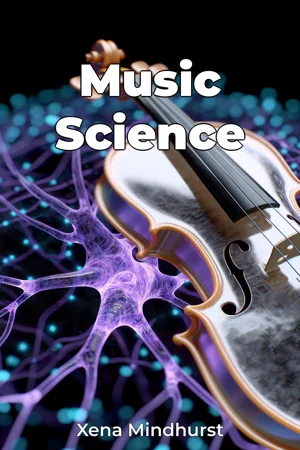
"Music Science" investigates the intricate relationship between sound, human psychology, and emotional response, revealing how musical elements directly influence brain function and emotional states. This comprehensive examination brings together neuroscience, psychology, and musicology to understand the profound impact of music on human experience. The book explores three core areas: the neurological processing of musical information, the psychological mechanisms of emotional response to music, and the practical applications of music in therapeutic and everyday contexts. These topics form the foundation for understanding how different musical elements—rhythm, harmony, and melody—trigger specific neural pathways and emotional reactions. Drawing from decades of research in cognitive neuroscience and music psychology, the work presents evidence from brain imaging studies, psychological experiments, and clinical applications. The research demonstrates how music processing involves multiple brain regions, creating complex neural networks that influence emotion, memory, and behavior. The book's central thesis argues that music's effect on emotions follows predictable patterns based on both universal human responses and cultural conditioning. This understanding allows for the systematic application of music in various contexts, from therapy to performance enhancement. Structured in three main sections, the book first examines the fundamental mechanics of music perception, including frequency processing, pattern recognition, and temporal organization in the brain. The second section delves into emotional processing, exploring how different musical features activate specific emotional responses. The final section focuses on practical applications, from clinical music therapy to performance optimization. The evidence presented includes data from EEG studies, fMRI scans, psychological assessments, and longitudinal studies of music therapy outcomes. The book incorporates case studies from clinical settings and research laboratories worldwide, providing a comprehensive view of current understanding in the field. Interdisciplinary connections link music science to fields such as evolutionary biology, explaining music's role in human development, and cognitive psychology, examining music's influence on learning and memory. The book also explores connections with cultural anthropology, investigating how different societies use music to regulate emotional states. The work takes an empirical approach while remaining accessible to non-specialists. Technical concepts are explained through clear analogies and practical examples, making complex neurological and psychological principles understandable to general readers. Written in an academic yet engaging style, the book maintains scientific rigor while using clear language and relevant examples. It serves both professionals in music therapy and psychology as well as general readers interested in understanding music's impact on human behavior and emotion. The target audience includes psychology students, music therapists, healthcare professionals, and individuals seeking to understand and apply music's psychological effects in their personal or professional lives. Within the psychology and music genres, the book adheres to scientific methodology while incorporating practical applications. It addresses current debates in the field, such as the universality of musical emotional responses versus cultural specificity. The scope encompasses both theoretical frameworks and practical applications, though it primarily focuses on Western musical traditions while acknowledging global musical diversity. Readers learn to apply this knowledge in various settings, from stress management to emotional regulation. The book addresses ongoing debates in music psychology, including the extent to which musical preference is innate versus learned, and the mechanisms behind music's therapeutic effects. These discussions are presented with balanced evidence from multiple perspectives, allowing readers to form informed conclusions.
"Music Science" investigates the intricate relationship between sound, human psychology, and emotional response, revealing how musical elements directly influence brain function and emotional states. This comprehensive examination brings together neuroscience, psychology, and musicology to understand the profound impact of music on human experience. The book explores three core areas: the neurological processing of musical information, the psychological mechanisms of emotional response to music, and the practical applications of music in therapeutic and everyday contexts. These topics form the foundation for understanding how different musical elements—rhythm, harmony, and melody—trigger specific neural pathways and emotional reactions. Drawing from decades of research in cognitive neuroscience and music psychology, the work presents evidence from brain imaging studies, psychological experiments, and clinical applications. The research demonstrates how music processing involves multiple brain regions, creating complex neural networks that influence emotion, memory, and behavior. The book's central thesis argues that music's effect on emotions follows predictable patterns based on both universal human responses and cultural conditioning. This understanding allows for the systematic application of music in various contexts, from therapy to performance enhancement. Structured in three main sections, the book first examines the fundamental mechanics of music perception, including frequency processing, pattern recognition, and temporal organization in the brain. The second section delves into emotional processing, exploring how different musical features activate specific emotional responses. The final section focuses on practical applications, from clinical music therapy to performance optimization. The evidence presented includes data from EEG studies, fMRI scans, psychological assessments, and longitudinal studies of music therapy outcomes. The book incorporates case studies from clinical settings and research laboratories worldwide, providing a comprehensive view of current understanding in the field. Interdisciplinary connections link music science to fields such as evolutionary biology, explaining music's role in human development, and cognitive psychology, examining music's influence on learning and memory. The book also explores connections with cultural anthropology, investigating how different societies use music to regulate emotional states. The work takes an empirical approach while remaining accessible to non-specialists. Technical concepts are explained through clear analogies and practical examples, making complex neurological and psychological principles understandable to general readers. Written in an academic yet engaging style, the book maintains scientific rigor while using clear language and relevant examples. It serves both professionals in music therapy and psychology as well as general readers interested in understanding music's impact on human behavior and emotion. The target audience includes psychology students, music therapists, healthcare professionals, and individuals seeking to understand and apply music's psychological effects in their personal or professional lives. Within the psychology and music genres, the book adheres to scientific methodology while incorporating practical applications. It addresses current debates in the field, such as the universality of musical emotional responses versus cultural specificity. The scope encompasses both theoretical frameworks and practical applications, though it primarily focuses on Western musical traditions while acknowledging global musical diversity. Readers learn to apply this knowledge in various settings, from stress management to emotional regulation. The book addresses ongoing debates in music psychology, including the extent to which musical preference is innate versus learned, and the mechanisms behind music's therapeutic effects. These discussions are presented with balanced evidence from multiple perspectives, allowing readers to form informed conclusions.
"Music Science" delves into the fascinating intersection of music, psychology, and neuroscience, offering a comprehensive exploration of how musical elements influence our brain function and emotional responses. Through a blend of neuroscientific research, psychological studies, and clinical applications, the book uncovers the complex neural networks activated by music and explains how different musical components—from rhythm to harmony—trigger specific emotional reactions in listeners. The book progresses systematically through three main sections, beginning with the fundamental mechanics of music perception in the brain, including how we process frequencies and recognize patterns. It then explores the psychological aspects of emotional processing, revealing how musical features evoke particular emotional responses through both universal human reactions and cultural conditioning. The final section bridges theory with practice, examining real-world applications in music therapy and performance enhancement, supported by evidence from EEG studies, fMRI scans, and clinical case studies. What sets this work apart is its accessible approach to complex scientific concepts, using clear analogies and practical examples to explain intricate neurological and psychological principles. While maintaining academic rigor, it speaks to both professionals and general readers, making it valuable for anyone from psychology students to music therapists. The book's examination of music's role in emotional regulation, stress management, and therapeutic applications provides readers with actionable insights they can apply in personal and professional contexts.
Book Details
ISBN
9788233937683
Publisher
Publifye AS
Your Licenses
You don't own any licenses for this book
Purchase a license below to unlock this book and download the EPUB.
Purchase License
Select a tier to unlock this book
Need bulk licensing?
Contact us for enterprise agreements.