
About This Book
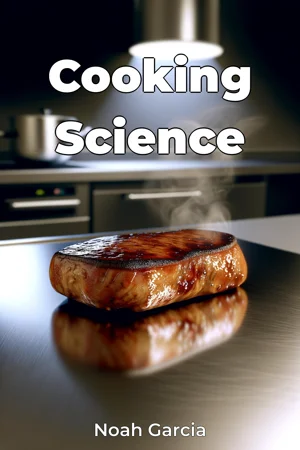
"Cooking Science" explores the fundamental intersection of chemistry, biology, and culinary arts, revealing how scientific principles transform raw ingredients into the foods we consume daily. This comprehensive guide bridges the gap between laboratory insights and kitchen application, demonstrating how understanding scientific concepts can enhance cooking skills and food quality. The book examines three core areas: molecular gastronomy, food chemistry, and thermal dynamics in cooking. Through detailed analysis, readers learn how protein denaturation affects meat texture, why emulsions are crucial in sauce making, and how Maillard reactions create complex flavors during browning processes. These concepts are presented through practical kitchen experiments and real-world cooking scenarios. Building on research from food science laboratories worldwide, the text integrates historical developments in food science with contemporary cooking methods. The book traces the evolution of cooking techniques from early preservation methods to modern sous-vide cooking, explaining how scientific understanding has refined these practices over time. The central thesis maintains that cooking is fundamentally a series of controlled chemical reactions, and understanding these processes leads to more consistent and higher-quality culinary results. This argument is supported by extensive research from leading food science institutions and professional kitchens. The content progresses systematically through four main sections: basic food chemistry, heat transfer principles, ingredient interactions, and practical applications. Each chapter includes detailed explanations of scientific concepts, followed by practical cooking methods that demonstrate these principles in action. The book incorporates data from peer-reviewed studies, professional kitchen experiments, and standardized testing procedures. Interdisciplinary connections link food science to chemistry, physics, and biology, while also exploring connections to agriculture and nutrition. These relationships demonstrate how various scientific fields contribute to our understanding of cooking processes and food safety. The book employs a methodical, research-based approach, using clear language to explain complex concepts. Technical information is balanced with practical applications, making the content accessible to both professional chefs and home cooks with an interest in science. The target audience includes culinary students, professional chefs, food industry professionals, and serious home cooks who want to understand the science behind their cooking techniques. The content is particularly valuable for those seeking to improve their cooking precision and consistency through scientific understanding. Working within the conventions of both scientific literature and culinary texts, the book provides detailed explanations of chemical processes while maintaining relevance to practical cooking applications. Diagrams, charts, and photographic evidence support the technical concepts presented. The scope encompasses fundamental scientific principles related to cooking, though it intentionally limits coverage of advanced biochemistry and molecular gastronomy techniques that require specialized equipment. Instead, it focuses on principles applicable in typical kitchen environments. Current debates in food science are addressed, including discussions about traditional versus modern cooking methods, the role of additives, and the impact of different cooking techniques on nutritional value. The book maintains an objective, evidence-based approach throughout, focusing on verifiable scientific principles and their practical applications in cooking. This combination of theoretical knowledge and practical application provides readers with both understanding and actionable insights for improving their culinary skills through science.
"Cooking Science" explores the fundamental intersection of chemistry, biology, and culinary arts, revealing how scientific principles transform raw ingredients into the foods we consume daily. This comprehensive guide bridges the gap between laboratory insights and kitchen application, demonstrating how understanding scientific concepts can enhance cooking skills and food quality. The book examines three core areas: molecular gastronomy, food chemistry, and thermal dynamics in cooking. Through detailed analysis, readers learn how protein denaturation affects meat texture, why emulsions are crucial in sauce making, and how Maillard reactions create complex flavors during browning processes. These concepts are presented through practical kitchen experiments and real-world cooking scenarios. Building on research from food science laboratories worldwide, the text integrates historical developments in food science with contemporary cooking methods. The book traces the evolution of cooking techniques from early preservation methods to modern sous-vide cooking, explaining how scientific understanding has refined these practices over time. The central thesis maintains that cooking is fundamentally a series of controlled chemical reactions, and understanding these processes leads to more consistent and higher-quality culinary results. This argument is supported by extensive research from leading food science institutions and professional kitchens. The content progresses systematically through four main sections: basic food chemistry, heat transfer principles, ingredient interactions, and practical applications. Each chapter includes detailed explanations of scientific concepts, followed by practical cooking methods that demonstrate these principles in action. The book incorporates data from peer-reviewed studies, professional kitchen experiments, and standardized testing procedures. Interdisciplinary connections link food science to chemistry, physics, and biology, while also exploring connections to agriculture and nutrition. These relationships demonstrate how various scientific fields contribute to our understanding of cooking processes and food safety. The book employs a methodical, research-based approach, using clear language to explain complex concepts. Technical information is balanced with practical applications, making the content accessible to both professional chefs and home cooks with an interest in science. The target audience includes culinary students, professional chefs, food industry professionals, and serious home cooks who want to understand the science behind their cooking techniques. The content is particularly valuable for those seeking to improve their cooking precision and consistency through scientific understanding. Working within the conventions of both scientific literature and culinary texts, the book provides detailed explanations of chemical processes while maintaining relevance to practical cooking applications. Diagrams, charts, and photographic evidence support the technical concepts presented. The scope encompasses fundamental scientific principles related to cooking, though it intentionally limits coverage of advanced biochemistry and molecular gastronomy techniques that require specialized equipment. Instead, it focuses on principles applicable in typical kitchen environments. Current debates in food science are addressed, including discussions about traditional versus modern cooking methods, the role of additives, and the impact of different cooking techniques on nutritional value. The book maintains an objective, evidence-based approach throughout, focusing on verifiable scientific principles and their practical applications in cooking. This combination of theoretical knowledge and practical application provides readers with both understanding and actionable insights for improving their culinary skills through science.
"Cooking Science" masterfully bridges the gap between laboratory science and practical cooking by exploring the fundamental chemistry, biology, and physics that underpin culinary arts. Through a methodical exploration of molecular gastronomy, food chemistry, and thermal dynamics, the book reveals how understanding scientific principles can dramatically improve cooking outcomes and food quality. From protein denaturation in meat to the complex Maillard reactions responsible for browning, readers discover the scientific foundations behind everyday cooking processes. The book's unique approach combines theoretical knowledge with practical kitchen applications, making complex scientific concepts accessible to both professional chefs and passionate home cooks. Each chapter progresses logically through basic food chemistry, heat transfer principles, ingredient interactions, and real-world applications, reinforced by kitchen experiments that demonstrate these concepts in action. Rather than focusing on advanced molecular gastronomy techniques requiring specialized equipment, the content emphasizes principles applicable in typical kitchen environments. Throughout its four main sections, the book connects traditional cooking wisdom with modern scientific understanding, explaining how techniques have evolved through increased scientific knowledge. Whether exploring why emulsions are crucial in sauce-making or how different cooking methods affect nutritional value, the content maintains a perfect balance between scientific accuracy and practical utility. This comprehensive approach makes it an invaluable resource for anyone seeking to enhance their culinary skills through a deeper understanding of the science behind cooking.
Book Details
ISBN
9788233937676
Publisher
Publifye AS
Your Licenses
You don't own any licenses for this book
Purchase a license below to unlock this book and download the EPUB.
Purchase License
Select a tier to unlock this book
Need bulk licensing?
Contact us for enterprise agreements.