
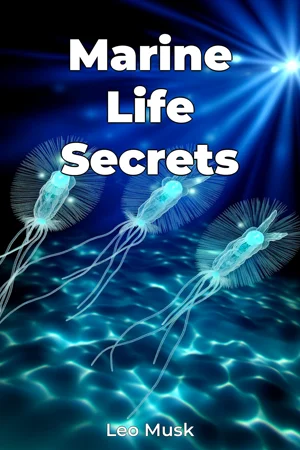
About This Book
"Marine Life Secrets" uncovers how microscopic marine organisms shape Earth's fundamental biological and chemical processes, presenting a detailed examination of the ocean's smallest yet most influential inhabitants. The book challenges common assumptions about marine ecosystem drivers by demonstrating how creatures under one millimeter in size control major oceanic functions. The text systematically explores three core themes: the role of microorganisms in marine food webs, their impact on global climate regulation, and their potential applications in biotechnology. These topics interconnect to reveal how tiny marine life forms influence everything from fish populations to weather patterns. Drawing from recent deep-sea research and advanced microscopy studies, the book presents evidence gathered through autonomous underwater vehicles and genetic sequencing technologies. Scientists' discoveries from the past decade reveal previously unknown relationships between marine microorganisms and larger ecosystem processes. The work is structured in three main sections. The first examines how marine microbes form the foundation of ocean food webs, processing nearly 50% of Earth's carbon dioxide through photosynthesis. The second section analyzes their role in cloud formation through the production of dimethyl sulfide, demonstrating direct links between ocean chemistry and atmospheric conditions. The final section explores emerging applications in medicine and environmental restoration. Research evidence includes data from long-term ocean monitoring stations, satellite observations, and laboratory studies from marine research institutions worldwide. The book incorporates findings from the Tara Oceans Expedition and the Census of Marine Life project, providing comprehensive sampling data from various ocean depths and regions. The content connects biology with chemistry, climatology, and environmental science, demonstrating how marine microbial processes influence global systems. These connections help readers understand complex oceanic mechanisms through multiple scientific lenses. Written in an analytical style that balances technical accuracy with accessibility, the book uses clear explanations and specific examples to convey complex concepts. Each chapter builds upon previous information, creating a coherent narrative of marine microbial influence. The target audience includes marine biology students, environmental scientists, and informed general readers interested in ocean sciences. The book serves as both an academic resource and an informative text for those seeking to understand marine ecosystem dynamics. The work acknowledges current debates in marine science, including discussions about the extent of microbial influence on climate change and the potential risks of marine biotechnology applications. It presents various scientific viewpoints while maintaining focus on verified research data. Practical applications discussed include biofuel development from marine microorganisms, pharmaceutical compounds derived from marine bacteria, and potential solutions for ocean pollution through microbial remediation. The book also explores how understanding marine microbes can improve aquaculture practices and help predict environmental changes. Limitations are clearly stated, noting that many deep-ocean microorganisms remain unstudied, and some biochemical processes are not fully understood. The text maintains scientific rigor while acknowledging areas requiring further research. The book differentiates itself through its focus on the intersection of microscopic marine life and global environmental processes, providing readers with a comprehensive understanding of how small-scale biological activities influence large-scale Earth systems.
"Marine Life Secrets" uncovers how microscopic marine organisms shape Earth's fundamental biological and chemical processes, presenting a detailed examination of the ocean's smallest yet most influential inhabitants. The book challenges common assumptions about marine ecosystem drivers by demonstrating how creatures under one millimeter in size control major oceanic functions. The text systematically explores three core themes: the role of microorganisms in marine food webs, their impact on global climate regulation, and their potential applications in biotechnology. These topics interconnect to reveal how tiny marine life forms influence everything from fish populations to weather patterns. Drawing from recent deep-sea research and advanced microscopy studies, the book presents evidence gathered through autonomous underwater vehicles and genetic sequencing technologies. Scientists' discoveries from the past decade reveal previously unknown relationships between marine microorganisms and larger ecosystem processes. The work is structured in three main sections. The first examines how marine microbes form the foundation of ocean food webs, processing nearly 50% of Earth's carbon dioxide through photosynthesis. The second section analyzes their role in cloud formation through the production of dimethyl sulfide, demonstrating direct links between ocean chemistry and atmospheric conditions. The final section explores emerging applications in medicine and environmental restoration. Research evidence includes data from long-term ocean monitoring stations, satellite observations, and laboratory studies from marine research institutions worldwide. The book incorporates findings from the Tara Oceans Expedition and the Census of Marine Life project, providing comprehensive sampling data from various ocean depths and regions. The content connects biology with chemistry, climatology, and environmental science, demonstrating how marine microbial processes influence global systems. These connections help readers understand complex oceanic mechanisms through multiple scientific lenses. Written in an analytical style that balances technical accuracy with accessibility, the book uses clear explanations and specific examples to convey complex concepts. Each chapter builds upon previous information, creating a coherent narrative of marine microbial influence. The target audience includes marine biology students, environmental scientists, and informed general readers interested in ocean sciences. The book serves as both an academic resource and an informative text for those seeking to understand marine ecosystem dynamics. The work acknowledges current debates in marine science, including discussions about the extent of microbial influence on climate change and the potential risks of marine biotechnology applications. It presents various scientific viewpoints while maintaining focus on verified research data. Practical applications discussed include biofuel development from marine microorganisms, pharmaceutical compounds derived from marine bacteria, and potential solutions for ocean pollution through microbial remediation. The book also explores how understanding marine microbes can improve aquaculture practices and help predict environmental changes. Limitations are clearly stated, noting that many deep-ocean microorganisms remain unstudied, and some biochemical processes are not fully understood. The text maintains scientific rigor while acknowledging areas requiring further research. The book differentiates itself through its focus on the intersection of microscopic marine life and global environmental processes, providing readers with a comprehensive understanding of how small-scale biological activities influence large-scale Earth systems.
"Marine Life Secrets" reveals the extraordinary impact of microscopic marine organisms on Earth's most crucial biological and chemical processes. This comprehensive exploration challenges our understanding of ocean ecosystems by demonstrating how creatures smaller than one millimeter orchestrate everything from global climate patterns to the health of marine food webs. Through cutting-edge research gathered from autonomous underwater vehicles and genetic sequencing, the book illuminates the hidden world of marine microorganisms that process nearly half of Earth's carbon dioxide. The book progresses logically through three main sections, beginning with an examination of how marine microbes form the backbone of ocean food webs. It then delves into their surprising role in climate regulation through cloud formation, before exploring their promising applications in biotechnology and environmental restoration. Drawing from landmark studies like the Tara Oceans Expedition and the Census of Marine Life project, the text weaves together findings from various depths and regions of the world's oceans. Written in an accessible yet scientifically rigorous style, the book bridges multiple disciplines, from biology to climatology, helping readers understand complex oceanic mechanisms through clear explanations and specific examples. It stands out for its unique focus on the intersection between microscopic marine life and global environmental processes, making it invaluable for both students and general readers interested in understanding how the ocean's smallest inhabitants influence Earth's largest systems.
Book Details
ISBN
9788233937645
Publisher
Publifye AS
Your Licenses
You don't own any licenses for this book
Purchase a license below to unlock this book and download the EPUB.
Purchase License
Select a tier to unlock this book
Need bulk licensing?
Contact us for enterprise agreements.