
About This Book
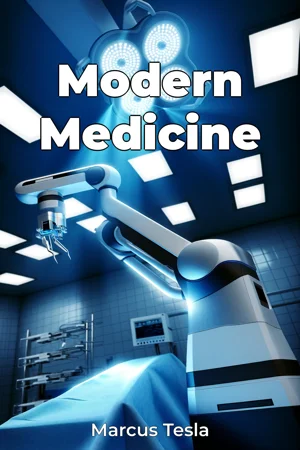
"Modern Medicine" examines how technological breakthroughs and scientific discoveries are transforming healthcare delivery and patient outcomes in the 21st century. The book presents a comprehensive analysis of recent medical innovations, their implementation, and their impact on both healthcare providers and patients. The narrative begins by exploring three pivotal areas: artificial intelligence in diagnostics, personalized medicine through genomics, and minimally invasive robotic surgery. These advancements represent the convergence of traditional medical practice with cutting-edge technology, fundamentally altering how diseases are diagnosed, treated, and managed. The book provides essential historical context, tracing the evolution of medical technology from basic diagnostic tools to today's sophisticated systems. It establishes how current innovations build upon decades of research and development, while explaining the basic principles of data science, genetics, and robotics that readers need to understand modern medical capabilities. Central to the book's argument is the assertion that healthcare is entering a new era where technology enables more precise, personalized, and preventive care. This shift from reactive to proactive medicine is supported by extensive research data from leading medical institutions and technology companies, including clinical trials, patient outcome studies, and cost-benefit analyses. The content is structured in three main sections. The first examines diagnostic technologies, focusing on AI-powered imaging systems and machine learning algorithms that detect patterns in patient data. The second explores therapeutic innovations, including targeted drug delivery systems and gene therapy. The final section addresses the integration of these technologies into healthcare systems, considering practical implementation challenges and solutions. Research evidence is drawn from peer-reviewed medical journals, hospital implementation studies, and interviews with leading healthcare professionals. The book incorporates case studies from major medical centers that have successfully adopted these innovations, providing real-world examples of their impact. The work connects medicine with computer science, engineering, and data analytics, demonstrating how interdisciplinary collaboration drives medical innovation. It examines the economic implications of these advances, considering both healthcare costs and potential savings through improved efficiency and outcomes. Written in a clear, methodical style that balances technical detail with accessibility, the book maintains an academic approach while ensuring complex concepts are understandable to educated general readers. It is particularly relevant for healthcare professionals, hospital administrators, medical students, and informed patients interested in the future of healthcare. The book addresses current debates about technology's role in medicine, including concerns about data privacy, algorithmic bias in medical AI, and the changing doctor-patient relationship. It presents balanced views on these issues while acknowledging both the potential and limitations of new technologies. Within the medical and scientific genres, the book adheres to conventional standards of evidence-based discussion while incorporating elements of technological innovation. It focuses on developments that have achieved clinical validation, avoiding speculation about unproven technologies. The scope encompasses current innovations with proven clinical applications, intentionally excluding experimental technologies that haven't yet demonstrated practical value. This approach ensures readers gain actionable insights rather than theoretical possibilities. The book concludes by examining how these innovations are being implemented in various healthcare settings, providing guidance for institutions and practitioners looking to adopt new technologies while maintaining high standards of patient care.
"Modern Medicine" examines how technological breakthroughs and scientific discoveries are transforming healthcare delivery and patient outcomes in the 21st century. The book presents a comprehensive analysis of recent medical innovations, their implementation, and their impact on both healthcare providers and patients. The narrative begins by exploring three pivotal areas: artificial intelligence in diagnostics, personalized medicine through genomics, and minimally invasive robotic surgery. These advancements represent the convergence of traditional medical practice with cutting-edge technology, fundamentally altering how diseases are diagnosed, treated, and managed. The book provides essential historical context, tracing the evolution of medical technology from basic diagnostic tools to today's sophisticated systems. It establishes how current innovations build upon decades of research and development, while explaining the basic principles of data science, genetics, and robotics that readers need to understand modern medical capabilities. Central to the book's argument is the assertion that healthcare is entering a new era where technology enables more precise, personalized, and preventive care. This shift from reactive to proactive medicine is supported by extensive research data from leading medical institutions and technology companies, including clinical trials, patient outcome studies, and cost-benefit analyses. The content is structured in three main sections. The first examines diagnostic technologies, focusing on AI-powered imaging systems and machine learning algorithms that detect patterns in patient data. The second explores therapeutic innovations, including targeted drug delivery systems and gene therapy. The final section addresses the integration of these technologies into healthcare systems, considering practical implementation challenges and solutions. Research evidence is drawn from peer-reviewed medical journals, hospital implementation studies, and interviews with leading healthcare professionals. The book incorporates case studies from major medical centers that have successfully adopted these innovations, providing real-world examples of their impact. The work connects medicine with computer science, engineering, and data analytics, demonstrating how interdisciplinary collaboration drives medical innovation. It examines the economic implications of these advances, considering both healthcare costs and potential savings through improved efficiency and outcomes. Written in a clear, methodical style that balances technical detail with accessibility, the book maintains an academic approach while ensuring complex concepts are understandable to educated general readers. It is particularly relevant for healthcare professionals, hospital administrators, medical students, and informed patients interested in the future of healthcare. The book addresses current debates about technology's role in medicine, including concerns about data privacy, algorithmic bias in medical AI, and the changing doctor-patient relationship. It presents balanced views on these issues while acknowledging both the potential and limitations of new technologies. Within the medical and scientific genres, the book adheres to conventional standards of evidence-based discussion while incorporating elements of technological innovation. It focuses on developments that have achieved clinical validation, avoiding speculation about unproven technologies. The scope encompasses current innovations with proven clinical applications, intentionally excluding experimental technologies that haven't yet demonstrated practical value. This approach ensures readers gain actionable insights rather than theoretical possibilities. The book concludes by examining how these innovations are being implemented in various healthcare settings, providing guidance for institutions and practitioners looking to adopt new technologies while maintaining high standards of patient care.
"Modern Medicine" offers a comprehensive exploration of how technological innovations are revolutionizing healthcare in the 21st century, focusing on three transformative areas: AI-powered diagnostics, personalized genomic medicine, and robotic surgery. This timely examination reveals how the convergence of traditional medical practice with cutting-edge technology is shifting healthcare from reactive to proactive approaches, fundamentally changing how we diagnose, treat, and manage diseases. The book expertly guides readers through three main sections, beginning with an analysis of diagnostic technologies, particularly AI-powered imaging systems and machine learning algorithms. It then delves into therapeutic innovations like targeted drug delivery and gene therapy, before addressing the practical challenges of integrating these technologies into existing healthcare systems. Supporting evidence comes from peer-reviewed research, hospital implementation studies, and real-world case studies from leading medical institutions. What sets this work apart is its balanced approach to discussing both the potential and limitations of medical technology, including important considerations about data privacy and algorithmic bias in medical AI. Written in clear, accessible language while maintaining academic rigor, the book serves as an essential resource for healthcare professionals, administrators, and informed patients interested in understanding how innovations in medical technology, artificial intelligence, and genomics are shaping the future of healthcare delivery and patient outcomes.
Book Details
ISBN
9788233937584
Publisher
Publifye AS
Your Licenses
You don't own any licenses for this book
Purchase a license below to unlock this book and download the EPUB.
Purchase License
Select a tier to unlock this book
Need bulk licensing?
Contact us for enterprise agreements.