
About This Book
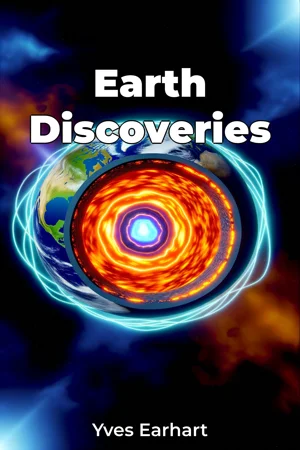
"Earth Discoveries" reveals recent scientific findings that challenge and expand our understanding of the planet we inhabit. The book examines how technological advances in the 21st century have led to fundamental shifts in our knowledge of Earth's systems, from its deep interior to its atmospheric boundaries. The work focuses on three primary areas of discovery: the dynamic interactions between Earth's core and magnetic field, previously unknown oceanic processes affecting global climate, and newly identified patterns in crustal plate behavior. These interconnected topics provide crucial insights into both Earth's current state and its potential future conditions. Drawing from recent research conducted between 2010-2023, the book synthesizes data from satellite observations, deep-sea monitoring stations, and advanced seismic networks. This comprehensive approach combines findings from multiple scientific disciplines, including geology, oceanography, atmospheric sciences, and physics, to present a cohesive picture of Earth's operations as an integrated system. The central thesis demonstrates how these new discoveries reveal Earth as a more dynamic and responsive system than previously understood. The book systematically builds this argument through four main sections: fundamental planetary processes, recent technological breakthroughs in Earth observation, key findings that have revised scientific models, and implications for future Earth science research. The evidence presented includes data from the European Space Agency's Swarm satellite constellation, findings from the International Ocean Discovery Program, and results from the Global Seismographic Network. These sources provide readers with current, peer-reviewed scientific information while explaining how each discovery method works. The book connects Earth sciences to climate studies, engineering challenges, and resource management, demonstrating how understanding planetary processes affects multiple sectors of human activity. It maintains an accessible technical level while providing sufficient detail for readers with basic scientific knowledge to grasp complex concepts. The writing employs a structured approach, moving from established principles to new findings, using clear explanations and relevant examples. Technical terms are carefully introduced and explained, making the content accessible to both general science readers and specialists in related fields. The target audience includes science educators, university students, and informed general readers interested in Earth sciences. The book serves as both a current reference for recent discoveries and a framework for understanding future developments in Earth science research. Specific attention is given to areas where scientific consensus is still developing, such as the precise mechanisms of core-mantle interaction and their effects on surface phenomena. The book presents multiple viewpoints on contested topics while clearly distinguishing between established facts and emerging theories. The scope encompasses the past decade of Earth science discoveries while acknowledging that many findings are part of ongoing research programs. It provides practical context for these discoveries, explaining their relevance to natural hazard assessment, resource exploration, and environmental protection. The work concludes by examining how these new understandings of Earth's systems influence approaches to climate change, natural resource management, and hazard mitigation. It provides readers with a foundation for evaluating future Earth science developments and their implications for human society. Throughout, the book maintains a focus on verifiable scientific findings rather than speculation, presenting a measured, evidence-based examination of our evolving understanding of Earth's systems and their interconnections.
"Earth Discoveries" reveals recent scientific findings that challenge and expand our understanding of the planet we inhabit. The book examines how technological advances in the 21st century have led to fundamental shifts in our knowledge of Earth's systems, from its deep interior to its atmospheric boundaries. The work focuses on three primary areas of discovery: the dynamic interactions between Earth's core and magnetic field, previously unknown oceanic processes affecting global climate, and newly identified patterns in crustal plate behavior. These interconnected topics provide crucial insights into both Earth's current state and its potential future conditions. Drawing from recent research conducted between 2010-2023, the book synthesizes data from satellite observations, deep-sea monitoring stations, and advanced seismic networks. This comprehensive approach combines findings from multiple scientific disciplines, including geology, oceanography, atmospheric sciences, and physics, to present a cohesive picture of Earth's operations as an integrated system. The central thesis demonstrates how these new discoveries reveal Earth as a more dynamic and responsive system than previously understood. The book systematically builds this argument through four main sections: fundamental planetary processes, recent technological breakthroughs in Earth observation, key findings that have revised scientific models, and implications for future Earth science research. The evidence presented includes data from the European Space Agency's Swarm satellite constellation, findings from the International Ocean Discovery Program, and results from the Global Seismographic Network. These sources provide readers with current, peer-reviewed scientific information while explaining how each discovery method works. The book connects Earth sciences to climate studies, engineering challenges, and resource management, demonstrating how understanding planetary processes affects multiple sectors of human activity. It maintains an accessible technical level while providing sufficient detail for readers with basic scientific knowledge to grasp complex concepts. The writing employs a structured approach, moving from established principles to new findings, using clear explanations and relevant examples. Technical terms are carefully introduced and explained, making the content accessible to both general science readers and specialists in related fields. The target audience includes science educators, university students, and informed general readers interested in Earth sciences. The book serves as both a current reference for recent discoveries and a framework for understanding future developments in Earth science research. Specific attention is given to areas where scientific consensus is still developing, such as the precise mechanisms of core-mantle interaction and their effects on surface phenomena. The book presents multiple viewpoints on contested topics while clearly distinguishing between established facts and emerging theories. The scope encompasses the past decade of Earth science discoveries while acknowledging that many findings are part of ongoing research programs. It provides practical context for these discoveries, explaining their relevance to natural hazard assessment, resource exploration, and environmental protection. The work concludes by examining how these new understandings of Earth's systems influence approaches to climate change, natural resource management, and hazard mitigation. It provides readers with a foundation for evaluating future Earth science developments and their implications for human society. Throughout, the book maintains a focus on verifiable scientific findings rather than speculation, presenting a measured, evidence-based examination of our evolving understanding of Earth's systems and their interconnections.
"Earth Discoveries" presents a groundbreaking exploration of our planet's most recent scientific revelations, showcasing how modern technology has transformed our understanding of Earth's complex systems. The book expertly weaves together findings from 2010-2023, focusing on three critical areas: the intricate relationship between Earth's core and magnetic field, newly discovered oceanic processes affecting global climate, and emerging patterns in crustal plate behavior. Through a methodical progression across four main sections, the book builds from fundamental planetary processes to cutting-edge technological breakthroughs in Earth observation. It draws upon impressive data sources, including the European Space Agency's Swarm satellite constellation and the International Ocean Discovery Program, to paint a picture of Earth as a far more dynamic and responsive system than previously understood. The integration of multiple scientific disciplines - from geology to physics - provides readers with a comprehensive view of how our planet functions as an interconnected system. The book strikes an excellent balance between technical depth and accessibility, making complex concepts understandable for both general science readers and specialists. It carefully addresses evolving scientific consensuses, particularly in areas like core-mantle interaction, while maintaining a strong foundation in verifiable evidence. By connecting these discoveries to practical applications in climate studies, resource management, and hazard mitigation, it offers valuable insights for anyone interested in understanding Earth's systems and their impact on human society.
Book Details
ISBN
9788233937508
Publisher
Publifye AS
Your Licenses
You don't own any licenses for this book
Purchase a license below to unlock this book and download the EPUB.
Purchase License
Select a tier to unlock this book
Need bulk licensing?
Contact us for enterprise agreements.