
About This Book
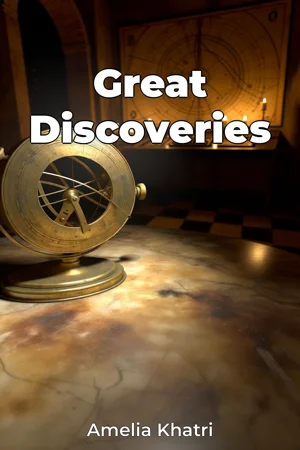
"Great Discoveries" examines pivotal scientific and technological breakthroughs throughout history and their lasting impact on contemporary society, offering readers a comprehensive analysis of how past innovations continue to shape our modern world. The book presents three fundamental themes: the nature of scientific discovery, the social conditions that foster innovation, and the ripple effects of breakthroughs across generations. Through careful examination of primary sources, archaeological evidence, and historical records, it traces the development of human knowledge from ancient civilizations to the present day. The narrative begins with the earliest tools and mathematical concepts developed in Mesopotamia and Egypt, demonstrating how these fundamental discoveries laid the groundwork for subsequent innovations. The book then explores major historical periods of accelerated discovery, including the Classical Era, the Islamic Golden Age, the Renaissance, and the Industrial Revolution, examining how each period built upon previous knowledge to advance human understanding. Central to the book's thesis is the concept that discoveries rarely occur in isolation. Instead, they emerge from complex networks of knowledge exchange, cultural interactions, and technological prerequisites. This interconnected view of scientific progress helps readers understand why certain discoveries happened when and where they did, and what conditions were necessary for their development. The content is structured chronologically but also thematically, with separate sections dedicated to mathematics, physics, chemistry, biology, and technology. Each section demonstrates how discoveries in one field often catalyzed advances in others. For example, the development of the microscope led to breakthroughs in both biology and materials science. The research draws from archaeological findings, historical documents, scientific papers, and contemporary analyses. The book includes detailed case studies of specific discoveries, examining both the technical aspects and the human stories behind them. This approach provides readers with both factual knowledge and contextual understanding. The work makes important connections between scientific history and other disciplines, including economics, philosophy, and social studies. These interdisciplinary links help explain how discoveries influenced and were influenced by broader societal changes. The writing maintains an analytical tone while remaining accessible to general readers with basic scientific literacy. Technical concepts are explained clearly, with supporting diagrams and illustrations where necessary. The target audience includes students, educators, and anyone interested in understanding how scientific progress shapes society. The book addresses ongoing debates about the nature of discovery itself, including questions about independent invention, the role of chance versus methodical research, and the influence of societal factors on scientific progress. It examines competing theories and interpretations of historical events, presenting evidence for various viewpoints. Practical applications of historical knowledge are emphasized throughout, showing how understanding past discoveries can inform current research methods and innovation strategies. The book demonstrates how historical patterns of discovery continue to influence modern research and development processes. The scope encompasses major discoveries across multiple continents and cultures, challenging traditional Eurocentric narratives of scientific progress. However, it acknowledges limitations in historical records and potential gaps in our understanding of ancient discoveries. This work is particularly relevant for readers seeking to understand how scientific and technological progress occurs, and how past discoveries continue to influence contemporary innovation. It provides valuable insights for researchers, innovators, and policy makers working to foster scientific advancement in the present day.
"Great Discoveries" examines pivotal scientific and technological breakthroughs throughout history and their lasting impact on contemporary society, offering readers a comprehensive analysis of how past innovations continue to shape our modern world. The book presents three fundamental themes: the nature of scientific discovery, the social conditions that foster innovation, and the ripple effects of breakthroughs across generations. Through careful examination of primary sources, archaeological evidence, and historical records, it traces the development of human knowledge from ancient civilizations to the present day. The narrative begins with the earliest tools and mathematical concepts developed in Mesopotamia and Egypt, demonstrating how these fundamental discoveries laid the groundwork for subsequent innovations. The book then explores major historical periods of accelerated discovery, including the Classical Era, the Islamic Golden Age, the Renaissance, and the Industrial Revolution, examining how each period built upon previous knowledge to advance human understanding. Central to the book's thesis is the concept that discoveries rarely occur in isolation. Instead, they emerge from complex networks of knowledge exchange, cultural interactions, and technological prerequisites. This interconnected view of scientific progress helps readers understand why certain discoveries happened when and where they did, and what conditions were necessary for their development. The content is structured chronologically but also thematically, with separate sections dedicated to mathematics, physics, chemistry, biology, and technology. Each section demonstrates how discoveries in one field often catalyzed advances in others. For example, the development of the microscope led to breakthroughs in both biology and materials science. The research draws from archaeological findings, historical documents, scientific papers, and contemporary analyses. The book includes detailed case studies of specific discoveries, examining both the technical aspects and the human stories behind them. This approach provides readers with both factual knowledge and contextual understanding. The work makes important connections between scientific history and other disciplines, including economics, philosophy, and social studies. These interdisciplinary links help explain how discoveries influenced and were influenced by broader societal changes. The writing maintains an analytical tone while remaining accessible to general readers with basic scientific literacy. Technical concepts are explained clearly, with supporting diagrams and illustrations where necessary. The target audience includes students, educators, and anyone interested in understanding how scientific progress shapes society. The book addresses ongoing debates about the nature of discovery itself, including questions about independent invention, the role of chance versus methodical research, and the influence of societal factors on scientific progress. It examines competing theories and interpretations of historical events, presenting evidence for various viewpoints. Practical applications of historical knowledge are emphasized throughout, showing how understanding past discoveries can inform current research methods and innovation strategies. The book demonstrates how historical patterns of discovery continue to influence modern research and development processes. The scope encompasses major discoveries across multiple continents and cultures, challenging traditional Eurocentric narratives of scientific progress. However, it acknowledges limitations in historical records and potential gaps in our understanding of ancient discoveries. This work is particularly relevant for readers seeking to understand how scientific and technological progress occurs, and how past discoveries continue to influence contemporary innovation. It provides valuable insights for researchers, innovators, and policy makers working to foster scientific advancement in the present day.
"Great Discoveries" offers a fascinating exploration of humanity's most significant scientific and technological breakthroughs, weaving together the complex tapestry of innovation across civilizations and centuries. The book uniquely demonstrates how discoveries emerge not in isolation, but through intricate networks of knowledge exchange and cultural interactions, from the fundamental tools of Mesopotamia to modern technological advances. Through careful analysis of archaeological evidence and historical records, it reveals how each era of discovery built upon previous achievements, creating a continuous chain of human progress. The narrative skillfully balances chronological progression with thematic organization, examining developments across mathematics, physics, chemistry, biology, and technology. By exploring pivotal periods like the Islamic Golden Age and the Renaissance, the book illuminates how social conditions and cultural exchange fostered innovation. Particularly compelling is its examination of how seemingly unrelated discoveries, such as the microscope's development, catalyzed breakthroughs across multiple scientific disciplines. Breaking from traditional Eurocentric perspectives, the work presents a global view of scientific progress, incorporating discoveries from diverse cultures and continents. The book's accessible approach combines technical accuracy with engaging human stories, making complex concepts understandable while maintaining scholarly rigor. Through detailed case studies and interdisciplinary analysis, readers gain valuable insights into how past innovations continue to influence modern research methods and technological development, making this work particularly relevant for anyone interested in understanding the evolution of human knowledge.
Book Details
ISBN
9788233937461
Publisher
Publifye AS
Your Licenses
You don't own any licenses for this book
Purchase a license below to unlock this book and download the EPUB.
Purchase License
Select a tier to unlock this book
Need bulk licensing?
Contact us for enterprise agreements.