
About This Book
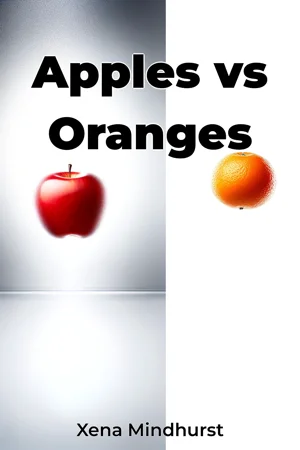
"Apples vs Oranges" explores the common saying "you can't compare apples to oranges" and challenges its validity as a cognitive framework for decision-making and problem-solving across various life situations. The book examines how this seemingly simple phrase has shaped our approach to comparing dissimilar items, ideas, and scenarios, often limiting our ability to make effective assessments and decisions. The book presents three core concepts: comparative analysis frameworks, cognitive biases in decision-making, and adaptive thinking strategies. These elements form the foundation for understanding how humans naturally make comparisons and why we often struggle with comparing seemingly different items or situations. Drawing from cognitive psychology research spanning the past four decades, the text demonstrates how our brain processes comparisons and what mechanisms influence our judgment. The central thesis argues that comparing dissimilar items is not only possible but essential for innovation, problem-solving, and personal growth. The author presents evidence from cognitive science, organizational behavior, and decision theory to support this position. The book's structure progresses from theoretical foundations to practical applications, divided into three main sections: understanding comparative thinking, developing comparative frameworks, and implementing adaptive comparison strategies. Research evidence includes case studies from Fortune 500 companies, cognitive psychology experiments, and cross-cultural studies on decision-making patterns. The methodology combines quantitative data analysis with qualitative research, featuring interviews with experts in fields ranging from business management to educational psychology. The book connects multiple disciplines, linking cognitive psychology with organizational behavior and educational theory. These connections demonstrate how comparative thinking influences various aspects of professional and personal life, from business decisions to educational methods and interpersonal relationships. The writing maintains a professional yet accessible tone, using clear language and practical examples to illustrate complex concepts. It's structured to appeal to both general readers interested in self-improvement and professionals seeking to enhance their decision-making capabilities. Practical applications focus on developing systematic approaches to comparing disparate elements, including: - A six-step framework for analyzing seemingly incomparable situations - Tools for identifying hidden similarities in distinct scenarios - Methods for overcoming cognitive biases that limit comparative thinking The book addresses ongoing debates in cognitive psychology about the nature of comparison and decision-making, particularly challenging traditional views about the limitations of cross-domain analysis. It acknowledges current controversies regarding the role of intuition versus structured analysis in decision-making. The target audience includes business professionals, educators, and individuals interested in improving their analytical and decision-making skills. The content is particularly relevant for those in positions requiring complex problem-solving and strategic thinking. Within the self-help and psychology genres, the book maintains scientific rigor while providing actionable insights. It focuses on evidence-based strategies rather than anecdotal advice, supporting each recommendation with research findings and theoretical frameworks. The scope encompasses both personal and professional applications, though it primarily emphasizes cognitive processes and practical implementation rather than theoretical abstractions. The book acknowledges its limitations, particularly in areas where current research is ongoing or inconclusive. Throughout the text, readers are provided with exercises, assessment tools, and real-world examples to help them apply the concepts in various situations, from business decisions to personal relationships and educational contexts.
"Apples vs Oranges" explores the common saying "you can't compare apples to oranges" and challenges its validity as a cognitive framework for decision-making and problem-solving across various life situations. The book examines how this seemingly simple phrase has shaped our approach to comparing dissimilar items, ideas, and scenarios, often limiting our ability to make effective assessments and decisions. The book presents three core concepts: comparative analysis frameworks, cognitive biases in decision-making, and adaptive thinking strategies. These elements form the foundation for understanding how humans naturally make comparisons and why we often struggle with comparing seemingly different items or situations. Drawing from cognitive psychology research spanning the past four decades, the text demonstrates how our brain processes comparisons and what mechanisms influence our judgment. The central thesis argues that comparing dissimilar items is not only possible but essential for innovation, problem-solving, and personal growth. The author presents evidence from cognitive science, organizational behavior, and decision theory to support this position. The book's structure progresses from theoretical foundations to practical applications, divided into three main sections: understanding comparative thinking, developing comparative frameworks, and implementing adaptive comparison strategies. Research evidence includes case studies from Fortune 500 companies, cognitive psychology experiments, and cross-cultural studies on decision-making patterns. The methodology combines quantitative data analysis with qualitative research, featuring interviews with experts in fields ranging from business management to educational psychology. The book connects multiple disciplines, linking cognitive psychology with organizational behavior and educational theory. These connections demonstrate how comparative thinking influences various aspects of professional and personal life, from business decisions to educational methods and interpersonal relationships. The writing maintains a professional yet accessible tone, using clear language and practical examples to illustrate complex concepts. It's structured to appeal to both general readers interested in self-improvement and professionals seeking to enhance their decision-making capabilities. Practical applications focus on developing systematic approaches to comparing disparate elements, including: - A six-step framework for analyzing seemingly incomparable situations - Tools for identifying hidden similarities in distinct scenarios - Methods for overcoming cognitive biases that limit comparative thinking The book addresses ongoing debates in cognitive psychology about the nature of comparison and decision-making, particularly challenging traditional views about the limitations of cross-domain analysis. It acknowledges current controversies regarding the role of intuition versus structured analysis in decision-making. The target audience includes business professionals, educators, and individuals interested in improving their analytical and decision-making skills. The content is particularly relevant for those in positions requiring complex problem-solving and strategic thinking. Within the self-help and psychology genres, the book maintains scientific rigor while providing actionable insights. It focuses on evidence-based strategies rather than anecdotal advice, supporting each recommendation with research findings and theoretical frameworks. The scope encompasses both personal and professional applications, though it primarily emphasizes cognitive processes and practical implementation rather than theoretical abstractions. The book acknowledges its limitations, particularly in areas where current research is ongoing or inconclusive. Throughout the text, readers are provided with exercises, assessment tools, and real-world examples to help them apply the concepts in various situations, from business decisions to personal relationships and educational contexts.
"Apples vs Oranges" challenges the age-old saying about comparing dissimilar things, presenting a groundbreaking exploration of how we make decisions and solve problems through comparative analysis. Drawing from four decades of cognitive psychology research, the book dismantles the notion that comparing different items is impossible, instead demonstrating how such comparisons are crucial for innovation and personal growth. Through a blend of scientific research and practical applications, it reveals how our brains process comparisons and why we often struggle with comparing seemingly unrelated concepts. The book's three-part structure guides readers from theoretical foundations to practical implementation, introducing a six-step framework for analyzing disparate situations and tools for identifying hidden similarities. Notable insights include how cognitive biases influence our comparative thinking and the role of structured analysis in decision-making. The author masterfully connects findings from cognitive psychology, organizational behavior, and decision theory, supporting arguments with case studies from Fortune 500 companies and cross-cultural research. What sets this book apart is its evidence-based approach to improving analytical thinking skills, offering readers concrete tools while maintaining scientific rigor. Rather than relying on anecdotal advice, it presents practical exercises and assessment tools that help readers apply concepts across various life situations. The content particularly resonates with professionals and individuals seeking to enhance their problem-solving capabilities, bridging the gap between cognitive science and real-world applications in business, education, and personal relationships.
Book Details
ISBN
9788233937294
Publisher
Publifye AS
Your Licenses
You don't own any licenses for this book
Purchase a license below to unlock this book and download the EPUB.
Purchase License
Select a tier to unlock this book
Need bulk licensing?
Contact us for enterprise agreements.