
About This Book
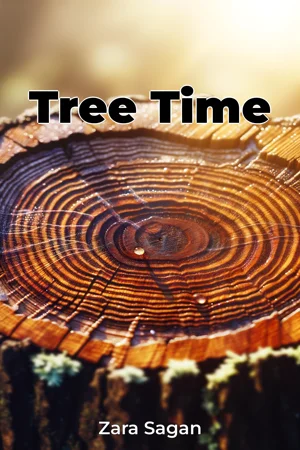
"Tree Time" explores the sophisticated temporal mechanisms that govern forest ecosystems, revealing how plants measure and respond to time across multiple scales, from daily cycles to seasonal changes and long-term environmental shifts. The book presents three core concepts: the cellular mechanisms of plant timekeeping, the interconnected temporal networks within forest communities, and the evolutionary development of botanical chronology. These topics help readers understand how forests function as complex, time-synchronized systems that maintain ecological balance through precise timing mechanisms. Drawing from recent botanical research and long-term forest studies, the work examines how trees use circadian rhythms, photoperiodism, and environmental cues to coordinate their growth, reproduction, and resource allocation. The text presents evidence from molecular biology, showing how trees possess internal clocks that regulate everything from leaf movement to growth hormone production. The central thesis argues that understanding forest timekeeping systems is crucial for predicting and managing ecosystem responses to climate change. This knowledge has direct implications for forest conservation, agriculture, and global carbon cycle management. The book's structure progresses from cellular-level timing mechanisms to ecosystem-wide temporal coordination. It begins with an examination of tree circadian rhythms, moves through seasonal adaptation processes, and culminates in exploring how entire forest communities synchronize their activities over years and decades. Research evidence includes data from dendrochronology, molecular biology studies, and long-term forest monitoring projects. The work incorporates findings from cutting-edge studies using time-lapse photography and genetic analysis to reveal previously unknown aspects of plant timing mechanisms. The text connects biology with climate science, evolution, and ecology, demonstrating how tree timing systems influence and respond to broader environmental patterns. These connections help explain forest resilience and adaptation capabilities while highlighting the vulnerability of these systems to rapid environmental changes. Written in an accessible academic style, the book uses clear explanations and specific examples to convey complex biological concepts. It maintains scientific accuracy while ensuring comprehension for readers with basic scientific knowledge. The target audience includes environmental scientists, botanists, forest managers, and informed general readers interested in plant biology and ecology. The book provides practical insights for forest conservation efforts and helps readers understand the impacts of climate change on forest ecosystems. The scope encompasses both temperate and tropical forests, examining timing mechanisms across diverse species and ecosystems. While focusing primarily on trees, it also addresses the temporal coordination between trees and other forest organisms. The work addresses current debates in forest ecology, including questions about how climate change affects plant timing systems and the potential for forests to adapt to rapid environmental changes. It presents various scientific perspectives on these issues while maintaining objective analysis of available evidence. Practical applications include improved forest management strategies, better timing of conservation efforts, and enhanced understanding of how human activities affect forest temporal systems. The book provides frameworks for predicting forest responses to environmental changes and developing more effective conservation strategies. The text remains focused on scientific evidence and research findings, avoiding sensationalism while presenting the complexity and significance of forest timing mechanisms. It acknowledges current limitations in scientific understanding while highlighting promising areas for future research.
"Tree Time" explores the sophisticated temporal mechanisms that govern forest ecosystems, revealing how plants measure and respond to time across multiple scales, from daily cycles to seasonal changes and long-term environmental shifts. The book presents three core concepts: the cellular mechanisms of plant timekeeping, the interconnected temporal networks within forest communities, and the evolutionary development of botanical chronology. These topics help readers understand how forests function as complex, time-synchronized systems that maintain ecological balance through precise timing mechanisms. Drawing from recent botanical research and long-term forest studies, the work examines how trees use circadian rhythms, photoperiodism, and environmental cues to coordinate their growth, reproduction, and resource allocation. The text presents evidence from molecular biology, showing how trees possess internal clocks that regulate everything from leaf movement to growth hormone production. The central thesis argues that understanding forest timekeeping systems is crucial for predicting and managing ecosystem responses to climate change. This knowledge has direct implications for forest conservation, agriculture, and global carbon cycle management. The book's structure progresses from cellular-level timing mechanisms to ecosystem-wide temporal coordination. It begins with an examination of tree circadian rhythms, moves through seasonal adaptation processes, and culminates in exploring how entire forest communities synchronize their activities over years and decades. Research evidence includes data from dendrochronology, molecular biology studies, and long-term forest monitoring projects. The work incorporates findings from cutting-edge studies using time-lapse photography and genetic analysis to reveal previously unknown aspects of plant timing mechanisms. The text connects biology with climate science, evolution, and ecology, demonstrating how tree timing systems influence and respond to broader environmental patterns. These connections help explain forest resilience and adaptation capabilities while highlighting the vulnerability of these systems to rapid environmental changes. Written in an accessible academic style, the book uses clear explanations and specific examples to convey complex biological concepts. It maintains scientific accuracy while ensuring comprehension for readers with basic scientific knowledge. The target audience includes environmental scientists, botanists, forest managers, and informed general readers interested in plant biology and ecology. The book provides practical insights for forest conservation efforts and helps readers understand the impacts of climate change on forest ecosystems. The scope encompasses both temperate and tropical forests, examining timing mechanisms across diverse species and ecosystems. While focusing primarily on trees, it also addresses the temporal coordination between trees and other forest organisms. The work addresses current debates in forest ecology, including questions about how climate change affects plant timing systems and the potential for forests to adapt to rapid environmental changes. It presents various scientific perspectives on these issues while maintaining objective analysis of available evidence. Practical applications include improved forest management strategies, better timing of conservation efforts, and enhanced understanding of how human activities affect forest temporal systems. The book provides frameworks for predicting forest responses to environmental changes and developing more effective conservation strategies. The text remains focused on scientific evidence and research findings, avoiding sensationalism while presenting the complexity and significance of forest timing mechanisms. It acknowledges current limitations in scientific understanding while highlighting promising areas for future research.
"Tree Time" offers a fascinating exploration of how forests operate as intricate timekeepers, from the cellular level to entire ecosystems. The book reveals the remarkable ways trees measure and respond to time, utilizing sophisticated mechanisms that govern everything from daily leaf movements to seasonal growth patterns. Through accessible scientific explanations, readers discover how trees possess internal clocks that orchestrate their biological processes and maintain crucial ecological balance. The text progresses logically from microscopic to macroscopic perspectives, beginning with cellular timekeeping mechanisms before expanding to forest-wide temporal networks. Drawing from dendrochronology, molecular biology, and long-term forest studies, it illuminates how trees synchronize their activities with both their environment and neighboring organisms. Particularly compelling is the examination of how forest communities coordinate their responses to seasonal changes and environmental shifts, demonstrating the complex interconnectedness of woodland ecosystems. This comprehensive work bridges the gap between plant biology and climate science, making it invaluable for both scientists and engaged general readers. The book's unique approach to explaining forest chronology provides essential insights into how these temporal systems influence forest resilience and adaptation capabilities. By understanding these sophisticated timing mechanisms, readers gain crucial knowledge about forest conservation and the potential impacts of climate change on these vital ecosystems. The author maintains scientific rigor while using clear examples and explanations to make complex biological concepts accessible to a broad audience.
Book Details
ISBN
9788233937133
Publisher
Publifye AS
Your Licenses
You don't own any licenses for this book
Purchase a license below to unlock this book and download the EPUB.
Purchase License
Select a tier to unlock this book
Need bulk licensing?
Contact us for enterprise agreements.