
About This Book
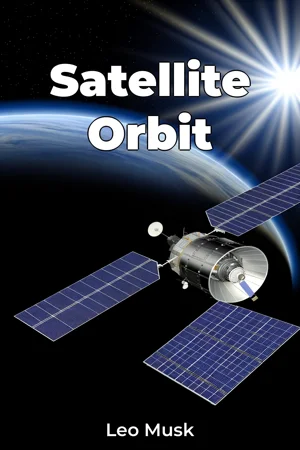
"Satellite Orbit" presents a comprehensive examination of artificial satellites and their fundamental role in modern technology and scientific advancement. The book opens with a crucial question that shapes our technological era: How have orbiting machines transformed our understanding of Earth and our capabilities in space? The work systematically explores three core areas: orbital mechanics and satellite positioning, practical applications of satellite technology, and the evolution of satellite systems from the first launches to current innovations. These topics form the foundation for understanding both the technical aspects of satellite operation and their practical impact on daily life. The book provides essential context beginning with the Soviet Union's launch of Sputnik 1 in 1957, tracking the development of satellite technology through the Space Race and into the current commercial space era. Readers are introduced to fundamental concepts in physics and orbital mechanics, building a framework for understanding more complex satellite operations. The central thesis maintains that satellites represent one of humanity's most transformative technological achievements, serving as critical infrastructure for modern civilization while continuously expanding our scientific knowledge. This argument is developed through detailed technical explanations and real-world applications. The content progresses from basic principles to advanced applications, structured in three main sections: 1) The Physics of Orbital Motion, 2) Satellite Systems and Operations, and 3) Applications in the Modern World. The book incorporates current research from space agencies, private aerospace companies, and academic institutions, using case studies and technical data to support its arguments. Mathematical models, orbital calculations, and real satellite tracking data provide empirical evidence for the book's technical discussions. The work connects physics, engineering, and practical applications, demonstrating how satellite technology integrates with fields such as meteorology, telecommunications, and navigation systems. The book employs a technical yet accessible approach, using clear explanations and visual aids to convey complex concepts. It is primarily written for engineering students, space industry professionals, and technically-minded readers interested in satellite technology and its applications. The work stands out through its integration of theoretical principles with practical applications, offering readers both the fundamental physics and real-world implementation of satellite systems. It addresses current developments in satellite miniaturization, debris management, and the increasing commercialization of space. The scope encompasses both geostationary and low-Earth orbit satellites, though it primarily focuses on civilian and commercial applications rather than military uses. The book provides practical insights for professionals working with satellite data, students studying aerospace engineering, and researchers in related fields. Current debates addressed include the management of increasing satellite congestion, the impact of mega-constellations on astronomy, and the sustainability of orbital space use. The book maintains objectivity while examining these challenges and potential solutions. This work serves as both a technical reference and an educational resource, reflecting current industry standards and practices while preparing readers for future developments in satellite technology. It fills a critical gap between theoretical physics texts and practical guides to satellite applications, offering a balanced perspective on this vital technology.
"Satellite Orbit" presents a comprehensive examination of artificial satellites and their fundamental role in modern technology and scientific advancement. The book opens with a crucial question that shapes our technological era: How have orbiting machines transformed our understanding of Earth and our capabilities in space? The work systematically explores three core areas: orbital mechanics and satellite positioning, practical applications of satellite technology, and the evolution of satellite systems from the first launches to current innovations. These topics form the foundation for understanding both the technical aspects of satellite operation and their practical impact on daily life. The book provides essential context beginning with the Soviet Union's launch of Sputnik 1 in 1957, tracking the development of satellite technology through the Space Race and into the current commercial space era. Readers are introduced to fundamental concepts in physics and orbital mechanics, building a framework for understanding more complex satellite operations. The central thesis maintains that satellites represent one of humanity's most transformative technological achievements, serving as critical infrastructure for modern civilization while continuously expanding our scientific knowledge. This argument is developed through detailed technical explanations and real-world applications. The content progresses from basic principles to advanced applications, structured in three main sections: 1) The Physics of Orbital Motion, 2) Satellite Systems and Operations, and 3) Applications in the Modern World. The book incorporates current research from space agencies, private aerospace companies, and academic institutions, using case studies and technical data to support its arguments. Mathematical models, orbital calculations, and real satellite tracking data provide empirical evidence for the book's technical discussions. The work connects physics, engineering, and practical applications, demonstrating how satellite technology integrates with fields such as meteorology, telecommunications, and navigation systems. The book employs a technical yet accessible approach, using clear explanations and visual aids to convey complex concepts. It is primarily written for engineering students, space industry professionals, and technically-minded readers interested in satellite technology and its applications. The work stands out through its integration of theoretical principles with practical applications, offering readers both the fundamental physics and real-world implementation of satellite systems. It addresses current developments in satellite miniaturization, debris management, and the increasing commercialization of space. The scope encompasses both geostationary and low-Earth orbit satellites, though it primarily focuses on civilian and commercial applications rather than military uses. The book provides practical insights for professionals working with satellite data, students studying aerospace engineering, and researchers in related fields. Current debates addressed include the management of increasing satellite congestion, the impact of mega-constellations on astronomy, and the sustainability of orbital space use. The book maintains objectivity while examining these challenges and potential solutions. This work serves as both a technical reference and an educational resource, reflecting current industry standards and practices while preparing readers for future developments in satellite technology. It fills a critical gap between theoretical physics texts and practical guides to satellite applications, offering a balanced perspective on this vital technology.
"Satellite Orbit" offers a comprehensive exploration of artificial satellites' pivotal role in modern civilization, tracing their evolution from Sputnik 1's launch in 1957 to today's advanced space technologies. The book masterfully bridges theoretical physics with practical applications, examining how these orbiting machines have revolutionized our understanding of Earth and expanded human capabilities in space. Through a careful blend of technical detail and accessible explanations, it demonstrates how orbital mechanics and satellite positioning have become fundamental to everyday technologies like telecommunications and navigation systems. The book progresses logically through three main sections, beginning with the fundamental physics of orbital motion, advancing to satellite systems and operations, and culminating in modern-world applications. Notable insights include the challenges of managing increasing satellite congestion and the impact of mega-constellations on astronomy. The text employs mathematical models and real satellite tracking data to illustrate complex concepts, making it particularly valuable for engineering students and space industry professionals while remaining accessible to technically-minded readers. What sets this work apart is its balanced approach to combining theoretical principles with practical applications, offering readers both the foundational physics and real-world implementation of satellite systems. The book addresses current developments in satellite miniaturization and debris management, while maintaining objectivity in discussing contemporary challenges facing the industry. This comprehensive treatment of orbital mechanics and satellite technology serves as both a technical reference and an educational resource, preparing readers for future developments in this rapidly evolving field.
Book Details
ISBN
9788233937072
Publisher
Publifye AS
Your Licenses
You don't own any licenses for this book
Purchase a license below to unlock this book and download the EPUB.
Purchase License
Select a tier to unlock this book
Need bulk licensing?
Contact us for enterprise agreements.