
About This Book
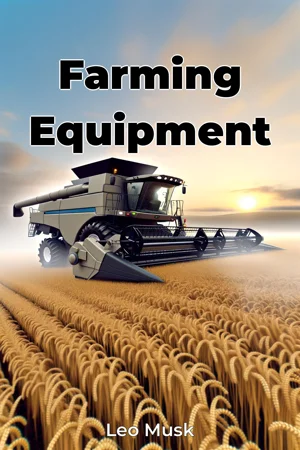
"Farming Equipment" presents a comprehensive examination of agricultural machinery and tools that have shaped modern farming practices across diverse global environments. The book opens by addressing a critical question: How has mechanization transformed agriculture from a labor-intensive endeavor into a highly efficient industry capable of feeding billions? The work systematically explores three main categories of farming equipment: soil preparation and planting machinery, harvesting equipment, and precision agriculture technologies. These core topics illuminate the technical evolution of farming while demonstrating how different regions adapt equipment to their specific agricultural needs. Beginning with historical context, the book traces the development of farming equipment from basic hand tools to contemporary autonomous systems. This progression provides readers with essential background on how mechanical innovation has consistently responded to agricultural challenges, from labor shortages to increasing food demand. The central thesis argues that understanding farming equipment is crucial for optimizing agricultural productivity while maintaining sustainability. This argument is particularly relevant as global food requirements continue to rise and environmental concerns become more pressing. Structured in three main sections, the book first examines traditional equipment categories including tractors, plows, seeders, and irrigation systems. The second section focuses on specialized equipment for different crop types and farming environments. The final section explores emerging technologies, including GPS-guided machinery, drone systems, and automated harvesting solutions. The research presents detailed technical specifications, performance data, and comparative analyses from agricultural research institutions worldwide. Case studies from diverse farming operations demonstrate real-world applications across various scales and conditions. The work connects engineering principles with agricultural science and environmental studies, while incorporating elements of economics and sustainability. These interdisciplinary links provide readers with a holistic understanding of modern farming systems. The book distinguishes itself through its practical approach, combining technical detail with operational insights. Each chapter includes maintenance guidelines, optimization strategies, and troubleshooting procedures for different equipment types. Written in a technical yet accessible style, the content balances detailed specifications with clear explanations suitable for both agricultural professionals and engineering students. Mathematical concepts and engineering principles are explained with practical examples and applications. The target audience includes agricultural engineers, farm managers, equipment operators, and agricultural technology students. The content serves both as an educational resource and a practical reference guide for working professionals. Following technical writing conventions, the book includes detailed diagrams, technical specifications, and operational procedures. Each chapter concludes with key considerations for equipment selection and implementation. While focusing primarily on currently available technology, the book also addresses experimental and prototype equipment being developed for future farming applications. It acknowledges regional variations in equipment usage while maintaining focus on widely applicable principles and practices. The work addresses ongoing debates regarding mechanization versus traditional farming methods, environmental impact of heavy machinery, and the role of automation in agriculture. It presents balanced perspectives on these issues while maintaining focus on technical accuracy and practical application. This book serves as both a comprehensive reference and a practical guide, enabling readers to make informed decisions about equipment selection, implementation, and optimization for various agricultural operations.
"Farming Equipment" presents a comprehensive examination of agricultural machinery and tools that have shaped modern farming practices across diverse global environments. The book opens by addressing a critical question: How has mechanization transformed agriculture from a labor-intensive endeavor into a highly efficient industry capable of feeding billions? The work systematically explores three main categories of farming equipment: soil preparation and planting machinery, harvesting equipment, and precision agriculture technologies. These core topics illuminate the technical evolution of farming while demonstrating how different regions adapt equipment to their specific agricultural needs. Beginning with historical context, the book traces the development of farming equipment from basic hand tools to contemporary autonomous systems. This progression provides readers with essential background on how mechanical innovation has consistently responded to agricultural challenges, from labor shortages to increasing food demand. The central thesis argues that understanding farming equipment is crucial for optimizing agricultural productivity while maintaining sustainability. This argument is particularly relevant as global food requirements continue to rise and environmental concerns become more pressing. Structured in three main sections, the book first examines traditional equipment categories including tractors, plows, seeders, and irrigation systems. The second section focuses on specialized equipment for different crop types and farming environments. The final section explores emerging technologies, including GPS-guided machinery, drone systems, and automated harvesting solutions. The research presents detailed technical specifications, performance data, and comparative analyses from agricultural research institutions worldwide. Case studies from diverse farming operations demonstrate real-world applications across various scales and conditions. The work connects engineering principles with agricultural science and environmental studies, while incorporating elements of economics and sustainability. These interdisciplinary links provide readers with a holistic understanding of modern farming systems. The book distinguishes itself through its practical approach, combining technical detail with operational insights. Each chapter includes maintenance guidelines, optimization strategies, and troubleshooting procedures for different equipment types. Written in a technical yet accessible style, the content balances detailed specifications with clear explanations suitable for both agricultural professionals and engineering students. Mathematical concepts and engineering principles are explained with practical examples and applications. The target audience includes agricultural engineers, farm managers, equipment operators, and agricultural technology students. The content serves both as an educational resource and a practical reference guide for working professionals. Following technical writing conventions, the book includes detailed diagrams, technical specifications, and operational procedures. Each chapter concludes with key considerations for equipment selection and implementation. While focusing primarily on currently available technology, the book also addresses experimental and prototype equipment being developed for future farming applications. It acknowledges regional variations in equipment usage while maintaining focus on widely applicable principles and practices. The work addresses ongoing debates regarding mechanization versus traditional farming methods, environmental impact of heavy machinery, and the role of automation in agriculture. It presents balanced perspectives on these issues while maintaining focus on technical accuracy and practical application. This book serves as both a comprehensive reference and a practical guide, enabling readers to make informed decisions about equipment selection, implementation, and optimization for various agricultural operations.
"Farming Equipment" delivers a thorough exploration of how agricultural machinery has revolutionized modern farming practices, tracing the evolution from simple hand tools to sophisticated autonomous systems. This comprehensive guide examines three fundamental categories: soil preparation and planting machinery, harvesting equipment, and precision agriculture technologies, demonstrating how mechanical innovation continues to address critical agricultural challenges across diverse global environments. The book uniquely bridges the gap between technical expertise and practical application, offering detailed specifications alongside real-world insights. Readers journey through traditional equipment fundamentals, including tractors and irrigation systems, before diving into specialized machinery for specific crop types and farming conditions. The final section explores cutting-edge developments in agricultural technology, such as GPS-guided machinery and automated harvesting solutions, providing a glimpse into farming's future while maintaining focus on current practical applications. Written for both agricultural professionals and engineering students, the content strikes an ideal balance between technical depth and accessibility. Through case studies from various farming operations worldwide, the book demonstrates how different regions adapt equipment to their specific needs. Each chapter includes practical maintenance guidelines and optimization strategies, making it an invaluable resource for anyone involved in modern agricultural operations, from farm managers to equipment operators.
Book Details
ISBN
9788233937027
Publisher
Publifye AS
Your Licenses
You don't own any licenses for this book
Purchase a license below to unlock this book and download the EPUB.
Purchase License
Select a tier to unlock this book
Need bulk licensing?
Contact us for enterprise agreements.