
About This Book
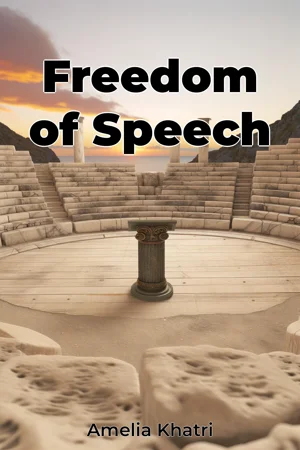
"Freedom of Speech: A Global History of Expression and Suppression" examines one of democracy's foundational principles through a comprehensive historical and contemporary lens. The book traces how the concept of free expression has evolved from ancient civilizations to our modern digital age, analyzing its impact on social progress and political development worldwide. The work explores three primary themes: the historical development of free speech as a legal and social concept, the varying interpretations and implementations across different political systems, and the current challenges facing freedom of expression in the digital era. These interconnected elements reveal how free speech has shaped human society and continues to influence global discourse. Beginning with Classical Athens and Roman Republic debates, the book establishes how early societies grappled with balancing open dialogue against social order. It progresses through pivotal moments including the invention of the printing press, the Enlightenment's impact on expression rights, and the American Constitution's First Amendment, demonstrating how each era contributed to modern free speech principles. The central argument posits that freedom of speech, while often presented as a universal value, has been consistently shaped by cultural, political, and technological contexts. The book provides evidence through extensive analysis of historical documents, court cases, and comparative studies of different nations' approaches to expression rights. The content is structured in three main sections: historical foundations, twentieth-century developments, and contemporary challenges. Key chapters examine the role of free speech in major social movements, wartime restrictions, and the emergence of international human rights frameworks. The narrative culminates in an analysis of modern challenges, including hate speech regulation, digital platform governance, and state surveillance. Research draws from primary sources including constitutional documents, court decisions, and government archives across multiple countries. The methodology combines legal analysis, historical research, and comparative political study to present a comprehensive view of how different societies have approached freedom of expression. The book connects political science, legal studies, and social history, demonstrating how free speech intersects with economic development, technological advancement, and social justice movements. This interdisciplinary approach provides readers with multiple frameworks for understanding expression rights. Written in an analytical style that balances academic rigor with accessibility, the work addresses both scholars and general readers interested in civil rights, democracy, and political history. The text maintains objectivity while examining various perspectives on free speech limitations and protections. The target audience includes policy makers, legal professionals, journalists, and citizens seeking to understand the complex history and current state of expression rights. The book provides practical insights for navigating contemporary debates about free speech in both professional and personal contexts. Current controversies addressed include social media content moderation, government surveillance, protest rights, and the balance between free expression and other social values. The book examines these issues through both historical precedent and modern legal frameworks. The work acknowledges its limitations, focusing primarily on political and legal aspects rather than philosophical or linguistic dimensions of free expression. It emphasizes documented historical events and established legal precedents while noting areas where scholarly debate continues. This comprehensive examination of freedom of speech provides readers with essential context for understanding current debates and participating in informed discussions about the future of expression rights in an increasingly connected world.
"Freedom of Speech: A Global History of Expression and Suppression" examines one of democracy's foundational principles through a comprehensive historical and contemporary lens. The book traces how the concept of free expression has evolved from ancient civilizations to our modern digital age, analyzing its impact on social progress and political development worldwide. The work explores three primary themes: the historical development of free speech as a legal and social concept, the varying interpretations and implementations across different political systems, and the current challenges facing freedom of expression in the digital era. These interconnected elements reveal how free speech has shaped human society and continues to influence global discourse. Beginning with Classical Athens and Roman Republic debates, the book establishes how early societies grappled with balancing open dialogue against social order. It progresses through pivotal moments including the invention of the printing press, the Enlightenment's impact on expression rights, and the American Constitution's First Amendment, demonstrating how each era contributed to modern free speech principles. The central argument posits that freedom of speech, while often presented as a universal value, has been consistently shaped by cultural, political, and technological contexts. The book provides evidence through extensive analysis of historical documents, court cases, and comparative studies of different nations' approaches to expression rights. The content is structured in three main sections: historical foundations, twentieth-century developments, and contemporary challenges. Key chapters examine the role of free speech in major social movements, wartime restrictions, and the emergence of international human rights frameworks. The narrative culminates in an analysis of modern challenges, including hate speech regulation, digital platform governance, and state surveillance. Research draws from primary sources including constitutional documents, court decisions, and government archives across multiple countries. The methodology combines legal analysis, historical research, and comparative political study to present a comprehensive view of how different societies have approached freedom of expression. The book connects political science, legal studies, and social history, demonstrating how free speech intersects with economic development, technological advancement, and social justice movements. This interdisciplinary approach provides readers with multiple frameworks for understanding expression rights. Written in an analytical style that balances academic rigor with accessibility, the work addresses both scholars and general readers interested in civil rights, democracy, and political history. The text maintains objectivity while examining various perspectives on free speech limitations and protections. The target audience includes policy makers, legal professionals, journalists, and citizens seeking to understand the complex history and current state of expression rights. The book provides practical insights for navigating contemporary debates about free speech in both professional and personal contexts. Current controversies addressed include social media content moderation, government surveillance, protest rights, and the balance between free expression and other social values. The book examines these issues through both historical precedent and modern legal frameworks. The work acknowledges its limitations, focusing primarily on political and legal aspects rather than philosophical or linguistic dimensions of free expression. It emphasizes documented historical events and established legal precedents while noting areas where scholarly debate continues. This comprehensive examination of freedom of speech provides readers with essential context for understanding current debates and participating in informed discussions about the future of expression rights in an increasingly connected world.
"Freedom of Speech: A Global History of Expression and Suppression" offers a compelling journey through the evolution of free expression, from ancient civilizations to today's digital landscape. This comprehensive exploration reveals how this fundamental right has been shaped by cultural, political, and technological forces throughout history, demonstrating that while often considered universal, freedom of speech has always been influenced by its context and era. The book masterfully weaves together three main threads: historical foundations beginning with Classical Athens, twentieth-century developments, and contemporary challenges. Through examination of pivotal moments like the invention of the printing press and the creation of the First Amendment, it illustrates how each period contributed to modern free speech principles. The narrative particularly shines in its analysis of how different societies have balanced open dialogue with social order, using extensive historical documents and court cases to support its findings. Moving from historical foundations to present-day challenges, the work tackles pressing issues such as digital platform governance, hate speech regulation, and state surveillance. Its interdisciplinary approach combines legal analysis, historical research, and comparative political study, making complex concepts accessible to both scholars and general readers. By examining free speech through the lens of social movements, wartime restrictions, and human rights frameworks, the book provides crucial context for understanding contemporary debates about expression rights in our increasingly interconnected world.
Book Details
ISBN
9788233937010
Publisher
Publifye AS
Your Licenses
You don't own any licenses for this book
Purchase a license below to unlock this book and download the EPUB.
Purchase License
Select a tier to unlock this book
Need bulk licensing?
Contact us for enterprise agreements.