
About This Book
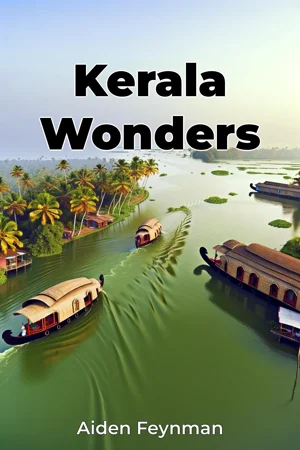
"Kerala Wonders" presents a meticulously researched visual and narrative journey through India's southwestern coastal state, where ancient traditions and natural ecosystems create one of the world's most diverse ecological and cultural landscapes. Through detailed illustrations and scientific documentation, this book examines the interconnected elements that make Kerala a living laboratory of sustainable coexistence between human civilization and natural systems. The book is structured in three main sections: natural landscapes, biodiversity, and cultural heritage. The first section maps Kerala's distinct geographical features, from the Western Ghats' dense forests to the intricate network of backwaters along the Arabian Sea coast. Original illustrations capture the varying elevations, soil compositions, and weather patterns that shape the region's unique ecosystem. In the biodiversity section, readers encounter detailed portrayals of Kerala's endemic species, including the Nilgiri Tahr, Lion-tailed Macaque, and numerous bird species that inhabit the region's varied terrain. The illustrations are accompanied by data on population distributions, behavioral patterns, and conservation status, providing crucial insights into the region's ecological health. The cultural heritage section examines how Kerala's traditional practices, from ancient agricultural methods to architectural designs, have evolved in harmony with the natural environment. The book presents architectural drawings of traditional Kerala houses, demonstrating how their design principles maximize natural ventilation and minimize environmental impact. Supporting these visual elements, the text incorporates research from environmental scientists, anthropologists, and local experts. The book draws from decades of ecological surveys, historical records, and contemporary studies to present a comprehensive picture of Kerala's environmental and cultural dynamics. The work makes significant interdisciplinary connections between environmental science, anthropology, and sustainable development. It demonstrates how traditional knowledge systems have contributed to modern conservation efforts and how architectural principles from Kerala's heritage buildings are influencing contemporary sustainable design. Written in an academic yet accessible style, the book combines scientific precision with clear explanations suitable for readers ranging from environmental students to conservation professionals and cultural researchers. Technical terms are carefully explained, and complex concepts are illustrated through practical examples. The book serves multiple audiences: environmental researchers will find detailed ecosystem data, architects can study sustainable design principles, and conservation planners can examine successful models of community-based environmental protection. Tourism professionals and travelers will gain deeper insights into responsible tourism practices. Rather than simply showcasing Kerala's visual appeal, the book provides practical frameworks for understanding how traditional practices can inform modern conservation efforts. It examines current challenges, including climate change impacts on coastal regions and the pressure of urbanization on forest corridors. The scope encompasses the entire state while focusing on specific case studies that illustrate broader principles. The book acknowledges its limitations, particularly in areas where research data is still emerging, and clearly distinguishes between established facts and areas requiring further study. The work addresses ongoing debates in conservation biology, particularly regarding the balance between development and preservation. It presents multiple viewpoints on contested issues such as forest management and tourism regulation, allowing readers to understand the complexity of these challenges. Through this comprehensive approach, "Kerala Wonders" provides a foundation for understanding how regional ecosystems function and how human communities can operate sustainably within them. It serves as both a documentary record of Kerala's natural and cultural heritage and a practical guide for environmental stewardship.
"Kerala Wonders" presents a meticulously researched visual and narrative journey through India's southwestern coastal state, where ancient traditions and natural ecosystems create one of the world's most diverse ecological and cultural landscapes. Through detailed illustrations and scientific documentation, this book examines the interconnected elements that make Kerala a living laboratory of sustainable coexistence between human civilization and natural systems. The book is structured in three main sections: natural landscapes, biodiversity, and cultural heritage. The first section maps Kerala's distinct geographical features, from the Western Ghats' dense forests to the intricate network of backwaters along the Arabian Sea coast. Original illustrations capture the varying elevations, soil compositions, and weather patterns that shape the region's unique ecosystem. In the biodiversity section, readers encounter detailed portrayals of Kerala's endemic species, including the Nilgiri Tahr, Lion-tailed Macaque, and numerous bird species that inhabit the region's varied terrain. The illustrations are accompanied by data on population distributions, behavioral patterns, and conservation status, providing crucial insights into the region's ecological health. The cultural heritage section examines how Kerala's traditional practices, from ancient agricultural methods to architectural designs, have evolved in harmony with the natural environment. The book presents architectural drawings of traditional Kerala houses, demonstrating how their design principles maximize natural ventilation and minimize environmental impact. Supporting these visual elements, the text incorporates research from environmental scientists, anthropologists, and local experts. The book draws from decades of ecological surveys, historical records, and contemporary studies to present a comprehensive picture of Kerala's environmental and cultural dynamics. The work makes significant interdisciplinary connections between environmental science, anthropology, and sustainable development. It demonstrates how traditional knowledge systems have contributed to modern conservation efforts and how architectural principles from Kerala's heritage buildings are influencing contemporary sustainable design. Written in an academic yet accessible style, the book combines scientific precision with clear explanations suitable for readers ranging from environmental students to conservation professionals and cultural researchers. Technical terms are carefully explained, and complex concepts are illustrated through practical examples. The book serves multiple audiences: environmental researchers will find detailed ecosystem data, architects can study sustainable design principles, and conservation planners can examine successful models of community-based environmental protection. Tourism professionals and travelers will gain deeper insights into responsible tourism practices. Rather than simply showcasing Kerala's visual appeal, the book provides practical frameworks for understanding how traditional practices can inform modern conservation efforts. It examines current challenges, including climate change impacts on coastal regions and the pressure of urbanization on forest corridors. The scope encompasses the entire state while focusing on specific case studies that illustrate broader principles. The book acknowledges its limitations, particularly in areas where research data is still emerging, and clearly distinguishes between established facts and areas requiring further study. The work addresses ongoing debates in conservation biology, particularly regarding the balance between development and preservation. It presents multiple viewpoints on contested issues such as forest management and tourism regulation, allowing readers to understand the complexity of these challenges. Through this comprehensive approach, "Kerala Wonders" provides a foundation for understanding how regional ecosystems function and how human communities can operate sustainably within them. It serves as both a documentary record of Kerala's natural and cultural heritage and a practical guide for environmental stewardship.
"Kerala Wonders" presents a captivating exploration of India's southwestern coastal state, where natural ecosystems and human traditions have created an extraordinary ecological and cultural tapestry. This comprehensive guide delves into the intricate relationship between Kerala's diverse landscapes, from the majestic Western Ghats to the meandering backwaters, and the communities that have sustainably coexisted within these environments for generations. The book masterfully weaves together three distinct yet interconnected elements: natural landscapes, biodiversity, and cultural heritage. Through detailed illustrations and scientific documentation, readers discover the habitat of endemic species like the Nilgiri Tahr and Lion-tailed Macaque, while learning how traditional architectural practices have evolved to work in harmony with the environment. The inclusion of original research data and expert insights from environmental scientists and anthropologists adds depth to the narrative, making complex ecological concepts accessible to a broad audience. What sets this book apart is its practical approach to demonstrating how traditional knowledge can inform modern conservation efforts. Rather than simply showcasing Kerala's beauty, it provides actionable frameworks for sustainable development and environmental stewardship. Whether you're an environmental researcher, architecture enthusiast, or conscious traveler, the book offers valuable insights into how regional ecosystems can thrive alongside human development, making it an essential resource for understanding sustainable coexistence in one of the world's most diverse regions.
Book Details
ISBN
9788233936778
Publisher
Publifye AS
Your Licenses
You don't own any licenses for this book
Purchase a license below to unlock this book and download the EPUB.
Purchase License
Select a tier to unlock this book
Need bulk licensing?
Contact us for enterprise agreements.