
About This Book
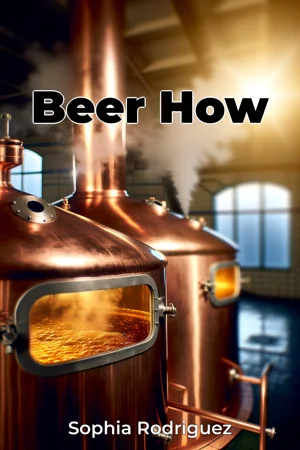
"Beer How" delves into the intricate science and artistry of brewing, exploring the multifaceted world of beer production from basic home brewing to advanced commercial techniques. The book addresses both novice brewers and experienced craftspeople, offering a comprehensive examination of brewing methodologies, ingredients, and cultural significance. The text begins by establishing brewing's historical foundation, tracing its evolution from ancient Mesopotamian traditions to modern craft brewing movements. This context sets the stage for understanding how brewing techniques have adapted to technological advances while maintaining core principles that have endured for millennia. Central to the book's argument is the premise that brewing success relies on understanding the interplay between four key elements: ingredients, process control, equipment optimization, and quality assessment. These elements are explored through three main sections: The first section examines raw materials, detailing how different varieties of hops, grains, yeasts, and water chemistry influence final outcomes. Readers learn to select and combine ingredients based on desired flavor profiles and brewing objectives. Scientific data supports discussions of enzyme activities, protein structures, and fermentation biochemistry. Section two focuses on the brewing process, covering mashing, boiling, fermentation, and conditioning. Each chapter includes precise temperature controls, timing considerations, and troubleshooting guides. The text incorporates current research in fermentation science and microbiology, presenting evidence-based approaches to process optimization. The final section addresses quality control, packaging, and storage, utilizing data from both commercial breweries and home brewing experiments. This section connects brewing science to practical applications, helping readers implement professional techniques at any scale. The book draws from multiple disciplines, including chemistry, microbiology, and engineering, while making connections to food science and agriculture. These interdisciplinary perspectives provide readers with a robust understanding of brewing as both art and science. Research evidence comes from peer-reviewed studies, commercial brewing data, and documented experimental results. The methodology combines traditional brewing wisdom with modern analytical techniques, offering readers both time-tested practices and innovative approaches. Written in a technical yet accessible style, the text maintains a balanced approach between scientific rigor and practical application. Each chapter includes detailed procedures, data tables, and chemical equations, supported by clear explanations for readers with varying levels of scientific background. The target audience includes home brewers seeking to advance their skills, brewing professionals looking to deepen their technical knowledge, and students of food science or fermentation studies. The book serves as both a practical guide and a reference text. Content is organized systematically, moving from fundamental concepts to advanced applications. While comprehensive in scope, the book focuses specifically on beer brewing, intentionally limiting coverage of other fermented beverages to maintain depth and relevance. Current debates addressed include the impact of climate change on hop cultivation, the role of wild fermentation in modern brewing, and the balance between automation and traditional methods in commercial production. The book's practical applications extend beyond brewing, offering insights into quality control systems, process optimization, and ingredient selection that apply to other food and beverage production contexts. Each chapter concludes with hands-on exercises and experimental protocols for skill development. Through this structured approach to brewing education, "Beer How" provides readers with both theoretical understanding and practical expertise, establishing itself as a valuable resource in the brewing literature.
"Beer How" delves into the intricate science and artistry of brewing, exploring the multifaceted world of beer production from basic home brewing to advanced commercial techniques. The book addresses both novice brewers and experienced craftspeople, offering a comprehensive examination of brewing methodologies, ingredients, and cultural significance. The text begins by establishing brewing's historical foundation, tracing its evolution from ancient Mesopotamian traditions to modern craft brewing movements. This context sets the stage for understanding how brewing techniques have adapted to technological advances while maintaining core principles that have endured for millennia. Central to the book's argument is the premise that brewing success relies on understanding the interplay between four key elements: ingredients, process control, equipment optimization, and quality assessment. These elements are explored through three main sections: The first section examines raw materials, detailing how different varieties of hops, grains, yeasts, and water chemistry influence final outcomes. Readers learn to select and combine ingredients based on desired flavor profiles and brewing objectives. Scientific data supports discussions of enzyme activities, protein structures, and fermentation biochemistry. Section two focuses on the brewing process, covering mashing, boiling, fermentation, and conditioning. Each chapter includes precise temperature controls, timing considerations, and troubleshooting guides. The text incorporates current research in fermentation science and microbiology, presenting evidence-based approaches to process optimization. The final section addresses quality control, packaging, and storage, utilizing data from both commercial breweries and home brewing experiments. This section connects brewing science to practical applications, helping readers implement professional techniques at any scale. The book draws from multiple disciplines, including chemistry, microbiology, and engineering, while making connections to food science and agriculture. These interdisciplinary perspectives provide readers with a robust understanding of brewing as both art and science. Research evidence comes from peer-reviewed studies, commercial brewing data, and documented experimental results. The methodology combines traditional brewing wisdom with modern analytical techniques, offering readers both time-tested practices and innovative approaches. Written in a technical yet accessible style, the text maintains a balanced approach between scientific rigor and practical application. Each chapter includes detailed procedures, data tables, and chemical equations, supported by clear explanations for readers with varying levels of scientific background. The target audience includes home brewers seeking to advance their skills, brewing professionals looking to deepen their technical knowledge, and students of food science or fermentation studies. The book serves as both a practical guide and a reference text. Content is organized systematically, moving from fundamental concepts to advanced applications. While comprehensive in scope, the book focuses specifically on beer brewing, intentionally limiting coverage of other fermented beverages to maintain depth and relevance. Current debates addressed include the impact of climate change on hop cultivation, the role of wild fermentation in modern brewing, and the balance between automation and traditional methods in commercial production. The book's practical applications extend beyond brewing, offering insights into quality control systems, process optimization, and ingredient selection that apply to other food and beverage production contexts. Each chapter concludes with hands-on exercises and experimental protocols for skill development. Through this structured approach to brewing education, "Beer How" provides readers with both theoretical understanding and practical expertise, establishing itself as a valuable resource in the brewing literature.
"Beer How" offers a masterful exploration of brewing science and methodology, bridging the gap between ancient traditions and modern techniques. This comprehensive guide takes readers on a journey through the four fundamental elements of successful brewing: ingredients, process control, equipment optimization, and quality assessment, making it an invaluable resource for both novice homebrewers and seasoned professionals. The book's systematic approach begins with a fascinating historical context before diving into the scientific foundations of brewing. The first section meticulously examines brewing ingredients, explaining how different varieties of hops, grains, yeasts, and water chemistry influence the final product. Moving through the brewing process, readers gain insights into crucial aspects like mashing, boiling, and fermentation, supported by current research and precise technical guidance. What sets this book apart is its blend of scientific rigor and practical application, incorporating peer-reviewed studies and commercial brewing data while maintaining accessibility. The final section focuses on quality control and storage, offering readers the tools to implement professional-grade techniques at any scale. Each chapter includes hands-on exercises and experimental protocols, ensuring readers can immediately apply their newfound knowledge to improve their brewing practices. Through its interdisciplinary approach, combining chemistry, microbiology, and engineering, the book creates a comprehensive understanding of brewing as both an art and a science.
Book Details
ISBN
9788233936747
Publisher
Publifye AS
Your Licenses
You don't own any licenses for this book
Purchase a license below to unlock this book and download the EPUB.
Purchase License
Select a tier to unlock this book
Need bulk licensing?
Contact us for enterprise agreements.