
About This Book
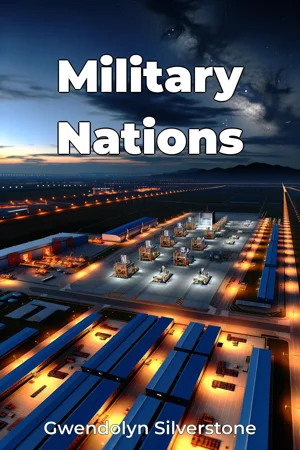
"Military Nations" examines the intricate relationship between military power and national identity through a detailed analysis of how armed forces have shaped global politics and international relations across centuries. The book investigates how military capabilities have influenced national development, international diplomacy, and societal evolution in key world powers. The work focuses on three primary themes: the development of military institutions and their impact on national governance, the role of military power in shaping international relations, and the social and economic consequences of maintaining significant military forces. These interconnected aspects reveal how military might has become both a tool for national security and a defining characteristic of influential nations. The book begins by establishing a historical framework, tracking the evolution of military powers from ancient empires to modern nation-states. It examines how the industrialization of warfare transformed not only military capabilities but also national economies and social structures. This context provides readers with essential background knowledge about military-industrial development and its influence on national policy-making. Central to the book's argument is the premise that military capability serves as both a consequence and a driver of national development, creating a complex feedback loop that influences domestic policy, international relations, and economic systems. This relationship is demonstrated through detailed case studies of major military powers, including the United States, Russia, China, and historical examples such as the British Empire and Prussia. The content is structured chronologically and thematically, beginning with the foundations of military power and progressing through key historical periods. Individual chapters examine specific aspects such as: - The relationship between military spending and economic development - The influence of military institutions on political systems - The role of military power in international diplomacy - The impact of military technology on national capabilities The research draws from extensive military archives, diplomatic records, economic data, and historical documents. Statistical analyses of military spending, force projection capabilities, and economic indicators provide empirical support for the book's arguments. The work connects military studies with economics, political science, and sociology, demonstrating how military power intersects with various aspects of national development. This interdisciplinary approach provides readers with a comprehensive understanding of how military might influences multiple facets of national power. Written in an analytical style that balances academic rigor with accessibility, the book maintains an objective tone while examining both the constructive and destructive aspects of military power. It addresses controversial topics such as military interventions, arms races, and the ethics of force projection without taking partisan positions. The target audience includes military historians, political analysts, international relations scholars, and informed readers interested in understanding the complex relationship between military capability and national power. The book provides practical insights for policymakers, military professionals, and students of international relations. Within the military history genre, the book distinguishes itself by examining not just conflicts and strategies, but the broader implications of military power on national development. It acknowledges limitations in scope by focusing primarily on major military powers while recognizing the roles of smaller nations in the international system. The work concludes by examining current trends in military power, including the impact of emerging technologies, changing global power dynamics, and new security challenges. It provides readers with analytical tools for understanding how military capability continues to shape international relations and national development in the contemporary world.
"Military Nations" examines the intricate relationship between military power and national identity through a detailed analysis of how armed forces have shaped global politics and international relations across centuries. The book investigates how military capabilities have influenced national development, international diplomacy, and societal evolution in key world powers. The work focuses on three primary themes: the development of military institutions and their impact on national governance, the role of military power in shaping international relations, and the social and economic consequences of maintaining significant military forces. These interconnected aspects reveal how military might has become both a tool for national security and a defining characteristic of influential nations. The book begins by establishing a historical framework, tracking the evolution of military powers from ancient empires to modern nation-states. It examines how the industrialization of warfare transformed not only military capabilities but also national economies and social structures. This context provides readers with essential background knowledge about military-industrial development and its influence on national policy-making. Central to the book's argument is the premise that military capability serves as both a consequence and a driver of national development, creating a complex feedback loop that influences domestic policy, international relations, and economic systems. This relationship is demonstrated through detailed case studies of major military powers, including the United States, Russia, China, and historical examples such as the British Empire and Prussia. The content is structured chronologically and thematically, beginning with the foundations of military power and progressing through key historical periods. Individual chapters examine specific aspects such as: - The relationship between military spending and economic development - The influence of military institutions on political systems - The role of military power in international diplomacy - The impact of military technology on national capabilities The research draws from extensive military archives, diplomatic records, economic data, and historical documents. Statistical analyses of military spending, force projection capabilities, and economic indicators provide empirical support for the book's arguments. The work connects military studies with economics, political science, and sociology, demonstrating how military power intersects with various aspects of national development. This interdisciplinary approach provides readers with a comprehensive understanding of how military might influences multiple facets of national power. Written in an analytical style that balances academic rigor with accessibility, the book maintains an objective tone while examining both the constructive and destructive aspects of military power. It addresses controversial topics such as military interventions, arms races, and the ethics of force projection without taking partisan positions. The target audience includes military historians, political analysts, international relations scholars, and informed readers interested in understanding the complex relationship between military capability and national power. The book provides practical insights for policymakers, military professionals, and students of international relations. Within the military history genre, the book distinguishes itself by examining not just conflicts and strategies, but the broader implications of military power on national development. It acknowledges limitations in scope by focusing primarily on major military powers while recognizing the roles of smaller nations in the international system. The work concludes by examining current trends in military power, including the impact of emerging technologies, changing global power dynamics, and new security challenges. It provides readers with analytical tools for understanding how military capability continues to shape international relations and national development in the contemporary world.
"Military Nations" offers a comprehensive exploration of how military power fundamentally shapes national identity and global politics throughout history. The book masterfully weaves together three critical themes: military institutions' influence on governance, military power's role in international relations, and the socio-economic impact of maintaining substantial armed forces. Through detailed case studies of major powers like the United States, Russia, China, and historical empires, the book reveals the complex feedback loop between military capability and national development. The analysis spans from ancient empires to modern nation-states, examining how the industrialization of warfare transformed not just military capabilities but entire societies. One of the book's most compelling insights is the intricate relationship between military spending and economic development, supported by extensive statistical analyses and archival research. Another fascinating aspect is the exploration of how military institutions have historically influenced political systems, demonstrating the deep connections between military might and domestic governance. The book distinguishes itself through its interdisciplinary approach, combining elements of military history, economics, political science, and sociology to present a holistic view of military power's role in national development. Written in an accessible yet scholarly style, it progresses chronologically and thematically through key historical periods, culminating in an examination of contemporary military challenges and emerging technologies. This structure makes it particularly valuable for readers seeking to understand both historical patterns and current trends in global military power dynamics.
Book Details
ISBN
9788233936600
Publisher
Publifye AS
Your Licenses
You don't own any licenses for this book
Purchase a license below to unlock this book and download the EPUB.
Purchase License
Select a tier to unlock this book
Need bulk licensing?
Contact us for enterprise agreements.