
About This Book
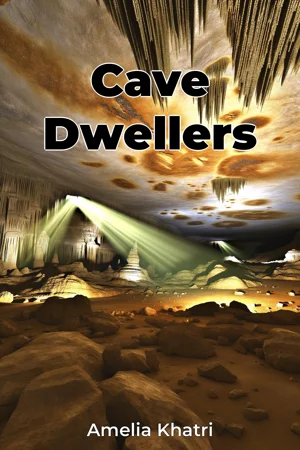
"Cave Dwellers" explores humanity's complex relationship with subterranean habitation, from prehistoric settlements to modern underground communities, examining how and why humans have consistently chosen to live beneath the Earth's surface. The book presents three primary themes: the geological and archaeological evidence of historical cave dwelling societies, the cultural and practical motivations behind underground living, and contemporary underground communities and their sustainable solutions for modern challenges. These interconnected topics reveal how underground living has been both a necessity and a choice throughout human history. Beginning with Paleolithic cave settlements, the text traces the evolution of cave dwelling across continents and cultures. It examines how early humans selected and modified natural caves, developed tools for cave expansion, and created sophisticated living spaces that provided protection from weather extremes and predators. The archaeological evidence, including cave paintings, tools, and remains, provides insights into daily life, social structures, and survival strategies of these early communities. The central argument posits that underground living represents not merely a primitive survival strategy but a sophisticated adaptation to environmental challenges that continues to offer relevant solutions for contemporary housing and environmental issues. This perspective is supported by extensive research from archaeological sites worldwide, modern case studies, and architectural analyses of both natural and human-made underground structures. The book's structure progresses chronologically and thematically, examining: the geological formation of habitable caves; archaeological evidence of early cave-dwelling societies; the development of underground construction techniques; and modern applications of subterranean architecture. It includes detailed analyses of notable underground communities, from the ancient cities of Cappadocia to the modern underground towns in Australia's Cooper Pedy. Research methodology combines archaeological data, geological surveys, anthropological studies, and contemporary architectural assessment. The text integrates findings from climate science, engineering, and urban planning to provide a comprehensive understanding of underground living spaces. The interdisciplinary approach connects archaeology with modern sustainable architecture, environmental science with urban planning, and anthropology with contemporary housing solutions. These connections demonstrate how historical underground dwelling practices inform modern sustainable design and architecture. Written in an academic yet accessible style, the book provides detailed technical information while maintaining reader engagement through case studies and practical examples. It targets academics, architects, urban planners, and general readers interested in sustainable living solutions and human adaptation to environmental challenges. The scope encompasses both natural cave dwellings and human-made underground structures across all inhabited continents, though it focuses primarily on well-documented sites with significant historical or contemporary relevance. The text addresses current debates about sustainable architecture, urban planning, and climate-responsive housing solutions. Practical applications include insights for modern underground construction, sustainable housing design, and climate-adaptive architecture. The book examines how underground living can address contemporary challenges such as energy efficiency, urban density, and climate change adaptation. The work maintains objectivity when discussing ongoing debates about the feasibility of large-scale underground urban development and its role in future city planning. It presents various viewpoints on the advantages and limitations of underground living spaces while acknowledging the technical, social, and psychological factors that influence their success or failure.
"Cave Dwellers" explores humanity's complex relationship with subterranean habitation, from prehistoric settlements to modern underground communities, examining how and why humans have consistently chosen to live beneath the Earth's surface. The book presents three primary themes: the geological and archaeological evidence of historical cave dwelling societies, the cultural and practical motivations behind underground living, and contemporary underground communities and their sustainable solutions for modern challenges. These interconnected topics reveal how underground living has been both a necessity and a choice throughout human history. Beginning with Paleolithic cave settlements, the text traces the evolution of cave dwelling across continents and cultures. It examines how early humans selected and modified natural caves, developed tools for cave expansion, and created sophisticated living spaces that provided protection from weather extremes and predators. The archaeological evidence, including cave paintings, tools, and remains, provides insights into daily life, social structures, and survival strategies of these early communities. The central argument posits that underground living represents not merely a primitive survival strategy but a sophisticated adaptation to environmental challenges that continues to offer relevant solutions for contemporary housing and environmental issues. This perspective is supported by extensive research from archaeological sites worldwide, modern case studies, and architectural analyses of both natural and human-made underground structures. The book's structure progresses chronologically and thematically, examining: the geological formation of habitable caves; archaeological evidence of early cave-dwelling societies; the development of underground construction techniques; and modern applications of subterranean architecture. It includes detailed analyses of notable underground communities, from the ancient cities of Cappadocia to the modern underground towns in Australia's Cooper Pedy. Research methodology combines archaeological data, geological surveys, anthropological studies, and contemporary architectural assessment. The text integrates findings from climate science, engineering, and urban planning to provide a comprehensive understanding of underground living spaces. The interdisciplinary approach connects archaeology with modern sustainable architecture, environmental science with urban planning, and anthropology with contemporary housing solutions. These connections demonstrate how historical underground dwelling practices inform modern sustainable design and architecture. Written in an academic yet accessible style, the book provides detailed technical information while maintaining reader engagement through case studies and practical examples. It targets academics, architects, urban planners, and general readers interested in sustainable living solutions and human adaptation to environmental challenges. The scope encompasses both natural cave dwellings and human-made underground structures across all inhabited continents, though it focuses primarily on well-documented sites with significant historical or contemporary relevance. The text addresses current debates about sustainable architecture, urban planning, and climate-responsive housing solutions. Practical applications include insights for modern underground construction, sustainable housing design, and climate-adaptive architecture. The book examines how underground living can address contemporary challenges such as energy efficiency, urban density, and climate change adaptation. The work maintains objectivity when discussing ongoing debates about the feasibility of large-scale underground urban development and its role in future city planning. It presents various viewpoints on the advantages and limitations of underground living spaces while acknowledging the technical, social, and psychological factors that influence their success or failure.
"Cave Dwellers" presents a fascinating exploration of humanity's enduring relationship with underground living spaces, from prehistoric caves to modern subterranean communities. The book challenges the notion that cave dwelling was merely a primitive survival strategy, instead revealing it as a sophisticated adaptation that continues to offer relevant solutions for contemporary housing and environmental challenges. Through a careful examination of archaeological evidence, geological surveys, and anthropological studies, readers discover how early humans selected and modified natural caves, developing increasingly sophisticated living spaces that provided protection from harsh elements and predators. The narrative spans continents and centuries, examining notable underground communities such as the ancient cities of Cappadocia and the modern Australian town of Cooper Pedy. The book's interdisciplinary approach weaves together insights from archaeology, environmental science, and urban planning, demonstrating how historical underground dwelling practices inform modern sustainable design. Particularly intriguing are the detailed analyses of how cave-dwelling societies developed specialized tools for cave modification and created complex living spaces that often featured sophisticated architectural elements. The book progresses logically from geological formations and prehistoric settlements to contemporary applications of subterranean architecture, maintaining an engaging balance between technical information and accessible case studies. This comprehensive examination of underground living speaks to both academic audiences and general readers interested in sustainable living solutions, offering practical insights for modern challenges such as energy efficiency and climate change adaptation. The author's objective treatment of ongoing debates about large-scale underground urban development makes this work particularly valuable for those interested in future city planning and sustainable architecture.
Book Details
ISBN
9788233936518
Publisher
Publifye AS
Your Licenses
You don't own any licenses for this book
Purchase a license below to unlock this book and download the EPUB.
Purchase License
Select a tier to unlock this book
Need bulk licensing?
Contact us for enterprise agreements.