
About This Book
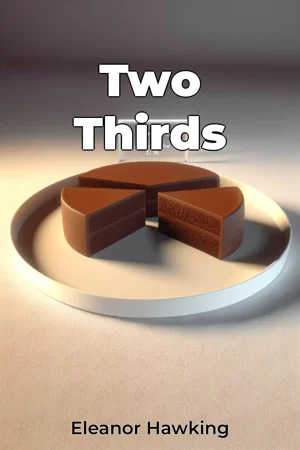
"Two Thirds" presents a foundational approach to teaching children the concept of fractions through practical, real-world applications. The book addresses a critical gap in early mathematics education by transforming abstract numerical concepts into tangible understanding. The text systematically builds comprehension through three main sections. The first introduces the basic concept of whole numbers and their division into parts, using familiar objects like pizzas, candy bars, and classroom materials. The second section develops the mathematical notation of fractions, specifically focusing on thirds and the concept of two-thirds. The final section bridges the gap between concrete examples and mathematical representation. Written for elementary school educators and parents of children aged 6-9, the book employs a carefully structured methodology based on cognitive development research in mathematics education. Each chapter begins with hands-on activities, progresses through visual representations, and culminates in mathematical notation, following the concrete-pictorial-abstract learning sequence established in mathematics pedagogy. The content integrates proven teaching methods with current educational research, incorporating elements from both cognitive psychology and educational best practices. This approach allows children to build natural connections between physical objects and mathematical concepts, reducing the anxiety often associated with fraction learning. Key features include: - Step-by-step activity guides for teachers and parents - Visual aids and reproducible worksheets - Assessment tools to track understanding - Common misconception alerts and correction strategies - Cross-curricular connections to science and measurement The book connects mathematics to other subjects through practical applications, such as basic cooking measurements, simple science experiments, and art projects involving geometric shapes. This interdisciplinary approach reinforces the relevance of fractions in daily life and various academic contexts. The writing maintains a clear, instructional tone while remaining accessible to non-specialists. Technical terms are carefully introduced and explained, with a glossary provided for reference. The text emphasizes conceptual understanding over rote memorization, encouraging students to develop problem-solving skills and mathematical reasoning. Supporting evidence comes from classroom testing in various educational settings, with data collected from both urban and rural schools. The methodology incorporates feedback from experienced educators and learning specialists, ensuring practical applicability across different teaching environments. The book acknowledges common challenges in teaching fractions and addresses them through multiple learning styles, including visual, auditory, and kinesthetic approaches. It provides differentiated instruction strategies to accommodate various learning needs and ability levels. Particular attention is given to building a strong foundation for more advanced mathematical concepts, with clear connections drawn to future learning in decimals, percentages, and algebra. The text establishes critical thinking patterns that support long-term mathematical development. While focused primarily on the concept of two-thirds, the book creates a framework that can be applied to understanding all fractions. This specific focus allows for deep comprehension of fundamental principles rather than superficial coverage of multiple concepts. The approach avoids common pitfalls in mathematics education by emphasizing understanding over memorization and providing numerous opportunities for practice and reinforcement. The book serves as both a teaching guide and a reference resource, supporting sustained learning through multiple interactions with the material.
"Two Thirds" presents a foundational approach to teaching children the concept of fractions through practical, real-world applications. The book addresses a critical gap in early mathematics education by transforming abstract numerical concepts into tangible understanding. The text systematically builds comprehension through three main sections. The first introduces the basic concept of whole numbers and their division into parts, using familiar objects like pizzas, candy bars, and classroom materials. The second section develops the mathematical notation of fractions, specifically focusing on thirds and the concept of two-thirds. The final section bridges the gap between concrete examples and mathematical representation. Written for elementary school educators and parents of children aged 6-9, the book employs a carefully structured methodology based on cognitive development research in mathematics education. Each chapter begins with hands-on activities, progresses through visual representations, and culminates in mathematical notation, following the concrete-pictorial-abstract learning sequence established in mathematics pedagogy. The content integrates proven teaching methods with current educational research, incorporating elements from both cognitive psychology and educational best practices. This approach allows children to build natural connections between physical objects and mathematical concepts, reducing the anxiety often associated with fraction learning. Key features include: - Step-by-step activity guides for teachers and parents - Visual aids and reproducible worksheets - Assessment tools to track understanding - Common misconception alerts and correction strategies - Cross-curricular connections to science and measurement The book connects mathematics to other subjects through practical applications, such as basic cooking measurements, simple science experiments, and art projects involving geometric shapes. This interdisciplinary approach reinforces the relevance of fractions in daily life and various academic contexts. The writing maintains a clear, instructional tone while remaining accessible to non-specialists. Technical terms are carefully introduced and explained, with a glossary provided for reference. The text emphasizes conceptual understanding over rote memorization, encouraging students to develop problem-solving skills and mathematical reasoning. Supporting evidence comes from classroom testing in various educational settings, with data collected from both urban and rural schools. The methodology incorporates feedback from experienced educators and learning specialists, ensuring practical applicability across different teaching environments. The book acknowledges common challenges in teaching fractions and addresses them through multiple learning styles, including visual, auditory, and kinesthetic approaches. It provides differentiated instruction strategies to accommodate various learning needs and ability levels. Particular attention is given to building a strong foundation for more advanced mathematical concepts, with clear connections drawn to future learning in decimals, percentages, and algebra. The text establishes critical thinking patterns that support long-term mathematical development. While focused primarily on the concept of two-thirds, the book creates a framework that can be applied to understanding all fractions. This specific focus allows for deep comprehension of fundamental principles rather than superficial coverage of multiple concepts. The approach avoids common pitfalls in mathematics education by emphasizing understanding over memorization and providing numerous opportunities for practice and reinforcement. The book serves as both a teaching guide and a reference resource, supporting sustained learning through multiple interactions with the material.
"Two Thirds" tackles the challenging task of making fraction concepts accessible and engaging for young learners aged 6-9. This innovative educational resource transforms the abstract notion of fractions, particularly two-thirds, into tangible understanding through a carefully structured three-part approach that progresses from concrete objects to mathematical notation. The book's unique strength lies in its systematic methodology, which follows the concrete-pictorial-abstract learning sequence. Beginning with familiar objects like pizzas and candy bars, it gradually builds comprehension through visual representations before introducing formal mathematical concepts. What sets this resource apart is its integration of proven teaching methods with cognitive development research, offering educators and parents a comprehensive toolkit that includes step-by-step activity guides, visual aids, and assessment tools. Throughout its chapters, the book maintains a clear focus on building fundamental understanding rather than promoting rote memorization. It addresses common learning challenges through multiple teaching styles and provides cross-curricular connections to subjects like science and art. The practical applications, from cooking measurements to geometric art projects, help demonstrate the relevance of fractions in everyday life while building a strong foundation for more advanced mathematical concepts. This approach ensures that students develop not just computational skills, but genuine mathematical reasoning abilities that will serve them well in future learning.
Book Details
ISBN
9788233936488
Publisher
Publifye AS
Your Licenses
You don't own any licenses for this book
Purchase a license below to unlock this book and download the EPUB.
Purchase License
Select a tier to unlock this book
Need bulk licensing?
Contact us for enterprise agreements.