
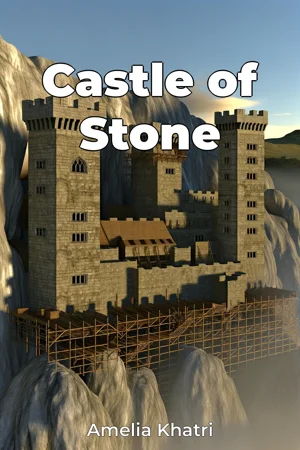
About This Book
"Castle of Stone" explores the intricate world of medieval castle construction, addressing the fundamental questions of materials, methods, and locations that shaped these formidable structures across Europe from the 9th to the 16th centuries. The book presents three core themes: the evolution of castle architecture from wooden structures to stone fortifications, the engineering principles and construction techniques that enabled their creation, and the strategic geography that influenced castle placement. These topics provide readers with a comprehensive understanding of how medieval builders transformed defensive architecture while adapting to local terrain and available resources. Drawing from archaeological evidence, medieval manuscripts, and architectural studies, the work examines how castle construction reflected both military necessity and social hierarchy. The text begins with the transition from wooden motte-and-bailey structures to stone keeps, detailing how Norman influences spread across Europe, bringing new building techniques and defensive innovations. The central chapters focus on construction methodology, describing the quarrying and transportation of stone, the role of master builders, and the complex systems of scaffolding and lifting mechanisms. Readers learn about the specialized tools and techniques used to shape stones, create proper foundations, and construct the massive walls that characterize medieval castles. The book explains how builders solved problems of water supply, waste management, and living quarters while maintaining defensive integrity. Geographic considerations receive detailed attention, with analysis of how topography, available materials, and political boundaries influenced castle location and design. Case studies from England, France, Germany, and Spain demonstrate regional variations in castle architecture and how local conditions shaped construction choices. The work incorporates recent archaeological findings and modern engineering analysis to explain how medieval builders achieved their architectural feats without modern technology. Technical drawings, archaeological site maps, and reconstructed floor plans support the detailed explanations of construction techniques and architectural elements. The interdisciplinary approach connects architectural history with military strategy, social hierarchy, and economic systems of medieval Europe. The book demonstrates how castle construction influenced the development of engineering principles still relevant today, while also shaping medieval society and warfare. Written in an academic yet accessible style, the text combines technical detail with historical context, making it valuable for architects, historians, archaeologists, and interested general readers. The author maintains a balanced perspective, addressing both the practical aspects of construction and the broader historical implications of castle building. The scope encompasses the major castle-building period in Western Europe, though it acknowledges variations in Eastern European and Middle Eastern fortification styles. The book addresses ongoing debates about the effectiveness of certain defensive features and the accuracy of historical construction cost estimates. For modern readers, the book offers insights into sustainable building practices, project management, and the integration of function with design. It examines how medieval builders solved complex engineering problems with limited resources, providing lessons for contemporary construction challenges. This comprehensive examination of castle construction fills a gap in architectural history by focusing specifically on the practical aspects of medieval building while placing these structures within their broader historical context. The work stands out for its detailed analysis of construction techniques supported by contemporary archaeological evidence and engineering studies.
"Castle of Stone" explores the intricate world of medieval castle construction, addressing the fundamental questions of materials, methods, and locations that shaped these formidable structures across Europe from the 9th to the 16th centuries. The book presents three core themes: the evolution of castle architecture from wooden structures to stone fortifications, the engineering principles and construction techniques that enabled their creation, and the strategic geography that influenced castle placement. These topics provide readers with a comprehensive understanding of how medieval builders transformed defensive architecture while adapting to local terrain and available resources. Drawing from archaeological evidence, medieval manuscripts, and architectural studies, the work examines how castle construction reflected both military necessity and social hierarchy. The text begins with the transition from wooden motte-and-bailey structures to stone keeps, detailing how Norman influences spread across Europe, bringing new building techniques and defensive innovations. The central chapters focus on construction methodology, describing the quarrying and transportation of stone, the role of master builders, and the complex systems of scaffolding and lifting mechanisms. Readers learn about the specialized tools and techniques used to shape stones, create proper foundations, and construct the massive walls that characterize medieval castles. The book explains how builders solved problems of water supply, waste management, and living quarters while maintaining defensive integrity. Geographic considerations receive detailed attention, with analysis of how topography, available materials, and political boundaries influenced castle location and design. Case studies from England, France, Germany, and Spain demonstrate regional variations in castle architecture and how local conditions shaped construction choices. The work incorporates recent archaeological findings and modern engineering analysis to explain how medieval builders achieved their architectural feats without modern technology. Technical drawings, archaeological site maps, and reconstructed floor plans support the detailed explanations of construction techniques and architectural elements. The interdisciplinary approach connects architectural history with military strategy, social hierarchy, and economic systems of medieval Europe. The book demonstrates how castle construction influenced the development of engineering principles still relevant today, while also shaping medieval society and warfare. Written in an academic yet accessible style, the text combines technical detail with historical context, making it valuable for architects, historians, archaeologists, and interested general readers. The author maintains a balanced perspective, addressing both the practical aspects of construction and the broader historical implications of castle building. The scope encompasses the major castle-building period in Western Europe, though it acknowledges variations in Eastern European and Middle Eastern fortification styles. The book addresses ongoing debates about the effectiveness of certain defensive features and the accuracy of historical construction cost estimates. For modern readers, the book offers insights into sustainable building practices, project management, and the integration of function with design. It examines how medieval builders solved complex engineering problems with limited resources, providing lessons for contemporary construction challenges. This comprehensive examination of castle construction fills a gap in architectural history by focusing specifically on the practical aspects of medieval building while placing these structures within their broader historical context. The work stands out for its detailed analysis of construction techniques supported by contemporary archaeological evidence and engineering studies.
"Castle of Stone" offers a fascinating exploration of medieval castle construction, tracing the evolution from wooden fortifications to the magnificent stone strongholds that dominated European landscapes from the 9th to 16th centuries. The book masterfully weaves together three fundamental aspects: architectural evolution, engineering methods, and strategic geography, providing readers with an unprecedented look at how these formidable structures shaped medieval warfare and society. Through careful examination of archaeological evidence and medieval manuscripts, the book reveals how master builders tackled impressive engineering challenges without modern technology. Readers discover the intricate processes of quarrying and transporting massive stones, the sophisticated lifting mechanisms used in construction, and the ingenious solutions for essential features like water supply and waste management. The transformation from simple motte-and-bailey structures to complex stone keeps demonstrates the remarkable advancement of medieval engineering and architectural knowledge. The narrative progresses from basic construction principles to detailed regional variations, using case studies from England, France, Germany, and Spain to illustrate how local conditions influenced castle design. Technical aspects are presented alongside historical context, making complex engineering concepts accessible to both specialists and general readers. By combining architectural history with military strategy and social hierarchy, the book provides a comprehensive understanding of how castle construction both reflected and shaped medieval European society, while offering surprisingly relevant insights for modern sustainable building practices and project management.
Book Details
ISBN
9788233936440
Publisher
Publifye AS
Your Licenses
You don't own any licenses for this book
Purchase a license below to unlock this book and download the EPUB.
Purchase License
Select a tier to unlock this book
Need bulk licensing?
Contact us for enterprise agreements.