
About This Book
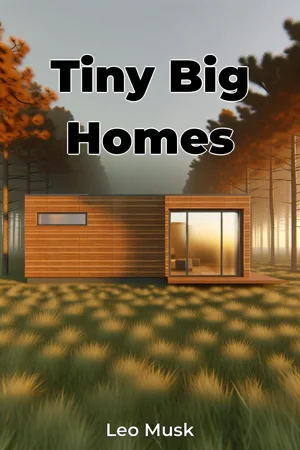
"Tiny Big Homes" examines the contemporary shift toward minimalist living spaces and challenges conventional assumptions about residential architecture. The book analyzes how the tiny home movement represents not merely a trend, but a fundamental reimagining of domestic space in response to economic, environmental, and social pressures. The work presents three core themes: spatial efficiency in modern architecture, the psychological impact of living spaces, and sustainable design principles in compact housing. These topics intersect to address how reduced square footage can lead to increased life quality when designed thoughtfully. The historical context traces the evolution of American housing from post-war expansion to current downsizing trends, incorporating data from housing markets, demographic studies, and architectural research. The book establishes that the average American home size has decreased by 20% since 2015, reflecting changing societal values and economic realities. The central thesis argues that well-designed tiny homes represent a viable solution to multiple contemporary challenges: housing affordability, environmental sustainability, and psychological well-being. This argument is supported by case studies from various climate zones and cultural contexts, demonstrating the adaptability of tiny home principles. The content progresses through three main sections: First, it examines the technical aspects of tiny home design, including spatial optimization and multi-functional furniture solutions. Second, it explores the environmental impact through energy consumption data and material efficiency studies. Third, it analyzes the social and psychological benefits, supported by resident interviews and quality-of-life assessments. Research methodology combines quantitative analysis of energy usage and space efficiency with qualitative studies of resident satisfaction. The book incorporates findings from architectural institutes, environmental research centers, and urban planning departments across North America and Europe. The work connects architecture with environmental science, psychology, and urban planning. It demonstrates how tiny homes influence community development, mental health, and ecological conservation, supported by cross-disciplinary research from these fields. The book's unique approach lies in its integration of technical architectural expertise with practical living solutions, presenting both theoretical frameworks and actionable guidelines for implementing tiny home concepts. Written in a technical yet accessible style, the text balances professional architectural insights with practical considerations for both industry professionals and potential tiny home residents. The target audience includes architects, urban planners, environmental designers, and individuals interested in alternative housing solutions. The content serves both as a professional reference and a practical guide for implementing tiny home concepts. The scope encompasses residential structures under 400 square feet, focusing on permanent dwellings rather than temporary or mobile solutions. While acknowledging tiny homes' limitations in certain contexts, the book addresses common criticisms and provides evidence-based responses. Real-world applications include detailed construction guidelines, zoning consideration strategies, and adaptable design templates. The work addresses ongoing debates about building codes, urban density, and housing affordability through evidence-based analysis and practical solutions. This comprehensive examination of tiny homes reflects broader discussions about sustainable living, urban development, and changing social values, while maintaining focus on practical implementation and measurable outcomes.
"Tiny Big Homes" examines the contemporary shift toward minimalist living spaces and challenges conventional assumptions about residential architecture. The book analyzes how the tiny home movement represents not merely a trend, but a fundamental reimagining of domestic space in response to economic, environmental, and social pressures. The work presents three core themes: spatial efficiency in modern architecture, the psychological impact of living spaces, and sustainable design principles in compact housing. These topics intersect to address how reduced square footage can lead to increased life quality when designed thoughtfully. The historical context traces the evolution of American housing from post-war expansion to current downsizing trends, incorporating data from housing markets, demographic studies, and architectural research. The book establishes that the average American home size has decreased by 20% since 2015, reflecting changing societal values and economic realities. The central thesis argues that well-designed tiny homes represent a viable solution to multiple contemporary challenges: housing affordability, environmental sustainability, and psychological well-being. This argument is supported by case studies from various climate zones and cultural contexts, demonstrating the adaptability of tiny home principles. The content progresses through three main sections: First, it examines the technical aspects of tiny home design, including spatial optimization and multi-functional furniture solutions. Second, it explores the environmental impact through energy consumption data and material efficiency studies. Third, it analyzes the social and psychological benefits, supported by resident interviews and quality-of-life assessments. Research methodology combines quantitative analysis of energy usage and space efficiency with qualitative studies of resident satisfaction. The book incorporates findings from architectural institutes, environmental research centers, and urban planning departments across North America and Europe. The work connects architecture with environmental science, psychology, and urban planning. It demonstrates how tiny homes influence community development, mental health, and ecological conservation, supported by cross-disciplinary research from these fields. The book's unique approach lies in its integration of technical architectural expertise with practical living solutions, presenting both theoretical frameworks and actionable guidelines for implementing tiny home concepts. Written in a technical yet accessible style, the text balances professional architectural insights with practical considerations for both industry professionals and potential tiny home residents. The target audience includes architects, urban planners, environmental designers, and individuals interested in alternative housing solutions. The content serves both as a professional reference and a practical guide for implementing tiny home concepts. The scope encompasses residential structures under 400 square feet, focusing on permanent dwellings rather than temporary or mobile solutions. While acknowledging tiny homes' limitations in certain contexts, the book addresses common criticisms and provides evidence-based responses. Real-world applications include detailed construction guidelines, zoning consideration strategies, and adaptable design templates. The work addresses ongoing debates about building codes, urban density, and housing affordability through evidence-based analysis and practical solutions. This comprehensive examination of tiny homes reflects broader discussions about sustainable living, urban development, and changing social values, while maintaining focus on practical implementation and measurable outcomes.
"Tiny Big Homes" offers a compelling exploration of the tiny home movement as a transformative force in contemporary architecture and sustainable living. The book delves into how compact living spaces represent more than just a trend, demonstrating through extensive research that thoughtfully designed small homes can enhance quality of life while addressing pressing environmental and economic challenges. Notably, the book reveals that average American home sizes have decreased by 20% since 2015, reflecting a significant shift in housing preferences and societal values. The work systematically progresses through three main sections, beginning with technical design aspects and spatial optimization strategies, followed by environmental impact analysis, and concluding with an examination of social and psychological benefits. Drawing from case studies across various climates and cultures, the book presents a robust argument for tiny homes as viable solutions to modern housing challenges. The integration of cross-disciplinary research, including insights from environmental science, psychology, and urban planning, provides readers with a comprehensive understanding of how minimal living spaces influence community development and ecological conservation. What sets this book apart is its balanced approach to both theoretical frameworks and practical applications, making it valuable for professionals and prospective tiny home residents alike. Through detailed construction guidelines, zoning strategies, and adaptable design templates, it addresses real-world implementation challenges while maintaining focus on homes under 400 square feet. The work effectively combines technical expertise with accessible language, offering evidence-based solutions for sustainable living without sacrificing clarity or practical utility.
Book Details
ISBN
9788233936297
Publisher
Publifye AS
Your Licenses
You don't own any licenses for this book
Purchase a license below to unlock this book and download the EPUB.
Purchase License
Select a tier to unlock this book
Need bulk licensing?
Contact us for enterprise agreements.