
About This Book
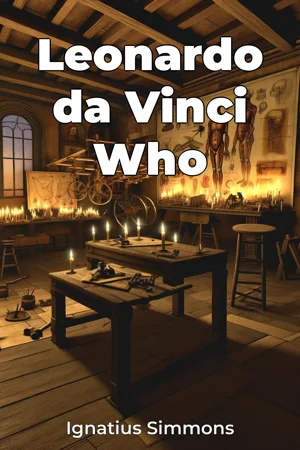
"Leonardo da Vinci Who" presents a methodical exploration of the Renaissance polymath through the dual lenses of artistic genius and scientific innovation. The book opens by challenging the common perception of da Vinci as merely the painter of the Mona Lisa, posing the question: How did one man's ceaseless curiosity reshape our understanding of both art and science? The narrative follows three primary threads: da Vinci's development as an artist-engineer, his scientific investigations, and his lasting influence on multiple disciplines. The book examines how his illegitimate birth and lack of formal classical education potentially contributed to his unconventional approaches to problem-solving and observation. Set against the backdrop of 15th-century Florence and Milan, the text provides crucial context about the Renaissance period's intellectual and artistic revolution. Readers gain insight into the patronage system, the state of scientific knowledge, and the intersection of art and technology during this pivotal era. The book's central thesis argues that da Vinci's true genius lay not in any single achievement but in his integrated approach to understanding the natural world through both artistic and scientific inquiry. This synthesis of disciplines forms the foundation for exploring his various projects and studies. The content progresses chronologically while maintaining thematic coherence. Early chapters focus on his artistic apprenticeship and initial engineering projects, followed by detailed analyses of his anatomical studies and technological innovations. The final section examines how his methodologies inform modern approaches to innovation and cross-disciplinary thinking. Supporting evidence draws from da Vinci's own notebooks, contemporary accounts, and modern scientific analysis of his work. The book incorporates recent findings from art historians, engineers, and anatomists who have studied his designs and drawings using current technology. The work connects to multiple fields including engineering, anatomy, art history, and physics. It demonstrates how da Vinci's studies of bird flight informed aerodynamics and how his artistic techniques revolutionized the representation of three-dimensional forms. Written in an analytical yet accessible style, the book balances scholarly insight with narrative clarity. Technical concepts are explained through practical examples and visual descriptions, making complex ideas understandable to general readers while maintaining academic rigor. The target audience includes students of art history, science enthusiasts, and professionals interested in innovation and creative problem-solving. The book serves both as an introduction to da Vinci's work and as a detailed analysis of his methods and achievements. Within the biography genre, the book distinguishes itself by focusing on the interplay between da Vinci's various pursuits rather than presenting a purely chronological life story. It addresses scholarly debates about attribution of works and interpretation of his notes while maintaining objectivity. The scope encompasses da Vinci's major works and discoveries while acknowledging that many of his projects remain lost or were never completed. The book addresses recent controversies regarding artwork attribution and the practical feasibility of his machine designs. Readers can apply da Vinci's observational techniques and integrated thinking methods to their own fields, with specific examples provided for artists, scientists, and innovators. The work concludes by examining how da Vinci's approach to combining art and science remains relevant in addressing contemporary challenges in technology and design.
"Leonardo da Vinci Who" presents a methodical exploration of the Renaissance polymath through the dual lenses of artistic genius and scientific innovation. The book opens by challenging the common perception of da Vinci as merely the painter of the Mona Lisa, posing the question: How did one man's ceaseless curiosity reshape our understanding of both art and science? The narrative follows three primary threads: da Vinci's development as an artist-engineer, his scientific investigations, and his lasting influence on multiple disciplines. The book examines how his illegitimate birth and lack of formal classical education potentially contributed to his unconventional approaches to problem-solving and observation. Set against the backdrop of 15th-century Florence and Milan, the text provides crucial context about the Renaissance period's intellectual and artistic revolution. Readers gain insight into the patronage system, the state of scientific knowledge, and the intersection of art and technology during this pivotal era. The book's central thesis argues that da Vinci's true genius lay not in any single achievement but in his integrated approach to understanding the natural world through both artistic and scientific inquiry. This synthesis of disciplines forms the foundation for exploring his various projects and studies. The content progresses chronologically while maintaining thematic coherence. Early chapters focus on his artistic apprenticeship and initial engineering projects, followed by detailed analyses of his anatomical studies and technological innovations. The final section examines how his methodologies inform modern approaches to innovation and cross-disciplinary thinking. Supporting evidence draws from da Vinci's own notebooks, contemporary accounts, and modern scientific analysis of his work. The book incorporates recent findings from art historians, engineers, and anatomists who have studied his designs and drawings using current technology. The work connects to multiple fields including engineering, anatomy, art history, and physics. It demonstrates how da Vinci's studies of bird flight informed aerodynamics and how his artistic techniques revolutionized the representation of three-dimensional forms. Written in an analytical yet accessible style, the book balances scholarly insight with narrative clarity. Technical concepts are explained through practical examples and visual descriptions, making complex ideas understandable to general readers while maintaining academic rigor. The target audience includes students of art history, science enthusiasts, and professionals interested in innovation and creative problem-solving. The book serves both as an introduction to da Vinci's work and as a detailed analysis of his methods and achievements. Within the biography genre, the book distinguishes itself by focusing on the interplay between da Vinci's various pursuits rather than presenting a purely chronological life story. It addresses scholarly debates about attribution of works and interpretation of his notes while maintaining objectivity. The scope encompasses da Vinci's major works and discoveries while acknowledging that many of his projects remain lost or were never completed. The book addresses recent controversies regarding artwork attribution and the practical feasibility of his machine designs. Readers can apply da Vinci's observational techniques and integrated thinking methods to their own fields, with specific examples provided for artists, scientists, and innovators. The work concludes by examining how da Vinci's approach to combining art and science remains relevant in addressing contemporary challenges in technology and design.
"Leonardo da Vinci Who" explores the remarkable intersection of art and science through the life and work of history's most famous polymath. Moving beyond the common view of da Vinci as merely the Mona Lisa's creator, this comprehensive study reveals how his unique approach to observation and problem-solving revolutionized multiple fields during the Renaissance. The book examines how his unconventional background—born illegitimate and lacking formal classical education—may have contributed to his innovative thinking and extraordinary achievements across disciplines. Through chronologically organized chapters, readers journey from da Vinci's early artistic apprenticeship in Florence to his groundbreaking anatomical studies and engineering innovations in Milan. The narrative weaves together his various pursuits, demonstrating how his artistic skills enhanced his scientific observations and vice versa. For instance, his meticulous study of bird flight informed both his mechanical designs and his artistic representations of motion, while his anatomical drawings combined scientific accuracy with artistic beauty. Set against the vibrant backdrop of 15th-century Italy, the book draws from da Vinci's own notebooks, contemporary accounts, and modern scientific analysis to present a uniquely integrated view of his genius. Rather than focusing solely on biographical details, it emphasizes the interconnected nature of his work—from engineering and anatomy to art and physics—showing how his methodologies continue to inform modern approaches to innovation and creative problem-solving. This balanced approach makes complex concepts accessible while maintaining scholarly integrity, offering valuable insights for both general readers and specialists in art and science.
Book Details
ISBN
9788233936235
Publisher
Publifye AS
Your Licenses
You don't own any licenses for this book
Purchase a license below to unlock this book and download the EPUB.
Purchase License
Select a tier to unlock this book
Need bulk licensing?
Contact us for enterprise agreements.