
About This Book
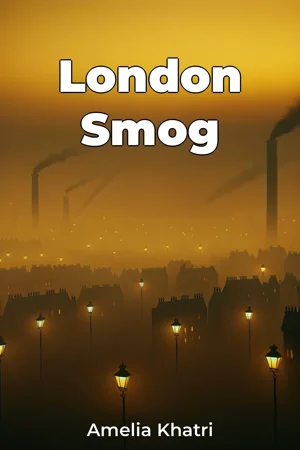
"London Smog" investigates one of history's most significant environmental challenges: the toxic air that earned London its reputation as the world's most polluted city during the Industrial Revolution through the mid-20th century. The book examines three primary elements that contributed to London's notorious atmosphere: the city's reliance on coal for heating and industry, the unique meteorological conditions of the Thames Valley, and the social policies that perpetuated the problem. Through detailed analysis of historical records, scientific data, and firsthand accounts, it reveals how these factors combined to create a persistent environmental crisis that shaped public health policy and urban development. The narrative begins in the 17th century, tracking the gradual transformation of London's air quality as population growth and industrialization intensified. It pays particular attention to the Victorian era, when the combination of industrial emissions, domestic coal burning, and inadequate sanitation created the characteristic "London particular" - a thick, yellow-brown fog that contained sulfur dioxide, carbon particles, and various organic compounds. Central to the book's argument is the demonstration that London's air pollution crisis was not merely an environmental issue but a complex socio-economic phenomenon. The author presents evidence from medical records, mortality statistics, and economic data to show how air quality directly influenced public health, worker productivity, and urban planning decisions. The content is organized chronologically and thematically, examining: - The scientific composition of London's unique atmospheric conditions - The social and economic factors that resisted clean air reforms - The development of environmental legislation and public health measures - The culmination in the Great Smog of 1952 and subsequent Clean Air Act of 1956 The research draws from municipal archives, meteorological records, medical journals, and parliamentary documents. The author incorporates contemporary scientific analysis of preserved air samples and meteorological data to provide modern insight into historical conditions. The book connects environmental science, public health, and urban planning, demonstrating how air quality influenced architecture, social reform, and medical understanding of respiratory diseases. It examines the international impact of London's experience, as cities worldwide learned from its challenges and solutions. Written in an analytical style that balances academic rigor with accessibility, the book employs narrative techniques to illustrate the human impact of air pollution through case studies and personal accounts. The target audience includes environmental historians, urban planners, public health professionals, and readers interested in environmental policy and urban history. The scope encompasses the period from 1600 to 1960, focusing primarily on central London while acknowledging the broader regional impact. The book addresses ongoing debates about the role of government regulation in environmental protection and the balance between industrial progress and public health. Practical applications include lessons for modern urban planning, environmental policy development, and public health initiatives, particularly relevant for rapidly industrializing cities in developing nations facing similar challenges. The book maintains a measured, evidence-based approach while examining controversial aspects of class inequality in environmental exposure and the resistance of industrial interests to regulation. It provides valuable historical context for contemporary discussions about air quality management and environmental justice.
"London Smog" investigates one of history's most significant environmental challenges: the toxic air that earned London its reputation as the world's most polluted city during the Industrial Revolution through the mid-20th century. The book examines three primary elements that contributed to London's notorious atmosphere: the city's reliance on coal for heating and industry, the unique meteorological conditions of the Thames Valley, and the social policies that perpetuated the problem. Through detailed analysis of historical records, scientific data, and firsthand accounts, it reveals how these factors combined to create a persistent environmental crisis that shaped public health policy and urban development. The narrative begins in the 17th century, tracking the gradual transformation of London's air quality as population growth and industrialization intensified. It pays particular attention to the Victorian era, when the combination of industrial emissions, domestic coal burning, and inadequate sanitation created the characteristic "London particular" - a thick, yellow-brown fog that contained sulfur dioxide, carbon particles, and various organic compounds. Central to the book's argument is the demonstration that London's air pollution crisis was not merely an environmental issue but a complex socio-economic phenomenon. The author presents evidence from medical records, mortality statistics, and economic data to show how air quality directly influenced public health, worker productivity, and urban planning decisions. The content is organized chronologically and thematically, examining: - The scientific composition of London's unique atmospheric conditions - The social and economic factors that resisted clean air reforms - The development of environmental legislation and public health measures - The culmination in the Great Smog of 1952 and subsequent Clean Air Act of 1956 The research draws from municipal archives, meteorological records, medical journals, and parliamentary documents. The author incorporates contemporary scientific analysis of preserved air samples and meteorological data to provide modern insight into historical conditions. The book connects environmental science, public health, and urban planning, demonstrating how air quality influenced architecture, social reform, and medical understanding of respiratory diseases. It examines the international impact of London's experience, as cities worldwide learned from its challenges and solutions. Written in an analytical style that balances academic rigor with accessibility, the book employs narrative techniques to illustrate the human impact of air pollution through case studies and personal accounts. The target audience includes environmental historians, urban planners, public health professionals, and readers interested in environmental policy and urban history. The scope encompasses the period from 1600 to 1960, focusing primarily on central London while acknowledging the broader regional impact. The book addresses ongoing debates about the role of government regulation in environmental protection and the balance between industrial progress and public health. Practical applications include lessons for modern urban planning, environmental policy development, and public health initiatives, particularly relevant for rapidly industrializing cities in developing nations facing similar challenges. The book maintains a measured, evidence-based approach while examining controversial aspects of class inequality in environmental exposure and the resistance of industrial interests to regulation. It provides valuable historical context for contemporary discussions about air quality management and environmental justice.
"London Smog" offers a compelling exploration of how the world's most polluted city grappled with its notorious air quality crisis from the Industrial Revolution through the mid-20th century. This comprehensive study weaves together three crucial elements: London's heavy reliance on coal, the Thames Valley's unique weather patterns, and the social policies that allowed the crisis to persist. Through meticulous research of historical records, scientific data, and firsthand accounts, the book reveals how these factors created the infamous "London particular" - a toxic yellow-brown fog that became synonymous with the city's identity. The narrative traces this environmental crisis from the 17th century through 1960, demonstrating that London's air pollution was far more than just an environmental challenge - it was a complex socio-economic issue that profoundly impacted public health, worker productivity, and urban development. The book's chronological journey pays special attention to the Victorian era, when industrial emissions and domestic coal use reached their peak, culminating in the Great Smog of 1952 and the subsequent Clean Air Act of 1956. Drawing from an impressive array of sources, including municipal archives, meteorological records, and medical journals, the book presents its findings in an accessible yet academically rigorous style. What makes this work particularly valuable is its interdisciplinary approach, connecting environmental science with public health and urban planning, while offering practical lessons for modern cities facing similar challenges. The author's balanced examination of class inequality in environmental exposure and industrial resistance to regulation provides crucial historical context for contemporary discussions about environmental justice and air quality management.
Book Details
ISBN
9788233936198
Publisher
Publifye AS
Your Licenses
You don't own any licenses for this book
Purchase a license below to unlock this book and download the EPUB.
Purchase License
Select a tier to unlock this book
Need bulk licensing?
Contact us for enterprise agreements.