
About This Book
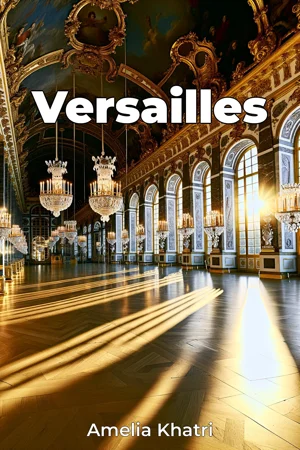
At Versailles, where marble halls gleamed with unprecedented grandeur, chamber pots often sat unemptied while courtiers jockeyed for position in Louis XIV's presence. This paradox of splendor and squalor forms the foundation of "Versailles," a meticulous examination of daily life in Europe's most renowned royal court. The book centers on three primary themes: the architectural and social transformation of Versailles from hunting lodge to power center, the elaborate court etiquette that governed every aspect of daily life, and the stark contrast between public opulence and private degradation. These elements combine to reveal how Louis XIV's court became both the envy of Europe and a symbol of monarchical excess. Drawing from primary sources including courtiers' diaries, royal accounts, and diplomatic correspondence, the narrative reconstructs life at Versailles during the Sun King's reign (1643-1715). The author establishes the historical context of France's rise as Europe's dominant power and the political necessity behind Louis XIV's decision to move his court from Paris to Versailles. The central argument posits that Versailles served as more than a palace—it functioned as a sophisticated political tool where architecture, art, and ritual combined to create a system of control over the French nobility. The book demonstrates how Louis XIV's creation of elaborate court protocols effectively imprisoned nobles in golden chains, keeping them too occupied with ceremonies to challenge his authority. The content progresses chronologically through the construction and evolution of Versailles, examining how each expansion reflected political necessities. Key chapters explore the daily routines of courtiers, from the king's lever (rising ceremony) to the evening entertainments, revealing how these rituals reinforced social hierarchies and royal power. Research draws heavily on architectural plans, expense records, and medical documents that detail both the palace's grandeur and its sanitation challenges. The author incorporates recent archaeological findings and scientific analysis of preserved materials to provide new insights into court life. The work connects architectural history, political science, and social anthropology, demonstrating how Versailles influenced European court culture for centuries. The author's analysis extends to economics, showing how the palace's maintenance strained French finances and contributed to later political instability. The book employs an academic approach while maintaining accessibility through vivid descriptive passages and carefully chosen anecdotes. The writing balances scholarly rigor with engaging narrative elements, making it suitable for both academic readers and educated general audiences interested in European history. The target audience includes historians, architecture enthusiasts, and readers interested in the development of modern political systems. The work speaks particularly to those studying the relationship between power, ceremony, and physical space. While focusing primarily on Louis XIV's reign, the book acknowledges the palace's later history and its influence on modern state ceremonies and political architecture. It addresses ongoing scholarly debates about the effectiveness of Louis XIV's centralization policies and their long-term impact on French society. The author limits the scope mainly to the latter half of the 17th century, with careful attention to documenting daily life rather than focusing solely on major historical events. This approach provides readers with a comprehensive understanding of how social control operated through seemingly mundane court routines and architectural design. The book's insights remain relevant for understanding how physical spaces and social protocols continue to shape power relationships in modern political and corporate settings. It offers practical lessons about the relationship between architectural design and social control, applicable to contemporary institutional settings.
At Versailles, where marble halls gleamed with unprecedented grandeur, chamber pots often sat unemptied while courtiers jockeyed for position in Louis XIV's presence. This paradox of splendor and squalor forms the foundation of "Versailles," a meticulous examination of daily life in Europe's most renowned royal court. The book centers on three primary themes: the architectural and social transformation of Versailles from hunting lodge to power center, the elaborate court etiquette that governed every aspect of daily life, and the stark contrast between public opulence and private degradation. These elements combine to reveal how Louis XIV's court became both the envy of Europe and a symbol of monarchical excess. Drawing from primary sources including courtiers' diaries, royal accounts, and diplomatic correspondence, the narrative reconstructs life at Versailles during the Sun King's reign (1643-1715). The author establishes the historical context of France's rise as Europe's dominant power and the political necessity behind Louis XIV's decision to move his court from Paris to Versailles. The central argument posits that Versailles served as more than a palace—it functioned as a sophisticated political tool where architecture, art, and ritual combined to create a system of control over the French nobility. The book demonstrates how Louis XIV's creation of elaborate court protocols effectively imprisoned nobles in golden chains, keeping them too occupied with ceremonies to challenge his authority. The content progresses chronologically through the construction and evolution of Versailles, examining how each expansion reflected political necessities. Key chapters explore the daily routines of courtiers, from the king's lever (rising ceremony) to the evening entertainments, revealing how these rituals reinforced social hierarchies and royal power. Research draws heavily on architectural plans, expense records, and medical documents that detail both the palace's grandeur and its sanitation challenges. The author incorporates recent archaeological findings and scientific analysis of preserved materials to provide new insights into court life. The work connects architectural history, political science, and social anthropology, demonstrating how Versailles influenced European court culture for centuries. The author's analysis extends to economics, showing how the palace's maintenance strained French finances and contributed to later political instability. The book employs an academic approach while maintaining accessibility through vivid descriptive passages and carefully chosen anecdotes. The writing balances scholarly rigor with engaging narrative elements, making it suitable for both academic readers and educated general audiences interested in European history. The target audience includes historians, architecture enthusiasts, and readers interested in the development of modern political systems. The work speaks particularly to those studying the relationship between power, ceremony, and physical space. While focusing primarily on Louis XIV's reign, the book acknowledges the palace's later history and its influence on modern state ceremonies and political architecture. It addresses ongoing scholarly debates about the effectiveness of Louis XIV's centralization policies and their long-term impact on French society. The author limits the scope mainly to the latter half of the 17th century, with careful attention to documenting daily life rather than focusing solely on major historical events. This approach provides readers with a comprehensive understanding of how social control operated through seemingly mundane court routines and architectural design. The book's insights remain relevant for understanding how physical spaces and social protocols continue to shape power relationships in modern political and corporate settings. It offers practical lessons about the relationship between architectural design and social control, applicable to contemporary institutional settings.
"Versailles" offers a fascinating exploration of Europe's most iconic palace, revealing the intricate dance between magnificence and misery that defined life in Louis XIV's court. This compelling examination goes beyond the glittering façade to expose how the Sun King transformed a modest hunting lodge into an unrivaled center of power, using architecture and elaborate social protocols as tools of political control. The book masterfully weaves together three central narratives: the palace's architectural evolution, the complex system of court etiquette, and the stark contrast between public grandeur and private squalor. Drawing from primary sources including courtiers' diaries and royal accounts, readers discover surprising details about daily life, such as how nobles would endure physical discomfort during lengthy ceremonies just to remain in the king's presence, and how the palace's splendid halls often lacked basic sanitation despite their opulent decoration. Through meticulous research and engaging storytelling, the author demonstrates how Versailles served as an elaborate political prison, where nobles were kept in check through golden chains of ceremony and ritual. The narrative progresses chronologically through the palace's development, examining how each architectural addition and social protocol worked together to reinforce royal authority. This approach combines architectural history with social anthropology, offering readers a unique perspective on how physical spaces and social ceremonies can be used as instruments of power - insights that remain relevant in understanding modern political and institutional dynamics.
Book Details
ISBN
9788233936129
Publisher
Publifye AS
Your Licenses
You don't own any licenses for this book
Purchase a license below to unlock this book and download the EPUB.
Purchase License
Select a tier to unlock this book
Need bulk licensing?
Contact us for enterprise agreements.