
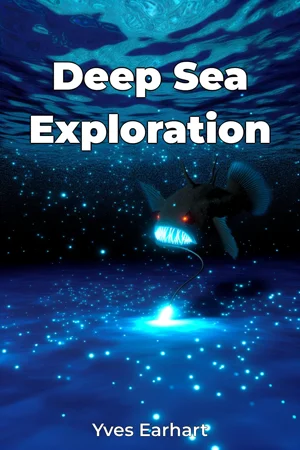
About This Book
"Deep Sea Exploration" examines the final frontier on Earth - the ocean's deepest regions, where pressure exceeds 1,000 atmospheres and life adapts to complete darkness. This comprehensive study of deep-sea environments combines current research with historical discoveries to present a complete picture of our understanding of the deep ocean. The book addresses three core areas: the physical characteristics of deep-sea environments, the diverse ecosystems that thrive in these extreme conditions, and the technological advances that enable modern exploration. These topics are crucial for understanding both ocean conservation and potential resources that may benefit human society. The text begins with the historical context of deep-sea exploration, from the first bathyscaphe dives to modern ROV (Remotely Operated Vehicle) missions. This foundation helps readers grasp how our knowledge has evolved and the challenges scientists faced in studying these remote environments. The central thesis argues that deep-sea ecosystems are vital to Earth's biological and chemical cycles, yet remain largely unexplored, presenting both scientific opportunities and conservation challenges. The book demonstrates how deep-sea processes influence global climate patterns, biodiversity, and potential medical and technological innovations. Structured in three main sections, the content progresses from physical oceanography through biological systems to human interaction with the deep sea. Each chapter builds upon established scientific principles while incorporating recent discoveries, including new species identification and the impact of ocean acidification on deep-sea communities. The research presented draws from multiple sources: acoustic mapping data, chemical analysis of water columns, biological sampling, and long-term observation studies. The book features findings from international research vessels and deep-sea observatories, providing readers with current, peer-reviewed scientific data. The work connects marine science with chemistry, physics, and engineering, showing how deep-sea exploration drives innovation in multiple fields. These interdisciplinary links demonstrate the broader implications of deep-sea research for technology development and environmental protection. The book employs a systematic approach to complex topics, using clear language and detailed illustrations to make technical concepts accessible. While maintaining scientific accuracy, it avoids excessive technical jargon, making the content approachable for educated general readers. Written in an academic yet engaging style, the text balances scientific detail with narrative elements that capture the challenge and discovery inherent in deep-sea exploration. Each chapter includes relevant case studies and researcher profiles that illustrate key concepts through real-world examples. The primary audience includes marine science students, environmental professionals, and informed general readers interested in ocean sciences. The content serves both as an academic reference and an informative guide for those seeking to understand deep-sea environments. The book addresses current debates in marine science, including the impact of deep-sea mining, the effects of climate change on ocean ecosystems, and the ethics of resource extraction from sensitive marine environments. While focusing primarily on depths below 200 meters, the book acknowledges connections to shallow marine systems and surface processes. This scope allows for comprehensive coverage while maintaining detail in key areas. The work concludes with practical implications for conservation, resource management, and future research directions, providing readers with context for ongoing scientific efforts and environmental challenges in deep-sea exploration.
"Deep Sea Exploration" examines the final frontier on Earth - the ocean's deepest regions, where pressure exceeds 1,000 atmospheres and life adapts to complete darkness. This comprehensive study of deep-sea environments combines current research with historical discoveries to present a complete picture of our understanding of the deep ocean. The book addresses three core areas: the physical characteristics of deep-sea environments, the diverse ecosystems that thrive in these extreme conditions, and the technological advances that enable modern exploration. These topics are crucial for understanding both ocean conservation and potential resources that may benefit human society. The text begins with the historical context of deep-sea exploration, from the first bathyscaphe dives to modern ROV (Remotely Operated Vehicle) missions. This foundation helps readers grasp how our knowledge has evolved and the challenges scientists faced in studying these remote environments. The central thesis argues that deep-sea ecosystems are vital to Earth's biological and chemical cycles, yet remain largely unexplored, presenting both scientific opportunities and conservation challenges. The book demonstrates how deep-sea processes influence global climate patterns, biodiversity, and potential medical and technological innovations. Structured in three main sections, the content progresses from physical oceanography through biological systems to human interaction with the deep sea. Each chapter builds upon established scientific principles while incorporating recent discoveries, including new species identification and the impact of ocean acidification on deep-sea communities. The research presented draws from multiple sources: acoustic mapping data, chemical analysis of water columns, biological sampling, and long-term observation studies. The book features findings from international research vessels and deep-sea observatories, providing readers with current, peer-reviewed scientific data. The work connects marine science with chemistry, physics, and engineering, showing how deep-sea exploration drives innovation in multiple fields. These interdisciplinary links demonstrate the broader implications of deep-sea research for technology development and environmental protection. The book employs a systematic approach to complex topics, using clear language and detailed illustrations to make technical concepts accessible. While maintaining scientific accuracy, it avoids excessive technical jargon, making the content approachable for educated general readers. Written in an academic yet engaging style, the text balances scientific detail with narrative elements that capture the challenge and discovery inherent in deep-sea exploration. Each chapter includes relevant case studies and researcher profiles that illustrate key concepts through real-world examples. The primary audience includes marine science students, environmental professionals, and informed general readers interested in ocean sciences. The content serves both as an academic reference and an informative guide for those seeking to understand deep-sea environments. The book addresses current debates in marine science, including the impact of deep-sea mining, the effects of climate change on ocean ecosystems, and the ethics of resource extraction from sensitive marine environments. While focusing primarily on depths below 200 meters, the book acknowledges connections to shallow marine systems and surface processes. This scope allows for comprehensive coverage while maintaining detail in key areas. The work concludes with practical implications for conservation, resource management, and future research directions, providing readers with context for ongoing scientific efforts and environmental challenges in deep-sea exploration.
"Deep Sea Exploration" takes readers on a comprehensive journey into Earth's last unexplored frontier, where crushing pressures and perpetual darkness create extraordinary environments for life. This meticulously researched work combines historical perspective with cutting-edge research to illuminate our understanding of the ocean's deepest regions, from the first bathyscaphe expeditions to modern ROV missions. The book systematically explores three interconnected aspects of deep-sea research: the extreme physical conditions that shape these environments, the remarkably adapted ecosystems that flourish in darkness, and the technological innovations that enable scientists to study these remote areas. Through clear, accessible language and compelling case studies, readers learn how deep-sea processes influence global climate patterns and how these mysterious ecosystems contribute to Earth's biological and chemical cycles. The text particularly excels in explaining complex oceanographic concepts through real-world examples and researcher profiles. Progressing from physical oceanography through biological systems to human interactions, the book addresses crucial contemporary issues including deep-sea mining, climate change impacts, and ocean conservation. It uniquely bridges multiple scientific disciplines, demonstrating how deep-sea exploration drives innovation across fields while highlighting the critical balance between scientific discovery and environmental protection. This approach makes it an invaluable resource for both marine science students and environmentally conscious readers seeking to understand the importance of our ocean's deepest reaches.
Book Details
ISBN
9788233936068
Publisher
Publifye AS
Your Licenses
You don't own any licenses for this book
Purchase a license below to unlock this book and download the EPUB.
Purchase License
Select a tier to unlock this book
Need bulk licensing?
Contact us for enterprise agreements.