
About This Book
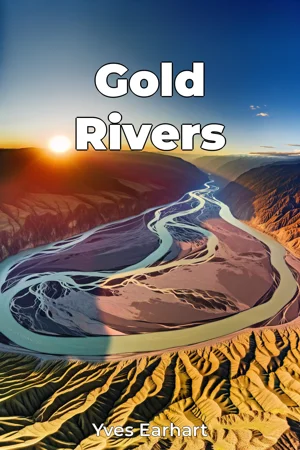
"Gold Rivers" explores the global phenomenon of alluvial gold deposits across Earth's major river systems, offering a comprehensive analysis of how these precious metal concentrations have shaped both geological understanding and human civilization. From the ancient riverbeds of California's Sierra Nevada to the modern placer deposits of the Yukon, this book examines the intricate processes that transport and concentrate gold in riverine environments. The work presents three primary themes: the geological mechanisms of gold transportation and deposition in river systems, the historical impact of gold-bearing rivers on human settlement patterns, and the current scientific methods used to locate and assess riverine gold deposits. These interconnected topics provide readers with both theoretical knowledge and practical understanding of river-based gold formations. The book builds upon fundamental concepts in fluvial geology, explaining how erosion, transportation, and deposition cycles create placer deposits. Readers are introduced to essential geological principles, including sediment transport mechanics, hydraulic sorting, and the role of density in mineral concentration. This background provides the framework for understanding more complex concepts presented later in the work. Drawing from extensive field research and geological surveys, the text presents detailed case studies of significant gold-bearing river systems across six continents. These examples illustrate how varying geological conditions, river morphology, and regional tectonics influence gold distribution patterns. The research incorporates recent technological advances in geological mapping and mineral prospecting, including remote sensing data and advanced geochemical analysis techniques. The book maintains a structured approach, moving from basic principles to advanced applications. Early chapters establish fundamental concepts in fluvial geology and gold formation, while later sections explore specific river systems and their gold-bearing characteristics. The final portion addresses modern exploration techniques and environmental considerations in river gold extraction. Scientific evidence is drawn from multiple disciplines, including geology, hydrology, mineralogy, and environmental science. The work incorporates data from government geological surveys, academic research, and industry studies, providing a robust foundation for its analyses and conclusions. The text connects with broader fields including environmental science, economic geology, and human geography. These interdisciplinary links highlight the broader implications of river gold deposits for ecosystem management, economic development, and land use planning. Written in a technical yet accessible style, the book serves both academic and professional audiences. The content is particularly relevant for geologists, mining professionals, environmental scientists, and students in related fields. Each chapter includes detailed diagrams, maps, and data tables that support the technical content while maintaining readability. The scope encompasses both historical and contemporary perspectives on river gold deposits, though it focuses primarily on current scientific understanding and modern assessment methods. While global in coverage, particular attention is given to major gold-bearing river systems that have significantly influenced mining practices and geological understanding. The work addresses ongoing debates in the field, including the relationship between climate change and placer deposit formation, the environmental impact of river gold mining, and the application of new technologies in deposit assessment. These discussions reflect current scientific discourse while maintaining objective analysis. The book provides practical applications for professionals involved in mineral exploration, environmental assessment, and resource management. It includes methodologies for deposit evaluation, environmental impact assessment, and sustainable extraction practices, making it a valuable resource for practitioners in these fields. This comprehensive examination of river gold deposits contributes to both theoretical understanding and practical applications in the field, serving as a reference for those seeking to understand the complex relationships between rivers, gold, and human interaction with these resources.
"Gold Rivers" explores the global phenomenon of alluvial gold deposits across Earth's major river systems, offering a comprehensive analysis of how these precious metal concentrations have shaped both geological understanding and human civilization. From the ancient riverbeds of California's Sierra Nevada to the modern placer deposits of the Yukon, this book examines the intricate processes that transport and concentrate gold in riverine environments. The work presents three primary themes: the geological mechanisms of gold transportation and deposition in river systems, the historical impact of gold-bearing rivers on human settlement patterns, and the current scientific methods used to locate and assess riverine gold deposits. These interconnected topics provide readers with both theoretical knowledge and practical understanding of river-based gold formations. The book builds upon fundamental concepts in fluvial geology, explaining how erosion, transportation, and deposition cycles create placer deposits. Readers are introduced to essential geological principles, including sediment transport mechanics, hydraulic sorting, and the role of density in mineral concentration. This background provides the framework for understanding more complex concepts presented later in the work. Drawing from extensive field research and geological surveys, the text presents detailed case studies of significant gold-bearing river systems across six continents. These examples illustrate how varying geological conditions, river morphology, and regional tectonics influence gold distribution patterns. The research incorporates recent technological advances in geological mapping and mineral prospecting, including remote sensing data and advanced geochemical analysis techniques. The book maintains a structured approach, moving from basic principles to advanced applications. Early chapters establish fundamental concepts in fluvial geology and gold formation, while later sections explore specific river systems and their gold-bearing characteristics. The final portion addresses modern exploration techniques and environmental considerations in river gold extraction. Scientific evidence is drawn from multiple disciplines, including geology, hydrology, mineralogy, and environmental science. The work incorporates data from government geological surveys, academic research, and industry studies, providing a robust foundation for its analyses and conclusions. The text connects with broader fields including environmental science, economic geology, and human geography. These interdisciplinary links highlight the broader implications of river gold deposits for ecosystem management, economic development, and land use planning. Written in a technical yet accessible style, the book serves both academic and professional audiences. The content is particularly relevant for geologists, mining professionals, environmental scientists, and students in related fields. Each chapter includes detailed diagrams, maps, and data tables that support the technical content while maintaining readability. The scope encompasses both historical and contemporary perspectives on river gold deposits, though it focuses primarily on current scientific understanding and modern assessment methods. While global in coverage, particular attention is given to major gold-bearing river systems that have significantly influenced mining practices and geological understanding. The work addresses ongoing debates in the field, including the relationship between climate change and placer deposit formation, the environmental impact of river gold mining, and the application of new technologies in deposit assessment. These discussions reflect current scientific discourse while maintaining objective analysis. The book provides practical applications for professionals involved in mineral exploration, environmental assessment, and resource management. It includes methodologies for deposit evaluation, environmental impact assessment, and sustainable extraction practices, making it a valuable resource for practitioners in these fields. This comprehensive examination of river gold deposits contributes to both theoretical understanding and practical applications in the field, serving as a reference for those seeking to understand the complex relationships between rivers, gold, and human interaction with these resources.
"Gold Rivers" delivers a comprehensive exploration of how gold deposits form and concentrate within Earth's major river systems, weaving together geological processes, human history, and modern scientific understanding. The book masterfully connects the fundamental mechanics of how rivers transport and concentrate gold with real-world examples from six continents, making complex geological concepts accessible to both technical and general audiences interested in Earth sciences. The text progresses logically from basic principles of fluvial geology and gold formation to specific case studies of significant gold-bearing rivers worldwide. Readers discover how factors like erosion cycles, sediment transport, and hydraulic sorting contribute to the formation of placer deposits, while learning about iconic locations from California's Sierra Nevada to the Yukon's rich goldfields. The book's approach balances technical accuracy with engaging narratives, using detailed diagrams and maps to illustrate key concepts. What sets this work apart is its interdisciplinary scope, examining not only the geological aspects but also incorporating environmental science, economic implications, and human geography. The final chapters address contemporary challenges in gold exploration and extraction, including environmental considerations and sustainable mining practices. This comprehensive treatment makes it particularly valuable for professionals in geology and mining, while remaining accessible to students and enthusiasts interested in understanding how rivers have shaped our relationship with gold throughout history.
Book Details
ISBN
9788233936051
Publisher
Publifye AS
Your Licenses
You don't own any licenses for this book
Purchase a license below to unlock this book and download the EPUB.
Purchase License
Select a tier to unlock this book
Need bulk licensing?
Contact us for enterprise agreements.