
About This Book
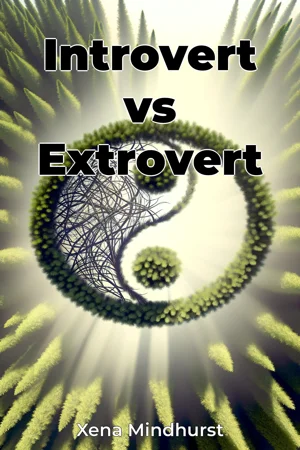
"Introvert vs Extrovert" delves into the fundamental aspects of human personality types, beginning with a critical question that affects every individual: How does our natural social orientation shape our lives, relationships, and success in an increasingly connected world? The book examines the science behind introversion and extroversion through three primary lenses: neurobiological foundations, behavioral patterns, and social dynamics. Drawing from decades of psychological research, including studies from leading institutions and the work of influential researchers like Hans Eysenck and Carl Jung, this comprehensive guide illuminates the spectrum of human social preferences and their implications. At its core, the book argues that understanding one's personality type is essential for personal growth and professional development, while challenging the common misconception that either trait is superior. The work systematically demonstrates how both introverts and extroverts can leverage their natural tendencies for optimal performance in various life domains. The content is structured in three main sections. The first establishes the scientific basis of personality types, exploring how brain structure and neurotransmitter activity influence social preferences. The second section examines the behavioral manifestations of these traits across different contexts - workplace, relationships, and personal development. The final section provides practical strategies for both personality types to thrive in environments that may naturally challenge their preferences. Research evidence is drawn from multiple sources, including longitudinal studies, neuroimaging research, and behavioral experiments. The book incorporates data from the Myers-Briggs Type Indicator, Big Five personality assessments, and contemporary neuroscience findings to support its arguments. The work connects psychology with neuroscience, sociology, and organizational behavior, demonstrating how personality types influence leadership styles, innovation processes, and team dynamics. These interdisciplinary connections provide readers with a holistic understanding of how personality types impact various life aspects. Written in an analytical yet accessible style, the book maintains a balanced approach between scientific rigor and practical application. Technical concepts are explained through real-world examples and case studies, making complex psychological principles understandable to a general audience. The target audience includes professionals seeking to improve workplace relationships, individuals interested in personal development, and anyone looking to better understand themselves and others. The book is particularly relevant for managers, educators, and those in fields requiring frequent social interaction. Practical applications include strategies for effective communication, energy management techniques for both personality types, and methods for creating inclusive environments that accommodate different social preferences. The book addresses ongoing debates in personality psychology, including the role of nature versus nurture in determining personality type and the impact of cultural factors on personality expression. While focusing primarily on the introvert-extrovert spectrum, the book acknowledges the complexity of human personality and discusses how these traits interact with other aspects of character and behavior. It addresses current challenges faced by both personality types in modern society, including the impact of social media and remote work environments. The book maintains objectivity while providing evidence-based insights, avoiding sensationalism in favor of substantiated research and practical wisdom. It serves as both an educational resource and a practical guide for navigating social and professional environments with greater awareness and effectiveness.
"Introvert vs Extrovert" delves into the fundamental aspects of human personality types, beginning with a critical question that affects every individual: How does our natural social orientation shape our lives, relationships, and success in an increasingly connected world? The book examines the science behind introversion and extroversion through three primary lenses: neurobiological foundations, behavioral patterns, and social dynamics. Drawing from decades of psychological research, including studies from leading institutions and the work of influential researchers like Hans Eysenck and Carl Jung, this comprehensive guide illuminates the spectrum of human social preferences and their implications. At its core, the book argues that understanding one's personality type is essential for personal growth and professional development, while challenging the common misconception that either trait is superior. The work systematically demonstrates how both introverts and extroverts can leverage their natural tendencies for optimal performance in various life domains. The content is structured in three main sections. The first establishes the scientific basis of personality types, exploring how brain structure and neurotransmitter activity influence social preferences. The second section examines the behavioral manifestations of these traits across different contexts - workplace, relationships, and personal development. The final section provides practical strategies for both personality types to thrive in environments that may naturally challenge their preferences. Research evidence is drawn from multiple sources, including longitudinal studies, neuroimaging research, and behavioral experiments. The book incorporates data from the Myers-Briggs Type Indicator, Big Five personality assessments, and contemporary neuroscience findings to support its arguments. The work connects psychology with neuroscience, sociology, and organizational behavior, demonstrating how personality types influence leadership styles, innovation processes, and team dynamics. These interdisciplinary connections provide readers with a holistic understanding of how personality types impact various life aspects. Written in an analytical yet accessible style, the book maintains a balanced approach between scientific rigor and practical application. Technical concepts are explained through real-world examples and case studies, making complex psychological principles understandable to a general audience. The target audience includes professionals seeking to improve workplace relationships, individuals interested in personal development, and anyone looking to better understand themselves and others. The book is particularly relevant for managers, educators, and those in fields requiring frequent social interaction. Practical applications include strategies for effective communication, energy management techniques for both personality types, and methods for creating inclusive environments that accommodate different social preferences. The book addresses ongoing debates in personality psychology, including the role of nature versus nurture in determining personality type and the impact of cultural factors on personality expression. While focusing primarily on the introvert-extrovert spectrum, the book acknowledges the complexity of human personality and discusses how these traits interact with other aspects of character and behavior. It addresses current challenges faced by both personality types in modern society, including the impact of social media and remote work environments. The book maintains objectivity while providing evidence-based insights, avoiding sensationalism in favor of substantiated research and practical wisdom. It serves as both an educational resource and a practical guide for navigating social and professional environments with greater awareness and effectiveness.
"Introvert vs Extrovert" offers a comprehensive exploration of how our natural social orientations fundamentally shape our lives, careers, and relationships. This enlightening work bridges the gap between scientific research and practical application, examining personality types through neurobiological foundations, behavioral patterns, and social dynamics. The book challenges common misconceptions about introversion and extroversion, demonstrating that neither trait is inherently superior, but rather each carries its own strengths and potential challenges in our increasingly connected world. The book progresses systematically through three main sections, beginning with the scientific underpinnings of personality types, including brain structure and neurotransmitter activity. It then explores how these traits manifest in various life contexts, from workplace scenarios to personal relationships, before concluding with practical strategies for both personality types to thrive in challenging environments. Drawing from decades of psychological research, including work from prominent researchers and institutions, the book presents complex concepts through accessible examples and real-world applications. What sets this work apart is its balanced approach to understanding personality types, combining rigorous scientific evidence with practical wisdom. Whether you're a professional seeking to improve workplace dynamics, an individual on a journey of self-discovery, or someone trying to better understand others, the book offers valuable insights for navigating social and professional landscapes. The inclusion of energy management techniques, communication strategies, and methods for creating inclusive environments makes this an invaluable resource for anyone interested in personal growth and improving interpersonal relationships.
Book Details
ISBN
9788233935665
Publisher
Publifye AS
Your Licenses
You don't own any licenses for this book
Purchase a license below to unlock this book and download the EPUB.
Purchase License
Select a tier to unlock this book
Need bulk licensing?
Contact us for enterprise agreements.