
About This Book
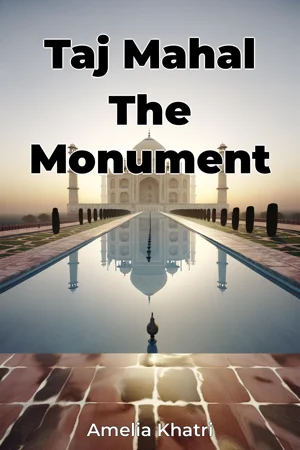
"Taj Mahal: The Monument" examines one of humanity's most significant architectural achievements through a detailed analysis of its construction, cultural impact, and historical context. This comprehensive study presents new archaeological findings and architectural documentation that challenge several long-held assumptions about the monument's creation. The book addresses three primary topics: the mathematical and engineering principles behind the Taj Mahal's construction, the sociopolitical climate of 17th-century Mughal India that facilitated its creation, and the cultural symbolism embedded in its design. These intersecting themes reveal how the monument represents both architectural innovation and cultural synthesis. The narrative begins with Shah Jahan's commission of the mausoleum in 1632 and traces the 22-year construction period, examining the logistics of materials procurement, workforce management, and technological solutions. The text analyzes primary sources, including contemporary court documents and architectural plans, to provide insights into the decision-making processes and construction techniques employed. Central to the book's thesis is the argument that the Taj Mahal represents more than an architectural masterpiece—it serves as a crucial case study in how monumental architecture reflects and shapes political power, cultural identity, and technological advancement. This perspective is supported by extensive archaeological evidence and architectural documentation. The content is structured in three main sections: The first explores the technical aspects of construction, including materials science and engineering solutions. The second examines the historical context, including the Mughal Empire's political and economic conditions. The third analyzes the monument's influence on subsequent architectural developments and its role in cultural heritage preservation. Research presented includes newly translated Persian manuscripts, ground-penetrating radar studies of the foundation systems, and comparative analyses with contemporary Indo-Islamic architecture. The book incorporates recent conservation reports and structural stability studies conducted between 2010 and 2020. The work connects architecture, history, and cultural studies by examining how construction techniques reflected social hierarchies, how material choices indicated trade relationships, and how decorative elements embodied religious and philosophical concepts. These interdisciplinary connections provide a holistic understanding of the monument's significance. Written in an academic yet accessible style, the book targets architects, historians, and cultural heritage professionals while remaining relevant to general readers interested in architectural history. It avoids sensationalism in favor of well-documented facts and scholarly analysis. The scope encompasses the period from 1632 to the present, focusing on construction, historical context, and contemporary preservation challenges. While centered on the Taj Mahal, the book includes comparative analyses with other Mughal monuments to establish architectural and cultural context. Practical applications include insights for conservation professionals, urban planners, and architects working with historical structures. The book addresses ongoing debates about preservation methods, tourism impact management, and environmental threats to the monument. The text maintains objectivity when discussing contested aspects of the monument's history, including debates about the workforce composition and the extent of foreign influence on its design. It presents multiple interpretations where historical evidence is inconclusive, allowing readers to engage with scholarly discourse surrounding these issues. By examining the Taj Mahal's creation and legacy through multiple disciplinary lenses, this work provides a comprehensive resource for understanding one of architecture's most studied monuments and its continuing relevance to contemporary discussions of cultural heritage preservation.
"Taj Mahal: The Monument" examines one of humanity's most significant architectural achievements through a detailed analysis of its construction, cultural impact, and historical context. This comprehensive study presents new archaeological findings and architectural documentation that challenge several long-held assumptions about the monument's creation. The book addresses three primary topics: the mathematical and engineering principles behind the Taj Mahal's construction, the sociopolitical climate of 17th-century Mughal India that facilitated its creation, and the cultural symbolism embedded in its design. These intersecting themes reveal how the monument represents both architectural innovation and cultural synthesis. The narrative begins with Shah Jahan's commission of the mausoleum in 1632 and traces the 22-year construction period, examining the logistics of materials procurement, workforce management, and technological solutions. The text analyzes primary sources, including contemporary court documents and architectural plans, to provide insights into the decision-making processes and construction techniques employed. Central to the book's thesis is the argument that the Taj Mahal represents more than an architectural masterpiece—it serves as a crucial case study in how monumental architecture reflects and shapes political power, cultural identity, and technological advancement. This perspective is supported by extensive archaeological evidence and architectural documentation. The content is structured in three main sections: The first explores the technical aspects of construction, including materials science and engineering solutions. The second examines the historical context, including the Mughal Empire's political and economic conditions. The third analyzes the monument's influence on subsequent architectural developments and its role in cultural heritage preservation. Research presented includes newly translated Persian manuscripts, ground-penetrating radar studies of the foundation systems, and comparative analyses with contemporary Indo-Islamic architecture. The book incorporates recent conservation reports and structural stability studies conducted between 2010 and 2020. The work connects architecture, history, and cultural studies by examining how construction techniques reflected social hierarchies, how material choices indicated trade relationships, and how decorative elements embodied religious and philosophical concepts. These interdisciplinary connections provide a holistic understanding of the monument's significance. Written in an academic yet accessible style, the book targets architects, historians, and cultural heritage professionals while remaining relevant to general readers interested in architectural history. It avoids sensationalism in favor of well-documented facts and scholarly analysis. The scope encompasses the period from 1632 to the present, focusing on construction, historical context, and contemporary preservation challenges. While centered on the Taj Mahal, the book includes comparative analyses with other Mughal monuments to establish architectural and cultural context. Practical applications include insights for conservation professionals, urban planners, and architects working with historical structures. The book addresses ongoing debates about preservation methods, tourism impact management, and environmental threats to the monument. The text maintains objectivity when discussing contested aspects of the monument's history, including debates about the workforce composition and the extent of foreign influence on its design. It presents multiple interpretations where historical evidence is inconclusive, allowing readers to engage with scholarly discourse surrounding these issues. By examining the Taj Mahal's creation and legacy through multiple disciplinary lenses, this work provides a comprehensive resource for understanding one of architecture's most studied monuments and its continuing relevance to contemporary discussions of cultural heritage preservation.
"Taj Mahal: The Monument" offers a groundbreaking exploration of one of humanity's most celebrated architectural wonders, weaving together technical expertise, historical context, and cultural significance. Through newly translated Persian manuscripts and modern archaeological findings, the book challenges traditional assumptions about this magnificent structure while providing a comprehensive understanding of its 22-year construction period under Shah Jahan's commission in 1632. The book uniquely approaches the monument through three interconnected lenses: the sophisticated mathematical and engineering principles that enabled its construction, the complex sociopolitical landscape of 17th-century Mughal India, and the deep cultural symbolism embedded within its design. Drawing from contemporary court documents and architectural plans, it reveals fascinating insights into the logistics of materials procurement and workforce management that made this architectural marvel possible. What sets this work apart is its interdisciplinary analysis of how construction techniques reflected social hierarchies and how material choices indicated broader trade relationships of the Mughal Empire. The text progresses from technical aspects of construction to historical context, culminating in an examination of the monument's influence on subsequent architectural developments and current preservation challenges. Recent conservation reports and structural stability studies from 2010-2020 provide readers with up-to-date understanding of this enduring symbol of architectural innovation and cultural synthesis.
Book Details
ISBN
9788233935634
Publisher
Publifye AS
Your Licenses
You don't own any licenses for this book
Purchase a license below to unlock this book and download the EPUB.
Purchase License
Select a tier to unlock this book
Need bulk licensing?
Contact us for enterprise agreements.