
About This Book
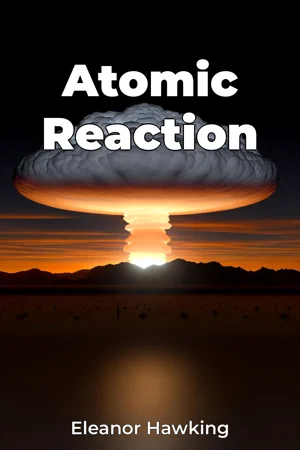
"Atomic Reaction" examines the scientific principles, historical development, and lasting implications of nuclear weapons technology, beginning with a fundamental question that shaped the 20th century: How did humanity harness the power of the atom to create the most destructive force in history? This comprehensive analysis bridges the gap between theoretical physics and military application, exploring three core elements: the scientific foundations of nuclear fission and fusion, the Manhattan Project's technological breakthrough, and the global impact of atomic weapons on military strategy and international relations. The book's structure follows the progression of nuclear science and its military applications across three distinct sections. The first part establishes the essential physics concepts, including atomic structure, radioactivity, and chain reactions, presented in accessible terms for readers with basic science knowledge. The second section details the technical development of the first atomic weapons, incorporating recently declassified documents and firsthand accounts from Manhattan Project participants. The final section analyzes the strategic and political consequences of nuclear proliferation. Central to the narrative is the argument that atomic weapons represented not just a technological advancement but a fundamental shift in human civilization, permanently altering international relations, military doctrine, and scientific responsibility. This thesis is supported by extensive primary source documentation, including military records, scientific papers, and diplomatic communications. The research draws from multiple disciplines, incorporating physics textbooks, military archives, and diplomatic records. The book features technical diagrams, firsthand accounts, and detailed explanations of both successful and failed atomic development programs worldwide. Special attention is given to the scientific principles that make nuclear weapons possible, explained through carefully crafted analogies and clear, step-by-step breakdowns. The text maintains a measured, academic tone while remaining accessible to educated general readers. Technical concepts are explained thoroughly but clearly, with careful attention to building understanding from fundamental principles. The writing style balances scientific precision with historical narrative, making complex concepts comprehensible without oversimplification. "Atomic Reaction" is particularly relevant for students of physics, military history enthusiasts, and policy analysts. It addresses ongoing debates about nuclear proliferation, deterrence theory, and the role of atomic weapons in modern military strategy. The book acknowledges but does not advocate for particular positions on nuclear disarmament or energy policy, instead focusing on factual presentation and analysis. The book's interdisciplinary approach connects physics principles to engineering challenges, military strategy, and international relations. This integration helps readers understand how scientific discoveries translate into military capabilities and political power. The text includes practical discussions of radiation effects, blast dynamics, and the principles of nuclear deterrence. Limitations are clearly stated: the book focuses primarily on fission and fusion weapons, not covering radiological devices or nuclear power generation in detail. It maintains objective distance from current political debates while providing the technical and historical context needed to understand them. The work serves as both a technical reference and a historical account, valuable to readers seeking to understand the scientific principles behind nuclear weapons, their historical development, and their continuing influence on international relations. It addresses contemporary issues including proliferation concerns, modernization programs, and the evolution of deterrence theory in a multi-polar world.
"Atomic Reaction" examines the scientific principles, historical development, and lasting implications of nuclear weapons technology, beginning with a fundamental question that shaped the 20th century: How did humanity harness the power of the atom to create the most destructive force in history? This comprehensive analysis bridges the gap between theoretical physics and military application, exploring three core elements: the scientific foundations of nuclear fission and fusion, the Manhattan Project's technological breakthrough, and the global impact of atomic weapons on military strategy and international relations. The book's structure follows the progression of nuclear science and its military applications across three distinct sections. The first part establishes the essential physics concepts, including atomic structure, radioactivity, and chain reactions, presented in accessible terms for readers with basic science knowledge. The second section details the technical development of the first atomic weapons, incorporating recently declassified documents and firsthand accounts from Manhattan Project participants. The final section analyzes the strategic and political consequences of nuclear proliferation. Central to the narrative is the argument that atomic weapons represented not just a technological advancement but a fundamental shift in human civilization, permanently altering international relations, military doctrine, and scientific responsibility. This thesis is supported by extensive primary source documentation, including military records, scientific papers, and diplomatic communications. The research draws from multiple disciplines, incorporating physics textbooks, military archives, and diplomatic records. The book features technical diagrams, firsthand accounts, and detailed explanations of both successful and failed atomic development programs worldwide. Special attention is given to the scientific principles that make nuclear weapons possible, explained through carefully crafted analogies and clear, step-by-step breakdowns. The text maintains a measured, academic tone while remaining accessible to educated general readers. Technical concepts are explained thoroughly but clearly, with careful attention to building understanding from fundamental principles. The writing style balances scientific precision with historical narrative, making complex concepts comprehensible without oversimplification. "Atomic Reaction" is particularly relevant for students of physics, military history enthusiasts, and policy analysts. It addresses ongoing debates about nuclear proliferation, deterrence theory, and the role of atomic weapons in modern military strategy. The book acknowledges but does not advocate for particular positions on nuclear disarmament or energy policy, instead focusing on factual presentation and analysis. The book's interdisciplinary approach connects physics principles to engineering challenges, military strategy, and international relations. This integration helps readers understand how scientific discoveries translate into military capabilities and political power. The text includes practical discussions of radiation effects, blast dynamics, and the principles of nuclear deterrence. Limitations are clearly stated: the book focuses primarily on fission and fusion weapons, not covering radiological devices or nuclear power generation in detail. It maintains objective distance from current political debates while providing the technical and historical context needed to understand them. The work serves as both a technical reference and a historical account, valuable to readers seeking to understand the scientific principles behind nuclear weapons, their historical development, and their continuing influence on international relations. It addresses contemporary issues including proliferation concerns, modernization programs, and the evolution of deterrence theory in a multi-polar world.
"Atomic Reaction" provides a comprehensive exploration of nuclear weapons technology, expertly weaving together the scientific principles of atomic physics with the dramatic historical narrative of the Manhattan Project and its far-reaching consequences. The book uniquely bridges the gap between complex physics concepts and their military applications, making it accessible to readers with basic scientific knowledge while maintaining academic rigor. The narrative unfolds across three distinct sections, beginning with fundamental physics concepts like atomic structure and nuclear fission, explained through carefully crafted analogies and clear breakdowns. Drawing from recently declassified documents and firsthand accounts, the second section delves into the technical development of the first atomic weapons through the Manhattan Project. The final section examines how nuclear weapons transformed international relations and military strategy, fundamentally altering the course of human civilization. This interdisciplinary work stands out for its meticulous research, incorporating primary sources from physics textbooks to military archives and diplomatic records. Technical concepts are illuminated through practical discussions of radiation effects and blast dynamics, while the broader implications of nuclear proliferation and deterrence theory are explored with scholarly objectivity. The book's balanced approach makes it particularly valuable for physics students, military history enthusiasts, and policy analysts seeking to understand both the scientific principles and historical context of nuclear weapons development.
Book Details
ISBN
9788233935566
Publisher
Publifye AS
Your Licenses
You don't own any licenses for this book
Purchase a license below to unlock this book and download the EPUB.
Purchase License
Select a tier to unlock this book
Need bulk licensing?
Contact us for enterprise agreements.