
About This Book
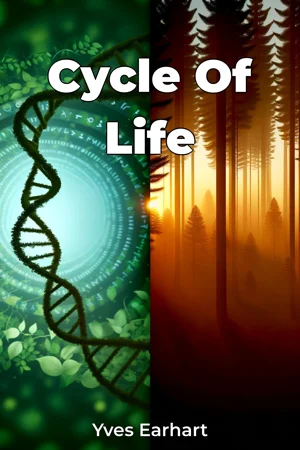
"Cycle of Life" explores the fundamental patterns of existence that connect all living organisms, from the smallest microorganisms to complex human societies. The book examines how cyclical patterns manifest in nature, biology, and ecological systems, offering readers a comprehensive understanding of life's recurring processes. The work begins by establishing the universal presence of cycles in nature, from the cellular level to ecosystem-wide phenomena. Through detailed analysis, it demonstrates how these patterns create a framework for understanding biological processes, seasonal changes, and species development. The text presents three core themes: biological rhythms, environmental cycles, and life stage progressions. Drawing from current research in chronobiology, ecology, and evolutionary biology, the book provides evidence-based explanations for how cycles maintain biological balance. It presents data from long-term studies of animal migration patterns, plant life cycles, and human biological rhythms, incorporating research from institutions worldwide. The content is structured in three main sections. The first examines cellular and molecular cycles, including circadian rhythms and cell division. The second explores environmental cycles, detailing seasonal changes, reproductive cycles, and ecosystem dynamics. The final section addresses life stage progression across species, from birth through growth, reproduction, and death. The book makes important connections between biology, environmental science, and human health. It demonstrates how understanding natural cycles can inform medical treatments, agricultural practices, and conservation efforts. The research presented includes case studies from diverse ecosystems, laboratory findings, and field observations. The writing maintains a clear, systematic approach, making complex biological concepts accessible to readers with basic science knowledge. Technical terms are carefully explained, and concepts build progressively from fundamental principles to more complex interactions. The target audience includes biology students, environmental professionals, and individuals interested in natural sciences. The book serves as both an academic resource and a practical guide for understanding natural patterns that affect daily life. What sets this work apart is its integration of traditional biological knowledge with current research on climate change impacts on natural cycles. It addresses how human activities affect these patterns and what these changes mean for future ecosystem stability. The text acknowledges ongoing debates in the field, particularly regarding the impact of artificial light on biological rhythms and the effects of climate change on seasonal patterns. It presents multiple viewpoints while maintaining focus on established scientific evidence. Practical applications include insights for agriculture, healthcare, and conservation. Readers learn how to apply understanding of natural cycles to optimize crop planning, manage sleep patterns, and support wildlife conservation efforts. The book's scope encompasses both macro and micro scales, from planetary seasonal changes to cellular rhythms, while maintaining focus on verifiable scientific processes. It intentionally limits speculation about future trends, staying grounded in current research and documented patterns. Research methods described include long-term observation studies, laboratory experiments, and data analysis from multiple scientific disciplines. The work synthesizes findings from biology, ecology, climatology, and related fields to present a comprehensive view of life's cyclical nature. The book concludes by examining how understanding these patterns can improve human interaction with natural systems and support more sustainable practices in various fields, from agriculture to urban planning.
"Cycle of Life" explores the fundamental patterns of existence that connect all living organisms, from the smallest microorganisms to complex human societies. The book examines how cyclical patterns manifest in nature, biology, and ecological systems, offering readers a comprehensive understanding of life's recurring processes. The work begins by establishing the universal presence of cycles in nature, from the cellular level to ecosystem-wide phenomena. Through detailed analysis, it demonstrates how these patterns create a framework for understanding biological processes, seasonal changes, and species development. The text presents three core themes: biological rhythms, environmental cycles, and life stage progressions. Drawing from current research in chronobiology, ecology, and evolutionary biology, the book provides evidence-based explanations for how cycles maintain biological balance. It presents data from long-term studies of animal migration patterns, plant life cycles, and human biological rhythms, incorporating research from institutions worldwide. The content is structured in three main sections. The first examines cellular and molecular cycles, including circadian rhythms and cell division. The second explores environmental cycles, detailing seasonal changes, reproductive cycles, and ecosystem dynamics. The final section addresses life stage progression across species, from birth through growth, reproduction, and death. The book makes important connections between biology, environmental science, and human health. It demonstrates how understanding natural cycles can inform medical treatments, agricultural practices, and conservation efforts. The research presented includes case studies from diverse ecosystems, laboratory findings, and field observations. The writing maintains a clear, systematic approach, making complex biological concepts accessible to readers with basic science knowledge. Technical terms are carefully explained, and concepts build progressively from fundamental principles to more complex interactions. The target audience includes biology students, environmental professionals, and individuals interested in natural sciences. The book serves as both an academic resource and a practical guide for understanding natural patterns that affect daily life. What sets this work apart is its integration of traditional biological knowledge with current research on climate change impacts on natural cycles. It addresses how human activities affect these patterns and what these changes mean for future ecosystem stability. The text acknowledges ongoing debates in the field, particularly regarding the impact of artificial light on biological rhythms and the effects of climate change on seasonal patterns. It presents multiple viewpoints while maintaining focus on established scientific evidence. Practical applications include insights for agriculture, healthcare, and conservation. Readers learn how to apply understanding of natural cycles to optimize crop planning, manage sleep patterns, and support wildlife conservation efforts. The book's scope encompasses both macro and micro scales, from planetary seasonal changes to cellular rhythms, while maintaining focus on verifiable scientific processes. It intentionally limits speculation about future trends, staying grounded in current research and documented patterns. Research methods described include long-term observation studies, laboratory experiments, and data analysis from multiple scientific disciplines. The work synthesizes findings from biology, ecology, climatology, and related fields to present a comprehensive view of life's cyclical nature. The book concludes by examining how understanding these patterns can improve human interaction with natural systems and support more sustainable practices in various fields, from agriculture to urban planning.
Cycle Of Life presents a fascinating exploration of the interconnected patterns that govern all living systems, from microscopic cellular processes to vast ecosystem dynamics. This comprehensive work unveils how cyclical patterns form the backbone of life itself, examining three fundamental themes: biological rhythms, environmental cycles, and life stage progressions. Through careful analysis of current research, the book demonstrates how these recurring patterns maintain the delicate balance of life on Earth, incorporating studies of animal migration, plant development, and human biological rhythms. The book's systematic approach progresses from the microscopic to the macroscopic, beginning with cellular and molecular cycles like circadian rhythms, then expanding to broader environmental patterns such as seasonal changes and reproductive cycles. The final section examines life stage progression across different species, creating a complete picture of nature's interconnected cycles. What makes this work particularly valuable is its integration of traditional biological knowledge with contemporary research on how climate change and human activities impact these natural patterns. Throughout its chapters, the book maintains accessibility while tackling complex concepts, making it an invaluable resource for biology students, environmental professionals, and nature enthusiasts. By connecting theoretical understanding with practical applications in agriculture, healthcare, and conservation, it demonstrates how knowledge of biological cycles can inform better decision-making in various fields. The inclusion of case studies from diverse ecosystems and research institutions worldwide provides readers with concrete examples of these principles in action.
Book Details
ISBN
9788233935306
Publisher
Publifye AS
Your Licenses
You don't own any licenses for this book
Purchase a license below to unlock this book and download the EPUB.
Purchase License
Select a tier to unlock this book
Need bulk licensing?
Contact us for enterprise agreements.