
About This Book
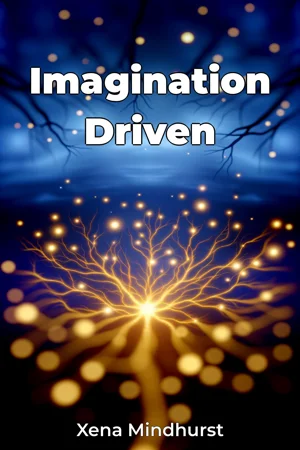
"Imagination Driven" challenges the conventional separation between creative thinking and practical execution, presenting a research-based framework for integrating imaginative processes into daily decision-making and problem-solving. The book explores three fundamental concepts: the neuroscience of imaginative thinking, the systematic application of creative processes to practical challenges, and the development of sustainable imagination-driven habits. Drawing from cognitive psychology, organizational behavior, and creativity studies, it demonstrates how imagination serves as the cornerstone of both innovation and practical problem-solving. Recent studies in cognitive neuroscience reveal that imagination and practical reasoning activate interconnected neural networks, suggesting that these processes are naturally linked rather than opposed. The book builds upon this foundation to present a unified approach to decision-making that harnesses both creative and analytical thinking. The central thesis argues that imagination is not merely a tool for artistic expression but a fundamental cognitive resource that can enhance all aspects of life, from business strategy to personal development. This perspective is supported by case studies from various fields, including business innovation, scientific discovery, and educational reform. The content is structured in three parts: First, it establishes the scientific basis for imagination's role in decision-making. Second, it presents a practical framework for applying imaginative thinking to everyday challenges. Third, it offers specific methodologies for developing and maintaining an imagination-driven approach to life and work. Research evidence includes longitudinal studies of successful innovators, cognitive experiments on decision-making processes, and organizational case studies. The book incorporates data from the Stanford Imagination Project and the MIT Creative Cognition Lab, providing empirical support for its recommendations. The work connects psychology, neuroscience, and organizational behavior, while drawing insights from evolutionary biology regarding the development of human cognitive capabilities. These interdisciplinary connections provide a comprehensive understanding of imagination's role in human capability. The book introduces the "Practical Imagination Protocol," a structured approach to problem-solving that combines creative thinking with analytical methods. This protocol has been tested in various organizational settings and refined through feedback from practitioners. Written in an accessible academic style, the text balances theoretical foundations with practical applications, using clear language and relevant examples to illustrate complex concepts. The target audience includes professionals seeking to enhance their problem-solving capabilities, leaders looking to foster innovation in their organizations, and individuals interested in personal development through enhanced creative thinking. The scope encompasses both individual and organizational applications, though it primarily focuses on cognitive processes and their practical implementation rather than artistic or purely creative pursuits. Practical applications include decision-making frameworks, problem-solving techniques, and methods for developing imaginative capabilities in professional contexts. The book provides structured exercises and assessment tools for readers to apply the concepts in their own lives. The work addresses ongoing debates in cognitive science about the relationship between creative and analytical thinking, offering evidence-based perspectives on how these seemingly opposed processes can work together effectively. This comprehensive guide provides readers with tools to integrate imaginative thinking into their practical decision-making processes, supported by current research and tested methodologies.
"Imagination Driven" challenges the conventional separation between creative thinking and practical execution, presenting a research-based framework for integrating imaginative processes into daily decision-making and problem-solving. The book explores three fundamental concepts: the neuroscience of imaginative thinking, the systematic application of creative processes to practical challenges, and the development of sustainable imagination-driven habits. Drawing from cognitive psychology, organizational behavior, and creativity studies, it demonstrates how imagination serves as the cornerstone of both innovation and practical problem-solving. Recent studies in cognitive neuroscience reveal that imagination and practical reasoning activate interconnected neural networks, suggesting that these processes are naturally linked rather than opposed. The book builds upon this foundation to present a unified approach to decision-making that harnesses both creative and analytical thinking. The central thesis argues that imagination is not merely a tool for artistic expression but a fundamental cognitive resource that can enhance all aspects of life, from business strategy to personal development. This perspective is supported by case studies from various fields, including business innovation, scientific discovery, and educational reform. The content is structured in three parts: First, it establishes the scientific basis for imagination's role in decision-making. Second, it presents a practical framework for applying imaginative thinking to everyday challenges. Third, it offers specific methodologies for developing and maintaining an imagination-driven approach to life and work. Research evidence includes longitudinal studies of successful innovators, cognitive experiments on decision-making processes, and organizational case studies. The book incorporates data from the Stanford Imagination Project and the MIT Creative Cognition Lab, providing empirical support for its recommendations. The work connects psychology, neuroscience, and organizational behavior, while drawing insights from evolutionary biology regarding the development of human cognitive capabilities. These interdisciplinary connections provide a comprehensive understanding of imagination's role in human capability. The book introduces the "Practical Imagination Protocol," a structured approach to problem-solving that combines creative thinking with analytical methods. This protocol has been tested in various organizational settings and refined through feedback from practitioners. Written in an accessible academic style, the text balances theoretical foundations with practical applications, using clear language and relevant examples to illustrate complex concepts. The target audience includes professionals seeking to enhance their problem-solving capabilities, leaders looking to foster innovation in their organizations, and individuals interested in personal development through enhanced creative thinking. The scope encompasses both individual and organizational applications, though it primarily focuses on cognitive processes and their practical implementation rather than artistic or purely creative pursuits. Practical applications include decision-making frameworks, problem-solving techniques, and methods for developing imaginative capabilities in professional contexts. The book provides structured exercises and assessment tools for readers to apply the concepts in their own lives. The work addresses ongoing debates in cognitive science about the relationship between creative and analytical thinking, offering evidence-based perspectives on how these seemingly opposed processes can work together effectively. This comprehensive guide provides readers with tools to integrate imaginative thinking into their practical decision-making processes, supported by current research and tested methodologies.
"Imagination Driven" presents a groundbreaking perspective on the integration of creative thinking and practical decision-making, backed by cutting-edge cognitive neuroscience research. The book challenges the traditional notion that imagination and practical reasoning are separate processes, revealing how these mental functions actually work together through interconnected neural networks to enhance problem-solving capabilities and innovation. Through a well-structured three-part approach, the book first establishes the scientific foundation of imagination's role in decision-making, drawing from studies at prestigious institutions like the Stanford Imagination Project and MIT Creative Cognition Lab. It then introduces the "Practical Imagination Protocol," a systematic framework that combines creative and analytical thinking for everyday problem-solving. The final section provides concrete methodologies for developing sustainable imagination-driven habits that can be applied in both personal and professional contexts. What sets this book apart is its comprehensive synthesis of cognitive psychology, neuroscience, and organizational behavior, making complex concepts accessible through practical examples and structured exercises. Rather than treating imagination as merely a tool for artistic expression, it demonstrates how imaginative thinking can be systematically applied to enhance business strategy, scientific discovery, and personal development. The book's evidence-based approach, combining theoretical insights with practical applications, makes it an invaluable resource for professionals seeking to improve their problem-solving capabilities and leaders aiming to foster innovation in their organizations.
Book Details
ISBN
9788233935276
Publisher
Publifye AS
Your Licenses
You don't own any licenses for this book
Purchase a license below to unlock this book and download the EPUB.
Purchase License
Select a tier to unlock this book
Need bulk licensing?
Contact us for enterprise agreements.