
About This Book
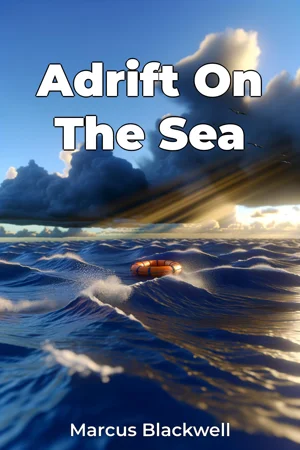
"Adrift On The Sea" presents a meticulously researched examination of maritime survival, drawing from documented cases, scientific data, and firsthand accounts of individuals who endured prolonged periods at sea. The book addresses the critical question that has challenged mariners throughout history: What determines survival when stranded on the vast ocean? Through three main sections, the book analyzes the physiological, psychological, and technical aspects of sea survival. The first section examines the human body's responses to extreme maritime conditions, including dehydration, exposure, and saltwater effects. The second explores the psychological strategies employed by survivors, while the third details practical survival techniques and equipment utilization. The work builds upon historical records dating back to the 18th century, incorporating modern scientific understanding of human endurance and maritime safety protocols. It references notable cases such as the 1982 Steven Callahan survival story and the 2014 Pacific crossing of Jose Salvador Alvarenga, analyzing the methods these survivors employed. The central thesis argues that survival at sea depends on an interconnected matrix of preparation, knowledge, and adaptability. The book demonstrates how these elements work together through detailed analysis of successful survival cases and unfortunate failures, providing readers with a comprehensive understanding of maritime survival principles. The content progresses from basic survival theory to practical applications, including chapters on: - Physical and mental preparation for sea emergencies - Navigation and position maintenance - Water procurement and food sourcing - Emergency equipment utilization - Signal and rescue protocols The research draws from maritime databases, survivor interviews, naval records, and medical studies on the effects of prolonged sea exposure. The methodology combines statistical analysis with narrative accounts, creating a balanced perspective on survival factors. The book connects multiple disciplines, including marine biology, meteorology, and psychology, showing how understanding these fields enhances survival chances. It also explores the relationship between modern technology and traditional survival techniques, demonstrating their complementary roles. Written in a clear, instructional style, the text alternates between analytical sections and narrative examples, making complex concepts accessible while maintaining academic rigor. The approach focuses on practical application, with each chapter including actionable takeaways for readers. The target audience includes maritime professionals, adventure enthusiasts, and safety personnel, though the principles discussed apply broadly to crisis management and survival situations. The book serves both as a practical manual and an academic resource, providing value to casual readers and professionals alike. The work acknowledges ongoing debates in survival methodology, particularly regarding equipment priorities and psychological preparation techniques. It addresses these controversies through evidence-based analysis while remaining objective in its presentation. The scope encompasses both short-term and extended survival scenarios, though it primarily focuses on situations lasting beyond 72 hours. While the book centers on ocean survival, many principles discussed apply to general emergency preparedness and crisis management. Each chapter concludes with practical exercises and checklists, allowing readers to develop and test their knowledge. The book maintains a focus on verified techniques and documented cases, avoiding sensationalism in favor of substantiated information and proven methods.
"Adrift On The Sea" presents a meticulously researched examination of maritime survival, drawing from documented cases, scientific data, and firsthand accounts of individuals who endured prolonged periods at sea. The book addresses the critical question that has challenged mariners throughout history: What determines survival when stranded on the vast ocean? Through three main sections, the book analyzes the physiological, psychological, and technical aspects of sea survival. The first section examines the human body's responses to extreme maritime conditions, including dehydration, exposure, and saltwater effects. The second explores the psychological strategies employed by survivors, while the third details practical survival techniques and equipment utilization. The work builds upon historical records dating back to the 18th century, incorporating modern scientific understanding of human endurance and maritime safety protocols. It references notable cases such as the 1982 Steven Callahan survival story and the 2014 Pacific crossing of Jose Salvador Alvarenga, analyzing the methods these survivors employed. The central thesis argues that survival at sea depends on an interconnected matrix of preparation, knowledge, and adaptability. The book demonstrates how these elements work together through detailed analysis of successful survival cases and unfortunate failures, providing readers with a comprehensive understanding of maritime survival principles. The content progresses from basic survival theory to practical applications, including chapters on: - Physical and mental preparation for sea emergencies - Navigation and position maintenance - Water procurement and food sourcing - Emergency equipment utilization - Signal and rescue protocols The research draws from maritime databases, survivor interviews, naval records, and medical studies on the effects of prolonged sea exposure. The methodology combines statistical analysis with narrative accounts, creating a balanced perspective on survival factors. The book connects multiple disciplines, including marine biology, meteorology, and psychology, showing how understanding these fields enhances survival chances. It also explores the relationship between modern technology and traditional survival techniques, demonstrating their complementary roles. Written in a clear, instructional style, the text alternates between analytical sections and narrative examples, making complex concepts accessible while maintaining academic rigor. The approach focuses on practical application, with each chapter including actionable takeaways for readers. The target audience includes maritime professionals, adventure enthusiasts, and safety personnel, though the principles discussed apply broadly to crisis management and survival situations. The book serves both as a practical manual and an academic resource, providing value to casual readers and professionals alike. The work acknowledges ongoing debates in survival methodology, particularly regarding equipment priorities and psychological preparation techniques. It addresses these controversies through evidence-based analysis while remaining objective in its presentation. The scope encompasses both short-term and extended survival scenarios, though it primarily focuses on situations lasting beyond 72 hours. While the book centers on ocean survival, many principles discussed apply to general emergency preparedness and crisis management. Each chapter concludes with practical exercises and checklists, allowing readers to develop and test their knowledge. The book maintains a focus on verified techniques and documented cases, avoiding sensationalism in favor of substantiated information and proven methods.
"Adrift On The Sea" offers a comprehensive exploration of maritime survival through the lens of real-life cases and scientific research, examining what it truly takes to survive when stranded on the open ocean. The book masterfully weaves together three crucial aspects of sea survival: the body's physical responses to extreme maritime conditions, the psychological battles faced by survivors, and the practical techniques that can mean the difference between life and death at sea. Drawing from historical records and modern scientific understanding, the book analyzes remarkable survival stories, including Steven Callahan's 1982 ordeal and Jose Salvador Alvarenga's 2014 Pacific crossing. These compelling accounts serve as practical demonstrations of the book's central argument: that survival at sea depends on the intricate relationship between preparation, knowledge, and adaptability. The text thoughtfully balances academic rigor with accessibility, presenting complex concepts through a combination of analytical insights and narrative examples. The book progresses logically from fundamental survival theory to practical applications, covering essential topics like emergency preparedness, navigation, water procurement, and rescue protocols. What sets this work apart is its multidisciplinary approach, incorporating insights from marine biology, meteorology, and psychology to create a holistic understanding of maritime survival. Each chapter concludes with practical exercises and checklists, making it an invaluable resource for both maritime professionals and adventure enthusiasts interested in understanding the challenges and strategies of ocean survival.
Book Details
ISBN
9788233935092
Publisher
Publifye AS
Your Licenses
You don't own any licenses for this book
Purchase a license below to unlock this book and download the EPUB.
Purchase License
Select a tier to unlock this book
Need bulk licensing?
Contact us for enterprise agreements.