
About This Book
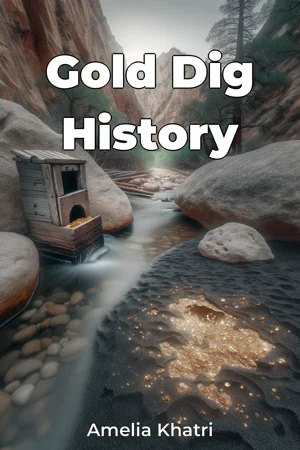
"Gold Dig History" examines humanity's enduring fascination with gold through the lens of major gold rushes and their lasting impact on global civilization. From the first glint of gold in ancient riverbeds to modern mining operations, this book traces how this precious metal has shaped economies, altered landscapes, and driven human migration patterns across centuries. The narrative begins with the fundamental question: Why has gold consistently held such power over human society? Through meticulous research and historical documentation, the book explores three primary themes: the geological formation and distribution of gold deposits, the sociological impact of major gold rushes, and the economic principles that have governed gold's value throughout history. The first section establishes the scientific foundation, explaining gold's physical properties and geological processes that created major deposits. Readers learn about placer mining, hydraulic mining, and modern extraction methods, supported by data from geological surveys and mining operations across six continents. Moving chronologically, the book examines significant gold rushes, including California (1848), Australia (1851), South Africa (1886), and Klondike (1896). Each chapter analyzes the distinct characteristics of these events, drawing from primary sources such as prospectors' journals, government records, and contemporary newspaper accounts. The text demonstrates how these rushes catalyzed rapid development, establishing infrastructure and communities that often outlived the initial gold fever. The economic analysis section integrates historical data with modern monetary theory, examining gold's role in international trade, currency systems, and financial crises. The book incorporates research from economic historians and banking archives to illustrate gold's influence on global financial systems. What distinguishes this work is its interdisciplinary approach, connecting geology, economics, and anthropology. The author draws upon archaeological findings, chemical analysis of historical artifacts, and modern economic models to present a comprehensive understanding of gold's significance. The writing maintains an academic foundation while employing narrative techniques to engage readers. Technical concepts are explained through practical examples and real-world applications, making complex information accessible to both general readers and subject matter experts. This book serves multiple audiences: historians seeking detailed analysis of resource-driven migration, investors understanding gold's economic role, and general readers interested in the human stories behind major gold rushes. The content is particularly relevant for those studying economic history, geology, or resource management. The scope encompasses both macro-level economic analysis and micro-level human experiences, though it primarily focuses on well-documented rushes from the 19th century onward. The book acknowledges ongoing debates about gold's future role in the global economy and addresses contemporary challenges in responsible resource extraction. Practical applications include insights for modern resource management, investment strategy, and economic policy. The book examines current gold mining practices and their environmental impact, providing context for contemporary discussions about sustainable resource extraction. Supporting evidence comes from diverse sources: geological surveys, economic data, personal accounts, and archaeological findings. The research incorporates recent studies on environmental impact and technological innovations in gold extraction, ensuring contemporary relevance while maintaining historical accuracy. The book concludes by examining gold's continuing influence on modern society, from investment practices to industrial applications, providing readers with a framework for understanding both historical events and contemporary gold-related issues.
"Gold Dig History" examines humanity's enduring fascination with gold through the lens of major gold rushes and their lasting impact on global civilization. From the first glint of gold in ancient riverbeds to modern mining operations, this book traces how this precious metal has shaped economies, altered landscapes, and driven human migration patterns across centuries. The narrative begins with the fundamental question: Why has gold consistently held such power over human society? Through meticulous research and historical documentation, the book explores three primary themes: the geological formation and distribution of gold deposits, the sociological impact of major gold rushes, and the economic principles that have governed gold's value throughout history. The first section establishes the scientific foundation, explaining gold's physical properties and geological processes that created major deposits. Readers learn about placer mining, hydraulic mining, and modern extraction methods, supported by data from geological surveys and mining operations across six continents. Moving chronologically, the book examines significant gold rushes, including California (1848), Australia (1851), South Africa (1886), and Klondike (1896). Each chapter analyzes the distinct characteristics of these events, drawing from primary sources such as prospectors' journals, government records, and contemporary newspaper accounts. The text demonstrates how these rushes catalyzed rapid development, establishing infrastructure and communities that often outlived the initial gold fever. The economic analysis section integrates historical data with modern monetary theory, examining gold's role in international trade, currency systems, and financial crises. The book incorporates research from economic historians and banking archives to illustrate gold's influence on global financial systems. What distinguishes this work is its interdisciplinary approach, connecting geology, economics, and anthropology. The author draws upon archaeological findings, chemical analysis of historical artifacts, and modern economic models to present a comprehensive understanding of gold's significance. The writing maintains an academic foundation while employing narrative techniques to engage readers. Technical concepts are explained through practical examples and real-world applications, making complex information accessible to both general readers and subject matter experts. This book serves multiple audiences: historians seeking detailed analysis of resource-driven migration, investors understanding gold's economic role, and general readers interested in the human stories behind major gold rushes. The content is particularly relevant for those studying economic history, geology, or resource management. The scope encompasses both macro-level economic analysis and micro-level human experiences, though it primarily focuses on well-documented rushes from the 19th century onward. The book acknowledges ongoing debates about gold's future role in the global economy and addresses contemporary challenges in responsible resource extraction. Practical applications include insights for modern resource management, investment strategy, and economic policy. The book examines current gold mining practices and their environmental impact, providing context for contemporary discussions about sustainable resource extraction. Supporting evidence comes from diverse sources: geological surveys, economic data, personal accounts, and archaeological findings. The research incorporates recent studies on environmental impact and technological innovations in gold extraction, ensuring contemporary relevance while maintaining historical accuracy. The book concludes by examining gold's continuing influence on modern society, from investment practices to industrial applications, providing readers with a framework for understanding both historical events and contemporary gold-related issues.
"Gold Dig History" presents a fascinating exploration of how gold has fundamentally shaped human civilization, from ancient times to the modern era. The book masterfully weaves together three interconnected narratives: the geological science behind gold formation, the sociological impact of major gold rushes, and the metal's enduring influence on global economic systems. Through careful examination of significant events like the California Gold Rush of 1848 and the Klondike Gold Rush of 1896, readers discover how these pivotal moments catalyzed massive social changes and infrastructure development that extended far beyond the initial quest for wealth. The narrative uniquely combines scientific rigor with compelling storytelling, making complex concepts accessible through practical examples and real-world applications. Drawing from an impressive array of primary sources, including prospectors' journals and government records, the book reveals how gold rushes transformed landscapes and communities across six continents. Particularly noteworthy is its treatment of placer mining and hydraulic mining techniques, demonstrating how technological advancement in gold extraction paralleled societal development. What sets this work apart is its interdisciplinary approach, bridging the gaps between geology, economics, and anthropology. The book progresses chronologically through major gold rushes while maintaining thematic connections to modern challenges in resource management and financial systems. This comprehensive examination serves both academic and general audiences, offering valuable insights into how this precious metal continues to influence contemporary society, from investment practices to industrial applications.
Book Details
ISBN
9788233935030
Publisher
Publifye AS
Your Licenses
You don't own any licenses for this book
Purchase a license below to unlock this book and download the EPUB.
Purchase License
Select a tier to unlock this book
Need bulk licensing?
Contact us for enterprise agreements.