
About This Book
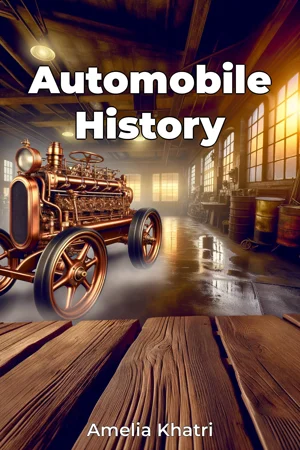
"Automobile History" presents a comprehensive exploration of how motorized transportation revolutionized human society, tracing the evolution from the first steam-powered vehicles to contemporary electric cars. This detailed examination combines mechanical engineering principles with historical context to illuminate the technological advances that shaped modern mobility. The book establishes three primary focal points: the technological progression of automobile design, the societal impact of widespread motorization, and the industrial innovations that enabled mass production. These interconnected themes demonstrate how automotive development catalyzed changes in manufacturing, urban planning, and global commerce. Beginning with early experiments in self-propelled vehicles during the 18th century, the narrative examines crucial developments including Gottlieb Daimler's internal combustion engine, Henry Ford's assembly line techniques, and the emergence of automotive safety standards. The text provides technical specifications and engineering principles accessible to general readers while maintaining sufficient depth for those with mechanical knowledge. The central thesis argues that automobile development represents a crucial intersection of mechanical innovation, industrial progress, and social transformation. This argument is supported through detailed case studies of pivotal moments in automotive history, including the transition from craftsman-built cars to mass production, the impact of two world wars on vehicular advancement, and the rise of global automotive corporations. The content is structured chronologically, with thematic chapters examining specific aspects of automobile development. Key sections include the evolution of power systems, advancements in materials science, the development of safety features, and the emergence of computer-aided design. The book concludes with an analysis of current trends in autonomous vehicles and alternative fuel systems. Research draws from engineering documentation, patent records, industrial archives, and historical accounts. Technical illustrations and diagrams supplement the text, providing visual clarification of mechanical concepts and design evolution. The work connects multiple disciplines, including mechanical engineering, industrial design, economic history, and environmental science. These intersections provide context for understanding how automotive development influenced urban planning, environmental regulations, and global trade patterns. The book employs an analytical approach, combining technical exposition with historical narrative. Complex engineering concepts are explained through practical examples and clear illustrations, making technical content accessible to non-specialists while maintaining accuracy and depth. Written in a structured, academic style, the text balances technical detail with historical context. Each chapter builds upon previous information, creating a coherent progression from basic principles to complex systems. The target audience includes engineering students, automotive industry professionals, and history enthusiasts. The material serves both as an educational resource and a reference work for understanding the technical and social aspects of automotive development. The scope encompasses global automotive development from the late 18th century to present day, with particular emphasis on major technological transitions and their broader implications. While focused primarily on passenger vehicles, the text acknowledges parallel developments in commercial and industrial transport. Practical applications include understanding current automotive technology, analyzing industry trends, and evaluating future developments in transportation. The book addresses ongoing debates regarding sustainable transportation, automation, and the future role of personal vehicles in urban environments. This work provides a foundation for understanding both the technical evolution of automobiles and their profound influence on modern society, offering readers insight into past developments and future possibilities in transportation technology.
"Automobile History" presents a comprehensive exploration of how motorized transportation revolutionized human society, tracing the evolution from the first steam-powered vehicles to contemporary electric cars. This detailed examination combines mechanical engineering principles with historical context to illuminate the technological advances that shaped modern mobility. The book establishes three primary focal points: the technological progression of automobile design, the societal impact of widespread motorization, and the industrial innovations that enabled mass production. These interconnected themes demonstrate how automotive development catalyzed changes in manufacturing, urban planning, and global commerce. Beginning with early experiments in self-propelled vehicles during the 18th century, the narrative examines crucial developments including Gottlieb Daimler's internal combustion engine, Henry Ford's assembly line techniques, and the emergence of automotive safety standards. The text provides technical specifications and engineering principles accessible to general readers while maintaining sufficient depth for those with mechanical knowledge. The central thesis argues that automobile development represents a crucial intersection of mechanical innovation, industrial progress, and social transformation. This argument is supported through detailed case studies of pivotal moments in automotive history, including the transition from craftsman-built cars to mass production, the impact of two world wars on vehicular advancement, and the rise of global automotive corporations. The content is structured chronologically, with thematic chapters examining specific aspects of automobile development. Key sections include the evolution of power systems, advancements in materials science, the development of safety features, and the emergence of computer-aided design. The book concludes with an analysis of current trends in autonomous vehicles and alternative fuel systems. Research draws from engineering documentation, patent records, industrial archives, and historical accounts. Technical illustrations and diagrams supplement the text, providing visual clarification of mechanical concepts and design evolution. The work connects multiple disciplines, including mechanical engineering, industrial design, economic history, and environmental science. These intersections provide context for understanding how automotive development influenced urban planning, environmental regulations, and global trade patterns. The book employs an analytical approach, combining technical exposition with historical narrative. Complex engineering concepts are explained through practical examples and clear illustrations, making technical content accessible to non-specialists while maintaining accuracy and depth. Written in a structured, academic style, the text balances technical detail with historical context. Each chapter builds upon previous information, creating a coherent progression from basic principles to complex systems. The target audience includes engineering students, automotive industry professionals, and history enthusiasts. The material serves both as an educational resource and a reference work for understanding the technical and social aspects of automotive development. The scope encompasses global automotive development from the late 18th century to present day, with particular emphasis on major technological transitions and their broader implications. While focused primarily on passenger vehicles, the text acknowledges parallel developments in commercial and industrial transport. Practical applications include understanding current automotive technology, analyzing industry trends, and evaluating future developments in transportation. The book addresses ongoing debates regarding sustainable transportation, automation, and the future role of personal vehicles in urban environments. This work provides a foundation for understanding both the technical evolution of automobiles and their profound influence on modern society, offering readers insight into past developments and future possibilities in transportation technology.
"Automobile History" offers a compelling journey through the transformation of human transportation, from primitive steam-powered vehicles to today's sophisticated electric cars. This comprehensive exploration uniquely weaves together the technological evolution of automobiles with their profound impact on society, industrial development, and urban planning. Through a carefully structured chronological narrative, the book demonstrates how automotive innovations have shaped not just how we travel, but how we live, work, and interact as a global society. The book masterfully balances technical detail with historical context, making complex engineering concepts accessible to both enthusiasts and professionals. Key developments, such as Gottlieb Daimler's internal combustion engine and Henry Ford's revolutionary assembly line techniques, are examined through the lens of both mechanical innovation and societal impact. The narrative particularly shines in its analysis of pivotal moments, including the transition from craftsman-built cars to mass production and the influence of world wars on vehicular advancement. Progressing through thematically organized chapters, the work explores crucial aspects of automotive development, from power systems and materials science to safety features and computer-aided design. The book's approach combines technical specifications with practical examples, supplemented by visual aids that clarify mechanical concepts. This comprehensive examination concludes with contemporary discussions of autonomous vehicles and alternative fuel systems, making it an invaluable resource for understanding both the historical evolution of automobiles and their future trajectory.
Book Details
ISBN
9788233935023
Publisher
Publifye AS
Your Licenses
You don't own any licenses for this book
Purchase a license below to unlock this book and download the EPUB.
Purchase License
Select a tier to unlock this book
Need bulk licensing?
Contact us for enterprise agreements.