
About This Book
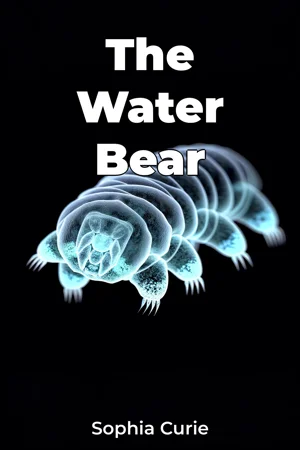
"The Water Bear" explores one of Earth's most resilient organisms, the tardigrade, examining how this microscopic creature's survival mechanisms could reshape our understanding of biology and adaptation. Through detailed scientific analysis, the book investigates how these eight-legged micro-animals survive conditions that would be lethal to most life forms. The text begins by introducing tardigrades in their natural habitats, from mountain peaks to ocean depths, establishing their ubiquitous presence across Earth's ecosystems. This widespread distribution serves as a foundation for understanding their evolutionary success and biological importance. The book presents three core areas of focus: the tardigrade's unique cellular structure, their cryptobiosis capabilities, and potential applications in biotechnology. Central to the narrative is the tardigrade's ability to enter a state of cryptobiosis, effectively suspending their metabolic processes when faced with hostile conditions. The book meticulously details how these organisms can withstand temperatures from near absolute zero to well above boiling, pressures six times greater than the ocean's deepest points, and radiation levels far exceeding human tolerance. These abilities stem from specific proteins and biological mechanisms, which the text examines through current research and laboratory studies. The work draws from extensive peer-reviewed research, including electron microscopy data, genetic sequencing results, and space exposure experiments. It presents findings from international research teams, incorporating studies conducted on tardigrades in low Earth orbit and various extreme terrestrial environments. Interdisciplinary connections emerge through chapters linking tardigrade biology to materials science, where their unique proteins inspire new protective materials, and to space biology, where their survival capabilities inform discussions about interplanetary travel and life's limits. The medical field's interest in tardigrade proteins for preserving biological materials and potentially protecting human cells from damage receives particular attention. The book maintains a methodical, evidence-based approach while remaining accessible to readers with basic scientific literacy. Technical concepts are carefully explained through analogies and clear illustrations, making complex biological processes comprehensible to non-specialists. Target readers include biology students, science enthusiasts, and professionals in related fields seeking to understand extreme adaptation mechanisms. The text serves both as an academic resource and an engaging exploration of biological innovation. Rather than simply describing tardigrade capabilities, the book examines the underlying mechanisms and their potential applications. It addresses current debates in evolutionary biology regarding the development of extreme resistance traits and discusses ethical considerations in utilizing tardigrade-derived innovations. The work concludes by exploring practical applications, including potential developments in vaccine preservation, radiation protection, and biomaterial engineering. It maintains a balanced perspective, acknowledging both the possibilities and limitations of applying tardigrade-derived solutions to human challenges. Throughout its chapters, the book emphasizes the broader implications of tardigrade research for understanding life's adaptability and resilience. It presents these microscopic organisms not merely as biological curiosities, but as keys to advancing our knowledge of life's fundamental mechanisms and potential.
"The Water Bear" explores one of Earth's most resilient organisms, the tardigrade, examining how this microscopic creature's survival mechanisms could reshape our understanding of biology and adaptation. Through detailed scientific analysis, the book investigates how these eight-legged micro-animals survive conditions that would be lethal to most life forms. The text begins by introducing tardigrades in their natural habitats, from mountain peaks to ocean depths, establishing their ubiquitous presence across Earth's ecosystems. This widespread distribution serves as a foundation for understanding their evolutionary success and biological importance. The book presents three core areas of focus: the tardigrade's unique cellular structure, their cryptobiosis capabilities, and potential applications in biotechnology. Central to the narrative is the tardigrade's ability to enter a state of cryptobiosis, effectively suspending their metabolic processes when faced with hostile conditions. The book meticulously details how these organisms can withstand temperatures from near absolute zero to well above boiling, pressures six times greater than the ocean's deepest points, and radiation levels far exceeding human tolerance. These abilities stem from specific proteins and biological mechanisms, which the text examines through current research and laboratory studies. The work draws from extensive peer-reviewed research, including electron microscopy data, genetic sequencing results, and space exposure experiments. It presents findings from international research teams, incorporating studies conducted on tardigrades in low Earth orbit and various extreme terrestrial environments. Interdisciplinary connections emerge through chapters linking tardigrade biology to materials science, where their unique proteins inspire new protective materials, and to space biology, where their survival capabilities inform discussions about interplanetary travel and life's limits. The medical field's interest in tardigrade proteins for preserving biological materials and potentially protecting human cells from damage receives particular attention. The book maintains a methodical, evidence-based approach while remaining accessible to readers with basic scientific literacy. Technical concepts are carefully explained through analogies and clear illustrations, making complex biological processes comprehensible to non-specialists. Target readers include biology students, science enthusiasts, and professionals in related fields seeking to understand extreme adaptation mechanisms. The text serves both as an academic resource and an engaging exploration of biological innovation. Rather than simply describing tardigrade capabilities, the book examines the underlying mechanisms and their potential applications. It addresses current debates in evolutionary biology regarding the development of extreme resistance traits and discusses ethical considerations in utilizing tardigrade-derived innovations. The work concludes by exploring practical applications, including potential developments in vaccine preservation, radiation protection, and biomaterial engineering. It maintains a balanced perspective, acknowledging both the possibilities and limitations of applying tardigrade-derived solutions to human challenges. Throughout its chapters, the book emphasizes the broader implications of tardigrade research for understanding life's adaptability and resilience. It presents these microscopic organisms not merely as biological curiosities, but as keys to advancing our knowledge of life's fundamental mechanisms and potential.
"The Water Bear" delves into the extraordinary world of tardigrades, microscopic organisms that have become scientific superstars due to their unparalleled survival abilities. These eight-legged creatures, found everywhere from mountain peaks to ocean depths, demonstrate remarkable resilience through their ability to withstand extreme conditions that would destroy most other life forms. The book meticulously explores their unique biological adaptations, focusing particularly on their ability to enter cryptobiosis—a state where they essentially pause all metabolic processes when faced with hostile environments. Through carefully structured chapters, the text progresses from examining tardigrades in their natural habitats to investigating their cellular structure and extraordinary survival mechanisms. Readers discover how these tiny animals can survive temperatures near absolute zero, withstand pressures six times greater than the deepest ocean points, and endure radiation levels far beyond human tolerance. The book's approach combines rigorous scientific analysis with accessible explanations, making complex biological concepts understandable to readers with basic scientific literacy. The narrative extends beyond mere biological curiosity, exploring practical applications of tardigrade research in biotechnology, space biology, and medicine. Drawing from extensive peer-reviewed research and international studies, including space exposure experiments, the book demonstrates how understanding these extremophiles could revolutionize various fields, from vaccine preservation to radiation protection. This comprehensive examination of tardigrade biology offers valuable insights for students, scientists, and anyone fascinated by nature's remarkable adaptations, while maintaining a balanced perspective on both the potential and limitations of tardigrade-inspired innovations.
Book Details
ISBN
9788233934811
Publisher
Publifye AS
Your Licenses
You don't own any licenses for this book
Purchase a license below to unlock this book and download the EPUB.
Purchase License
Select a tier to unlock this book
Need bulk licensing?
Contact us for enterprise agreements.