
About This Book
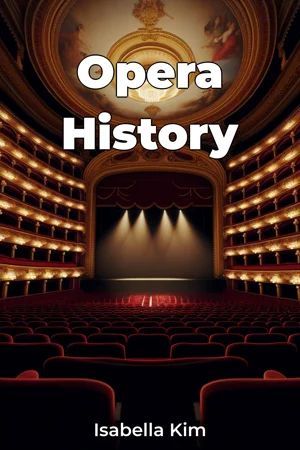
"What makes a singer's voice powerful enough to fill an entire opera house without amplification?" This question opens the door to a fascinating exploration of the art and science of opera in "Opera History: The Evolution of Grand Theatrics and Vocal Mastery." This comprehensive book delves into two primary topics: the development of operatic vocal techniques and the evolution of theatrical staging in opera. These subjects are crucial for understanding the unique blend of music and drama that defines opera as an art form. Additionally, the book examines the historical and cultural contexts that shaped opera's growth from its origins in 16th-century Italy to its global presence today. To fully appreciate the content, readers should have a basic understanding of musical notation and terminology. The book provides necessary background information on the structure of classical music and the fundamentals of vocal production. This context is essential for grasping the technical aspects of operatic performance and composition. The central argument of "Opera History" is that opera represents a pinnacle of human artistic achievement, combining multiple disciplines into a cohesive and emotionally powerful whole. This thesis is supported through an examination of opera's historical development, its musical and dramatic innovations, and its ongoing cultural significance. The book is structured chronologically, beginning with opera's roots in Renaissance court entertainments. It then traces the art form's evolution through the Baroque, Classical, Romantic, and Modern periods, highlighting key composers, performers, and works along the way. Major chapters focus on the development of bel canto technique, the influence of Wagner's music dramas, and the diversification of opera in the 20th and 21st centuries. To support its arguments, "Opera History" draws on a wide range of primary and secondary sources. These include musical scores, librettos, contemporary accounts of performances, and modern musicological research. The book also incorporates insights from vocal pedagogy, acoustic science, and theater technology to provide a multifaceted view of operatic development. Interdisciplinary connections are a key feature of the book. It explores opera's relationships with literature, examining how libretti have been adapted from classic texts and how opera has influenced literary forms. The book also delves into the visual arts, discussing set design, costume creation, and the integration of new technologies in stage production. Additionally, it touches on the sociology of opera, analyzing its role in reflecting and shaping societal values. One unique aspect of "Opera History" is its integration of modern scientific understanding of vocal acoustics with historical performance practices. This approach offers readers a deeper appreciation of how operatic vocal techniques evolved to meet the demands of larger theaters and changing musical styles. The writing style is scholarly yet accessible, balancing technical discussions of music theory and vocal technique with engaging narratives about the lives of composers and performers. This approach makes the book suitable for both academic readers and opera enthusiasts seeking a deeper understanding of the art form. "Opera History" is primarily aimed at music students, performers, and serious opera fans. However, its interdisciplinary approach and clear explanations of technical concepts make it valuable for anyone interested in the performing arts or cultural history. As a work in the Music and Performing Arts genres, the book includes detailed musical analyses, historical contextualization, and discussions of performance practice. It also features illustrations of stage designs, costume sketches, and diagrams of vocal techniques to enhance understanding of the visual and technical aspects of opera production. While the book covers a broad swath of operatic history, it focuses primarily on Western opera traditions. It acknowledges this limitation and briefly discusses non-Western operatic forms, suggesting areas for further study. Readers can apply the knowledge gained from this book to enhance their appreciation of opera performances, understand the technical challenges faced by singers and directors, and recognize the historical and cultural influences in different operatic works. "Opera History" addresses ongoing debates in the field, such as the tension between traditionalist and modernist approaches to staging classic operas, and the challenges of maintaining opera's relevance in the 21st century. By offering a comprehensive look at the interplay between vocal artistry, theatrical innovation, and cultural evolution, "Opera History: The Evolution of Grand Theatrics and Vocal Mastery" provides readers with a rich understanding of this complex and captivating art form.
"What makes a singer's voice powerful enough to fill an entire opera house without amplification?" This question opens the door to a fascinating exploration of the art and science of opera in "Opera History: The Evolution of Grand Theatrics and Vocal Mastery." This comprehensive book delves into two primary topics: the development of operatic vocal techniques and the evolution of theatrical staging in opera. These subjects are crucial for understanding the unique blend of music and drama that defines opera as an art form. Additionally, the book examines the historical and cultural contexts that shaped opera's growth from its origins in 16th-century Italy to its global presence today. To fully appreciate the content, readers should have a basic understanding of musical notation and terminology. The book provides necessary background information on the structure of classical music and the fundamentals of vocal production. This context is essential for grasping the technical aspects of operatic performance and composition. The central argument of "Opera History" is that opera represents a pinnacle of human artistic achievement, combining multiple disciplines into a cohesive and emotionally powerful whole. This thesis is supported through an examination of opera's historical development, its musical and dramatic innovations, and its ongoing cultural significance. The book is structured chronologically, beginning with opera's roots in Renaissance court entertainments. It then traces the art form's evolution through the Baroque, Classical, Romantic, and Modern periods, highlighting key composers, performers, and works along the way. Major chapters focus on the development of bel canto technique, the influence of Wagner's music dramas, and the diversification of opera in the 20th and 21st centuries. To support its arguments, "Opera History" draws on a wide range of primary and secondary sources. These include musical scores, librettos, contemporary accounts of performances, and modern musicological research. The book also incorporates insights from vocal pedagogy, acoustic science, and theater technology to provide a multifaceted view of operatic development. Interdisciplinary connections are a key feature of the book. It explores opera's relationships with literature, examining how libretti have been adapted from classic texts and how opera has influenced literary forms. The book also delves into the visual arts, discussing set design, costume creation, and the integration of new technologies in stage production. Additionally, it touches on the sociology of opera, analyzing its role in reflecting and shaping societal values. One unique aspect of "Opera History" is its integration of modern scientific understanding of vocal acoustics with historical performance practices. This approach offers readers a deeper appreciation of how operatic vocal techniques evolved to meet the demands of larger theaters and changing musical styles. The writing style is scholarly yet accessible, balancing technical discussions of music theory and vocal technique with engaging narratives about the lives of composers and performers. This approach makes the book suitable for both academic readers and opera enthusiasts seeking a deeper understanding of the art form. "Opera History" is primarily aimed at music students, performers, and serious opera fans. However, its interdisciplinary approach and clear explanations of technical concepts make it valuable for anyone interested in the performing arts or cultural history. As a work in the Music and Performing Arts genres, the book includes detailed musical analyses, historical contextualization, and discussions of performance practice. It also features illustrations of stage designs, costume sketches, and diagrams of vocal techniques to enhance understanding of the visual and technical aspects of opera production. While the book covers a broad swath of operatic history, it focuses primarily on Western opera traditions. It acknowledges this limitation and briefly discusses non-Western operatic forms, suggesting areas for further study. Readers can apply the knowledge gained from this book to enhance their appreciation of opera performances, understand the technical challenges faced by singers and directors, and recognize the historical and cultural influences in different operatic works. "Opera History" addresses ongoing debates in the field, such as the tension between traditionalist and modernist approaches to staging classic operas, and the challenges of maintaining opera's relevance in the 21st century. By offering a comprehensive look at the interplay between vocal artistry, theatrical innovation, and cultural evolution, "Opera History: The Evolution of Grand Theatrics and Vocal Mastery" provides readers with a rich understanding of this complex and captivating art form.
"Opera History: The Evolution of Grand Theatrics and Vocal Mastery" offers a captivating exploration of opera's development, focusing on vocal techniques and theatrical staging. This comprehensive book traces opera's journey from 16th-century Italian courts to its global presence today, highlighting the art form's unique blend of music and drama. The book argues that opera represents a pinnacle of human artistic achievement, supporting this claim through chronological examination of key periods, composers, and works. Readers will discover intriguing insights into the bel canto technique and Wagner's influential music dramas. The integration of modern scientific understanding of vocal acoustics with historical performance practices provides a fresh perspective on opera's evolution. Structured chronologically, the book progresses through major operatic periods, exploring interdisciplinary connections with literature, visual arts, and sociology. Its scholarly yet accessible writing style, combined with illustrations and musical analyses, makes it valuable for both academics and enthusiasts. By delving into the art and science behind opera's powerful voices and grand theatrics, this book offers readers a deeper appreciation of this complex and enduring art form.
Book Details
ISBN
9788233934514
Publisher
Publifye AS
Your Licenses
You don't own any licenses for this book
Purchase a license below to unlock this book and download the EPUB.
Purchase License
Select a tier to unlock this book
Need bulk licensing?
Contact us for enterprise agreements.