
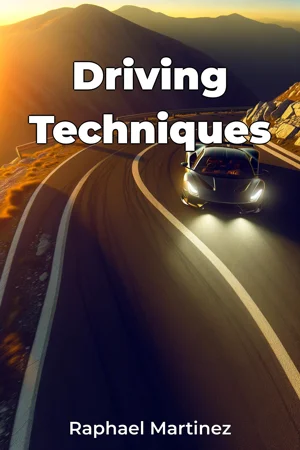
About This Book
"Driving Techniques" opens with a provocative question: "Are you truly in control when you're behind the wheel?" This adventure into the world of driving mastery challenges readers to reconsider their approach to one of the most common yet complex tasks of modern life. The book explores three key topics: situational awareness, vehicle dynamics, and decision-making under pressure. These elements form the foundation of advanced driving techniques, essential not only for professional drivers but for anyone seeking to enhance their safety and efficiency on the road. Situational awareness is presented as the cornerstone of effective driving. The book delves into the psychology of perception, explaining how drivers can train themselves to process multiple streams of information simultaneously. It covers techniques for scanning the environment, anticipating potential hazards, and maintaining a mental map of surrounding traffic. Vehicle dynamics, the second pillar, is explored through the lens of physics and engineering. Readers are introduced to concepts such as weight transfer, traction circles, and suspension geometry. The book explains how understanding these principles allows drivers to push their vehicles to the limit safely and effectively. The third topic, decision-making under pressure, draws from cognitive psychology and sports science. It examines how stress affects perception and reaction times, and provides strategies for maintaining composure in high-stakes situations. The central thesis of "Driving Techniques" is that mastery of these three elements - awareness, vehicle control, and decision-making - enables drivers to handle any situation they encounter on the road. This argument is developed through a logical progression, starting with foundational skills and building towards advanced techniques. The book's structure mirrors this progression. It begins with an introduction to the physics and psychology of driving, then moves into specific techniques for different driving scenarios. These range from everyday situations like navigating busy intersections to more extreme conditions such as high-speed pursuits or off-road racing. The final chapters focus on integrating these skills into a cohesive driving style and applying them in real-world situations. To support its arguments, "Driving Techniques" draws on a wide range of evidence. This includes data from accident reports and traffic studies, as well as insights from professional drivers, racing instructors, and cognitive scientists. The book also incorporates cutting-edge research on human-machine interfaces and autonomous driving systems, providing a glimpse into the future of transportation. Interdisciplinary connections are a key strength of the book. It links driving techniques to fields such as neuroscience, exploring how the brain processes spatial information while driving. It also draws parallels with aviation, examining how pilots' decision-making processes can inform better driving practices. Additionally, the book connects driving skills to broader life skills, showing how the principles of situational awareness and decision-making under pressure can be applied in various personal and professional contexts. What sets "Driving Techniques" apart is its practical, hands-on approach. Rather than simply describing techniques, it provides step-by-step exercises that readers can practice to improve their skills. These range from simple drills that can be done in a parking lot to more advanced exercises for closed course training. The writing style is clear and accessible, striking a balance between technical detail and engaging narrative. While the book includes necessary technical information, it uses analogies and real-world examples to make complex concepts understandable to a general audience. "Driving Techniques" is primarily aimed at automotive enthusiasts, professional drivers, and anyone looking to improve their driving skills. However, its broad approach and practical focus make it valuable for any driver seeking to enhance their safety and performance on the road. As an adventure-oriented non-fiction book, it includes vivid descriptions of challenging driving scenarios and first-hand accounts from professional drivers. These elements add excitement and immediacy to the technical content. While the book covers a wide range of driving techniques, it acknowledges that mastery requires hands-on practice beyond what can be learned from reading alone. It encourages readers to seek out professional instruction and closed-course training to fully develop their skills. In terms of real-world applications, the techniques described in the book can be immediately applied to everyday driving, potentially reducing the risk of accidents and improving fuel efficiency. For those involved in motorsports or professional driving, the advanced techniques provide a foundation for high-performance driving. "Driving Techniques" also addresses ongoing debates in the field, such as the role of technology in driving safety and the future of manual versus autonomous driving. It presents a balanced view of these issues, encouraging readers to think critically about the future of transportation.
"Driving Techniques" opens with a provocative question: "Are you truly in control when you're behind the wheel?" This adventure into the world of driving mastery challenges readers to reconsider their approach to one of the most common yet complex tasks of modern life. The book explores three key topics: situational awareness, vehicle dynamics, and decision-making under pressure. These elements form the foundation of advanced driving techniques, essential not only for professional drivers but for anyone seeking to enhance their safety and efficiency on the road. Situational awareness is presented as the cornerstone of effective driving. The book delves into the psychology of perception, explaining how drivers can train themselves to process multiple streams of information simultaneously. It covers techniques for scanning the environment, anticipating potential hazards, and maintaining a mental map of surrounding traffic. Vehicle dynamics, the second pillar, is explored through the lens of physics and engineering. Readers are introduced to concepts such as weight transfer, traction circles, and suspension geometry. The book explains how understanding these principles allows drivers to push their vehicles to the limit safely and effectively. The third topic, decision-making under pressure, draws from cognitive psychology and sports science. It examines how stress affects perception and reaction times, and provides strategies for maintaining composure in high-stakes situations. The central thesis of "Driving Techniques" is that mastery of these three elements - awareness, vehicle control, and decision-making - enables drivers to handle any situation they encounter on the road. This argument is developed through a logical progression, starting with foundational skills and building towards advanced techniques. The book's structure mirrors this progression. It begins with an introduction to the physics and psychology of driving, then moves into specific techniques for different driving scenarios. These range from everyday situations like navigating busy intersections to more extreme conditions such as high-speed pursuits or off-road racing. The final chapters focus on integrating these skills into a cohesive driving style and applying them in real-world situations. To support its arguments, "Driving Techniques" draws on a wide range of evidence. This includes data from accident reports and traffic studies, as well as insights from professional drivers, racing instructors, and cognitive scientists. The book also incorporates cutting-edge research on human-machine interfaces and autonomous driving systems, providing a glimpse into the future of transportation. Interdisciplinary connections are a key strength of the book. It links driving techniques to fields such as neuroscience, exploring how the brain processes spatial information while driving. It also draws parallels with aviation, examining how pilots' decision-making processes can inform better driving practices. Additionally, the book connects driving skills to broader life skills, showing how the principles of situational awareness and decision-making under pressure can be applied in various personal and professional contexts. What sets "Driving Techniques" apart is its practical, hands-on approach. Rather than simply describing techniques, it provides step-by-step exercises that readers can practice to improve their skills. These range from simple drills that can be done in a parking lot to more advanced exercises for closed course training. The writing style is clear and accessible, striking a balance between technical detail and engaging narrative. While the book includes necessary technical information, it uses analogies and real-world examples to make complex concepts understandable to a general audience. "Driving Techniques" is primarily aimed at automotive enthusiasts, professional drivers, and anyone looking to improve their driving skills. However, its broad approach and practical focus make it valuable for any driver seeking to enhance their safety and performance on the road. As an adventure-oriented non-fiction book, it includes vivid descriptions of challenging driving scenarios and first-hand accounts from professional drivers. These elements add excitement and immediacy to the technical content. While the book covers a wide range of driving techniques, it acknowledges that mastery requires hands-on practice beyond what can be learned from reading alone. It encourages readers to seek out professional instruction and closed-course training to fully develop their skills. In terms of real-world applications, the techniques described in the book can be immediately applied to everyday driving, potentially reducing the risk of accidents and improving fuel efficiency. For those involved in motorsports or professional driving, the advanced techniques provide a foundation for high-performance driving. "Driving Techniques" also addresses ongoing debates in the field, such as the role of technology in driving safety and the future of manual versus autonomous driving. It presents a balanced view of these issues, encouraging readers to think critically about the future of transportation.
"Driving Techniques" takes readers on an exhilarating journey into the world of advanced driving, challenging them to reconsider their approach to one of modern life's most common yet complex tasks. This adventure-oriented book explores three key pillars of driving mastery: situational awareness, vehicle dynamics, and decision-making under pressure. By delving into the psychology of perception, the physics of vehicle control, and cognitive strategies for high-stakes situations, the book offers a comprehensive approach to enhancing road safety and driving performance. What sets this book apart is its practical, hands-on approach. Readers are guided through a logical progression of skills, from foundational concepts to advanced techniques applicable in various driving scenarios. The book incorporates insights from professional drivers, racing instructors, and cognitive scientists, providing a rich blend of theoretical knowledge and real-world experience. It also draws fascinating interdisciplinary connections, linking driving techniques to fields such as neuroscience and aviation. As the chapters unfold, "Driving Techniques" presents step-by-step exercises for skill improvement, vivid descriptions of challenging driving scenarios, and thought-provoking discussions on the future of transportation. This engaging blend of technical content and narrative makes the book accessible to both automotive enthusiasts and general readers seeking to enhance their driving abilities and overall road safety.
Book Details
ISBN
9788233934262
Publisher
Publifye AS
Your Licenses
You don't own any licenses for this book
Purchase a license below to unlock this book and download the EPUB.
Purchase License
Select a tier to unlock this book
Need bulk licensing?
Contact us for enterprise agreements.