
About This Book
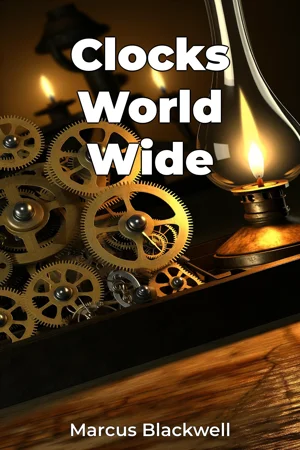
"What time is it?" This simple question has driven human innovation for millennia, leading to the development of timekeeping devices that have shaped our understanding of the world and our place in it. "Clocks World Wide" takes readers on a journey through time and space, exploring the fascinating history and global impact of timekeeping technologies. The book delves into three main topics: the evolution of timekeeping devices, the cultural significance of clocks across different societies, and the role of precision timekeeping in scientific and technological advancements. These topics are crucial for understanding how our perception of time has influenced human progress and interconnectedness throughout history. To fully appreciate the significance of clocks, readers are provided with essential historical context, from ancient sundials to modern atomic clocks. The book explores how early civilizations developed rudimentary timekeeping methods based on celestial observations and natural phenomena, setting the stage for increasingly sophisticated devices. The central argument of "Clocks World Wide" is that the development and global spread of accurate timekeeping technologies have been fundamental drivers of human progress, influencing everything from navigation and trade to scientific discovery and social organization. This thesis underscores the often-overlooked importance of clocks in shaping our modern world. The book is structured to guide readers through the chronological development of timekeeping devices, beginning with an introduction to early methods. It then explores the mechanical revolution in clockmaking during the Middle Ages and Renaissance, followed by the precision instruments of the Industrial Revolution. The final sections examine modern timekeeping technologies and their global impact. To support its arguments, "Clocks World Wide" draws on a wealth of historical records, archaeological findings, and scientific research. The book incorporates primary sources such as inventors' journals and patent documents, as well as contemporary studies on the societal effects of standardized time. Interdisciplinary connections are a key feature of the book, linking clockmaking to fields such as mathematics, astronomy, and physics. The text also explores the influence of timekeeping on economics and social sciences, demonstrating how the concept of precise time measurement has shaped labor practices and global communication. The book takes a unique approach by examining clocks not just as technological artifacts but as cultural symbols and agents of change. It analyzes how different cultures have perceived and utilized time, offering a global perspective on the role of clocks in various societies. Written in an accessible yet authoritative style, "Clocks World Wide" balances scholarly rigor with engaging narratives. The tone is informative and analytical, suitable for both academic readers and general audiences interested in history and technology. The target audience includes history enthusiasts, technology buffs, and students of science and engineering. The book offers valuable insights for anyone seeking to understand the complex interplay between technology and society. As a work of world history and technological analysis, the book adheres to the conventions of these genres by providing comprehensive historical context, detailed technical explanations, and rigorous sourcing of information. While global in scope, "Clocks World Wide" acknowledges its limitations, focusing primarily on major civilizations and technological turning points rather than attempting an exhaustive account of every culture's timekeeping practices. Readers can apply the book's insights to better understand the historical context of modern timekeeping challenges, such as leap seconds and the coordination of global time standards. The text also invites reflection on how our relationship with time continues to evolve in the digital age. The book addresses ongoing debates in the field, such as the social implications of standardized time zones and the potential future of timekeeping in an increasingly interconnected world. "Clocks World Wide" offers a comprehensive exploration of how the measurement of time has shaped human civilization. By tracing the development of clocks from ancient sundials to atomic precision instruments, the book illuminates the profound impact of timekeeping on science, culture, and global interconnectedness, providing readers with a new perspective on the devices that govern our daily lives.
"What time is it?" This simple question has driven human innovation for millennia, leading to the development of timekeeping devices that have shaped our understanding of the world and our place in it. "Clocks World Wide" takes readers on a journey through time and space, exploring the fascinating history and global impact of timekeeping technologies. The book delves into three main topics: the evolution of timekeeping devices, the cultural significance of clocks across different societies, and the role of precision timekeeping in scientific and technological advancements. These topics are crucial for understanding how our perception of time has influenced human progress and interconnectedness throughout history. To fully appreciate the significance of clocks, readers are provided with essential historical context, from ancient sundials to modern atomic clocks. The book explores how early civilizations developed rudimentary timekeeping methods based on celestial observations and natural phenomena, setting the stage for increasingly sophisticated devices. The central argument of "Clocks World Wide" is that the development and global spread of accurate timekeeping technologies have been fundamental drivers of human progress, influencing everything from navigation and trade to scientific discovery and social organization. This thesis underscores the often-overlooked importance of clocks in shaping our modern world. The book is structured to guide readers through the chronological development of timekeeping devices, beginning with an introduction to early methods. It then explores the mechanical revolution in clockmaking during the Middle Ages and Renaissance, followed by the precision instruments of the Industrial Revolution. The final sections examine modern timekeeping technologies and their global impact. To support its arguments, "Clocks World Wide" draws on a wealth of historical records, archaeological findings, and scientific research. The book incorporates primary sources such as inventors' journals and patent documents, as well as contemporary studies on the societal effects of standardized time. Interdisciplinary connections are a key feature of the book, linking clockmaking to fields such as mathematics, astronomy, and physics. The text also explores the influence of timekeeping on economics and social sciences, demonstrating how the concept of precise time measurement has shaped labor practices and global communication. The book takes a unique approach by examining clocks not just as technological artifacts but as cultural symbols and agents of change. It analyzes how different cultures have perceived and utilized time, offering a global perspective on the role of clocks in various societies. Written in an accessible yet authoritative style, "Clocks World Wide" balances scholarly rigor with engaging narratives. The tone is informative and analytical, suitable for both academic readers and general audiences interested in history and technology. The target audience includes history enthusiasts, technology buffs, and students of science and engineering. The book offers valuable insights for anyone seeking to understand the complex interplay between technology and society. As a work of world history and technological analysis, the book adheres to the conventions of these genres by providing comprehensive historical context, detailed technical explanations, and rigorous sourcing of information. While global in scope, "Clocks World Wide" acknowledges its limitations, focusing primarily on major civilizations and technological turning points rather than attempting an exhaustive account of every culture's timekeeping practices. Readers can apply the book's insights to better understand the historical context of modern timekeeping challenges, such as leap seconds and the coordination of global time standards. The text also invites reflection on how our relationship with time continues to evolve in the digital age. The book addresses ongoing debates in the field, such as the social implications of standardized time zones and the potential future of timekeeping in an increasingly interconnected world. "Clocks World Wide" offers a comprehensive exploration of how the measurement of time has shaped human civilization. By tracing the development of clocks from ancient sundials to atomic precision instruments, the book illuminates the profound impact of timekeeping on science, culture, and global interconnectedness, providing readers with a new perspective on the devices that govern our daily lives.
"Clocks World Wide" explores the fascinating history and global impact of timekeeping technologies, tracing their evolution from ancient sundials to modern atomic clocks. This comprehensive book examines how the development of accurate timekeeping has been a fundamental driver of human progress, influencing navigation, trade, scientific discovery, and social organization. It delves into three key areas: the evolution of timekeeping devices, their cultural significance across societies, and the role of precision timekeeping in scientific advancements. The book takes readers on a chronological journey through the development of clocks, beginning with early methods based on celestial observations and natural phenomena. It then explores the mechanical revolution in clockmaking during the Middle Ages and Renaissance, followed by the precision instruments of the Industrial Revolution. Intriguingly, the book reveals how different cultures have perceived and utilized time, offering a global perspective on the role of clocks in various societies. By examining clocks not just as technological artifacts but as cultural symbols and agents of change, "Clocks World Wide" provides a unique interdisciplinary approach. It balances scholarly rigor with engaging narratives, making it accessible to both academic readers and general audiences interested in world history and technology. The book's insights invite readers to reflect on how our relationship with time continues to evolve in the digital age, offering a new perspective on the devices that govern our daily lives.
Book Details
ISBN
9788233933937
Publisher
Publifye AS
Your Licenses
You don't own any licenses for this book
Purchase a license below to unlock this book and download the EPUB.
Purchase License
Select a tier to unlock this book
Need bulk licensing?
Contact us for enterprise agreements.