
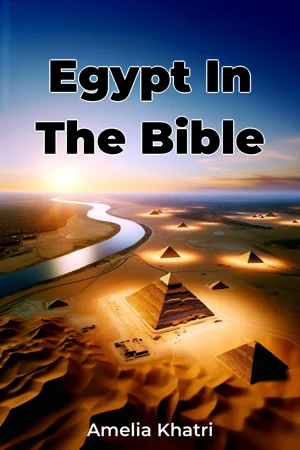
About This Book
"How did ancient Egypt, one of the world's most enduring civilizations, shape the narrative of the Bible?" This question forms the cornerstone of "Egypt In The Bible," a comprehensive exploration of the intricate relationship between Egyptian history and biblical accounts. The book delves into the fascinating intersection of archaeological evidence, historical records, and religious texts to provide readers with a nuanced understanding of Egypt's role in shaping biblical narratives. The book focuses on three main topics: the historical context of Egypt during key biblical events, the cultural and religious influences of Egypt on Israelite society, and the symbolic significance of Egypt in biblical prophecy and literature. These topics are crucial for understanding the broader context of biblical stories and the development of Judeo-Christian thought. To fully appreciate the book's content, readers should have a basic familiarity with biblical narratives and ancient Near Eastern history. The author provides necessary background information on Egyptian dynasties, major historical events, and relevant archaeological discoveries to ensure that readers can follow the arguments presented. The central thesis of "Egypt In The Bible" is that Egypt played a far more significant role in shaping biblical narratives and Israelite culture than is commonly acknowledged. The book argues that a deeper understanding of Egyptian history and culture is essential for interpreting many biblical passages accurately and appreciating the historical context of key events in Judeo-Christian tradition. The book is structured into four main sections. The first introduces the geographical and historical background of ancient Egypt, setting the stage for understanding its interactions with the Israelites. The second section examines specific biblical episodes involving Egypt, such as the Exodus and the flight of the Holy Family, analyzing them in light of archaeological and historical evidence. The third part explores the cultural and religious exchanges between Egypt and Israel, including the influence of Egyptian wisdom literature on biblical texts. The final section discusses the symbolic role of Egypt in biblical prophecy and apocalyptic literature. To support its arguments, the book draws on a wide range of evidence, including archaeological findings, ancient Egyptian texts, biblical exegesis, and contemporary scholarly research. The author employs interdisciplinary approaches, combining methods from archaeology, history, biblical studies, and comparative religion to provide a comprehensive analysis. The book makes connections to fields such as anthropology, linguistics, and political science, demonstrating how Egyptian-Israelite interactions influenced language development, social structures, and political ideologies in the ancient Near East. These interdisciplinary perspectives offer readers a holistic understanding of the subject matter. What sets "Egypt In The Bible" apart is its balanced approach to controversial topics, such as the historical accuracy of the Exodus narrative. The author presents various scholarly viewpoints, encouraging readers to engage critically with the evidence and draw their own conclusions. Written in an academic yet accessible style, the book maintains a neutral tone while presenting complex information. It avoids sensationalism, focusing instead on presenting factual information and well-reasoned arguments. "Egypt In The Bible" is primarily aimed at students of biblical studies, ancient history, and archaeology, as well as clergy and lay readers interested in deepening their understanding of biblical contexts. Its comprehensive approach makes it a valuable resource for anyone seeking to bridge the gap between biblical narratives and historical reality. As a work of historical non-fiction with religious themes, the book adheres to rigorous academic standards while remaining sensitive to the religious significance of the topics discussed. It presents historical and archaeological evidence objectively, allowing readers to reconcile this information with their faith perspectives. While the book covers a broad range of topics related to Egypt and the Bible, it focuses primarily on the period from the Middle Kingdom through the Roman era, as this timeframe is most relevant to biblical narratives. Readers can apply the knowledge gained from this book to better understand biblical texts, appreciate the historical context of religious traditions, and engage in more informed interfaith dialogues. The book also provides valuable insights for those interested in the development of monotheism and the cultural exchanges that shaped the ancient Near East. "Egypt In The Bible" addresses ongoing debates in biblical archaeology, such as the dating of the Exodus and the extent of Egyptian influence on Israelite monotheism. By presenting multiple perspectives on these issues, the book encourages readers to engage critically with the material and contribute to ongoing scholarly discussions.
"How did ancient Egypt, one of the world's most enduring civilizations, shape the narrative of the Bible?" This question forms the cornerstone of "Egypt In The Bible," a comprehensive exploration of the intricate relationship between Egyptian history and biblical accounts. The book delves into the fascinating intersection of archaeological evidence, historical records, and religious texts to provide readers with a nuanced understanding of Egypt's role in shaping biblical narratives. The book focuses on three main topics: the historical context of Egypt during key biblical events, the cultural and religious influences of Egypt on Israelite society, and the symbolic significance of Egypt in biblical prophecy and literature. These topics are crucial for understanding the broader context of biblical stories and the development of Judeo-Christian thought. To fully appreciate the book's content, readers should have a basic familiarity with biblical narratives and ancient Near Eastern history. The author provides necessary background information on Egyptian dynasties, major historical events, and relevant archaeological discoveries to ensure that readers can follow the arguments presented. The central thesis of "Egypt In The Bible" is that Egypt played a far more significant role in shaping biblical narratives and Israelite culture than is commonly acknowledged. The book argues that a deeper understanding of Egyptian history and culture is essential for interpreting many biblical passages accurately and appreciating the historical context of key events in Judeo-Christian tradition. The book is structured into four main sections. The first introduces the geographical and historical background of ancient Egypt, setting the stage for understanding its interactions with the Israelites. The second section examines specific biblical episodes involving Egypt, such as the Exodus and the flight of the Holy Family, analyzing them in light of archaeological and historical evidence. The third part explores the cultural and religious exchanges between Egypt and Israel, including the influence of Egyptian wisdom literature on biblical texts. The final section discusses the symbolic role of Egypt in biblical prophecy and apocalyptic literature. To support its arguments, the book draws on a wide range of evidence, including archaeological findings, ancient Egyptian texts, biblical exegesis, and contemporary scholarly research. The author employs interdisciplinary approaches, combining methods from archaeology, history, biblical studies, and comparative religion to provide a comprehensive analysis. The book makes connections to fields such as anthropology, linguistics, and political science, demonstrating how Egyptian-Israelite interactions influenced language development, social structures, and political ideologies in the ancient Near East. These interdisciplinary perspectives offer readers a holistic understanding of the subject matter. What sets "Egypt In The Bible" apart is its balanced approach to controversial topics, such as the historical accuracy of the Exodus narrative. The author presents various scholarly viewpoints, encouraging readers to engage critically with the evidence and draw their own conclusions. Written in an academic yet accessible style, the book maintains a neutral tone while presenting complex information. It avoids sensationalism, focusing instead on presenting factual information and well-reasoned arguments. "Egypt In The Bible" is primarily aimed at students of biblical studies, ancient history, and archaeology, as well as clergy and lay readers interested in deepening their understanding of biblical contexts. Its comprehensive approach makes it a valuable resource for anyone seeking to bridge the gap between biblical narratives and historical reality. As a work of historical non-fiction with religious themes, the book adheres to rigorous academic standards while remaining sensitive to the religious significance of the topics discussed. It presents historical and archaeological evidence objectively, allowing readers to reconcile this information with their faith perspectives. While the book covers a broad range of topics related to Egypt and the Bible, it focuses primarily on the period from the Middle Kingdom through the Roman era, as this timeframe is most relevant to biblical narratives. Readers can apply the knowledge gained from this book to better understand biblical texts, appreciate the historical context of religious traditions, and engage in more informed interfaith dialogues. The book also provides valuable insights for those interested in the development of monotheism and the cultural exchanges that shaped the ancient Near East. "Egypt In The Bible" addresses ongoing debates in biblical archaeology, such as the dating of the Exodus and the extent of Egyptian influence on Israelite monotheism. By presenting multiple perspectives on these issues, the book encourages readers to engage critically with the material and contribute to ongoing scholarly discussions.
"Egypt In The Bible" offers a comprehensive exploration of ancient Egypt's profound influence on biblical narratives and Israelite culture. This insightful book delves into the intricate relationship between Egyptian history and religious texts, examining archaeological evidence and historical records to provide a nuanced understanding of Egypt's role in shaping biblical accounts. The book is structured in four main sections, progressing from geographical and historical background to specific biblical episodes involving Egypt, cultural and religious exchanges, and the symbolic role of Egypt in prophecy. It highlights fascinating connections, such as the influence of Egyptian wisdom literature on biblical texts and the impact of Egyptian-Israelite interactions on language development and political ideologies in the ancient Near East. The author's balanced approach to controversial topics, like the historical accuracy of the Exodus narrative, encourages readers to engage critically with the evidence presented. What sets this book apart is its interdisciplinary approach, combining methods from archaeology, history, and comparative religion to offer a holistic understanding of the subject. By bridging the gap between biblical narratives and historical reality, "Egypt In The Bible" provides valuable insights for students, clergy, and anyone interested in deepening their understanding of biblical contexts and the development of monotheism in the ancient world.
Book Details
ISBN
9788233933586
Publisher
Publifye AS
Your Licenses
You don't own any licenses for this book
Purchase a license below to unlock this book and download the EPUB.
Purchase License
Select a tier to unlock this book
Need bulk licensing?
Contact us for enterprise agreements.