
About This Book
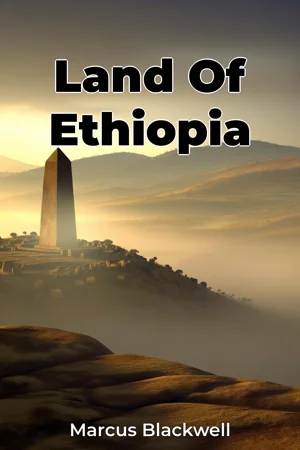
"Land of Ethiopia" opens with a provocative question: "How has a nation that claims to be one of the oldest in the world remained so enigmatic to the rest of the globe?" This thought-provoking inquiry sets the stage for a comprehensive exploration of Ethiopia's rich history, diverse culture, and complex geopolitical landscape. The book delves into three main topics: Ethiopia's ancient civilizations, its unique position as an uncolonized African nation, and its role in modern global affairs. These subjects are crucial for understanding not only Ethiopia's past but also its current status and future prospects on the world stage. To provide context, the author traces Ethiopia's lineage back to the ancient kingdom of Aksum, one of the world's great civilizations that flourished from the 1st to the 8th centuries CE. This historical backdrop is essential for grasping the depth of Ethiopia's cultural heritage and its influence on the development of the region. The central argument of "Land of Ethiopia" posits that Ethiopia's distinctive historical trajectory—marked by its successful resistance to colonization and its early adoption of Christianity—has shaped its national identity and international relations in ways that continue to resonate today. This thesis is significant as it offers a fresh perspective on African history and challenges common narratives about the continent's development. Structurally, the book is divided into three main sections. The first introduces Ethiopia's geographical and cultural landscape, emphasizing its diverse ethnic groups and languages. The second part delves into the nation's history, from the legendary Queen of Sheba to the reign of Emperor Haile Selassie. The final section examines Ethiopia's modern challenges and achievements, including its efforts to balance tradition with modernization. To support its arguments, "Land of Ethiopia" draws on a wide range of primary sources, including ancient manuscripts, oral histories, and contemporary governmental records. The author also incorporates recent archaeological findings and satellite imagery analysis, providing readers with up-to-date and comprehensive information. The book makes interdisciplinary connections between history, anthropology, and political science. It explores how Ethiopia's unique cultural practices have influenced its governance structures and examines the interplay between religion and politics in shaping the nation's identity. These connections offer readers a holistic understanding of Ethiopia's complex society. What sets "Land of Ethiopia" apart is its nuanced approach to the country's history. Rather than presenting a simplistic narrative of triumph or tragedy, the book offers a balanced view that acknowledges both Ethiopia's achievements and its ongoing challenges. This perspective allows readers to appreciate the complexities of nation-building in Africa. The writing style is scholarly yet accessible, blending academic rigor with engaging storytelling. This approach makes the book suitable for both academics and general readers interested in African history and culture. "Land of Ethiopia" is primarily targeted at students of African studies, history enthusiasts, and policymakers interested in international relations. However, its vivid descriptions and cultural insights also make it appealing to travelers and those curious about lesser-known parts of the world. As a work of world history and travel literature, the book includes detailed maps, photographs, and firsthand accounts that bring Ethiopia's landscapes and people to life. It also provides practical information for those interested in visiting the country, including insights into local customs and etiquette. While the book offers a comprehensive overview of Ethiopian history, it acknowledges the limitations of covering such a vast topic in a single volume. The author focuses primarily on major historical events and cultural phenomena, directing readers to additional resources for more specialized information. The practical applications of "Land of Ethiopia" extend beyond academic interest. It provides valuable context for understanding current events in the Horn of Africa, offers insights for businesses looking to engage with Ethiopia's growing economy, and promotes cultural awareness for international relations and diplomacy. The book addresses ongoing debates about Ethiopia's role in African politics, its struggles with ethnic federalism, and the challenges of preserving cultural heritage in the face of rapid modernization. By presenting multiple viewpoints on these issues, "Land of Ethiopia" encourages readers to think critically about the nation's past, present, and future. In sum, "Land of Ethiopia" offers a thorough, balanced, and engaging exploration of one of Africa's most fascinating countries. It invites readers to discover the complexities of Ethiopian history and culture, challenging preconceptions and illuminating the significance of this ancient land in our modern world.
"Land of Ethiopia" opens with a provocative question: "How has a nation that claims to be one of the oldest in the world remained so enigmatic to the rest of the globe?" This thought-provoking inquiry sets the stage for a comprehensive exploration of Ethiopia's rich history, diverse culture, and complex geopolitical landscape. The book delves into three main topics: Ethiopia's ancient civilizations, its unique position as an uncolonized African nation, and its role in modern global affairs. These subjects are crucial for understanding not only Ethiopia's past but also its current status and future prospects on the world stage. To provide context, the author traces Ethiopia's lineage back to the ancient kingdom of Aksum, one of the world's great civilizations that flourished from the 1st to the 8th centuries CE. This historical backdrop is essential for grasping the depth of Ethiopia's cultural heritage and its influence on the development of the region. The central argument of "Land of Ethiopia" posits that Ethiopia's distinctive historical trajectory—marked by its successful resistance to colonization and its early adoption of Christianity—has shaped its national identity and international relations in ways that continue to resonate today. This thesis is significant as it offers a fresh perspective on African history and challenges common narratives about the continent's development. Structurally, the book is divided into three main sections. The first introduces Ethiopia's geographical and cultural landscape, emphasizing its diverse ethnic groups and languages. The second part delves into the nation's history, from the legendary Queen of Sheba to the reign of Emperor Haile Selassie. The final section examines Ethiopia's modern challenges and achievements, including its efforts to balance tradition with modernization. To support its arguments, "Land of Ethiopia" draws on a wide range of primary sources, including ancient manuscripts, oral histories, and contemporary governmental records. The author also incorporates recent archaeological findings and satellite imagery analysis, providing readers with up-to-date and comprehensive information. The book makes interdisciplinary connections between history, anthropology, and political science. It explores how Ethiopia's unique cultural practices have influenced its governance structures and examines the interplay between religion and politics in shaping the nation's identity. These connections offer readers a holistic understanding of Ethiopia's complex society. What sets "Land of Ethiopia" apart is its nuanced approach to the country's history. Rather than presenting a simplistic narrative of triumph or tragedy, the book offers a balanced view that acknowledges both Ethiopia's achievements and its ongoing challenges. This perspective allows readers to appreciate the complexities of nation-building in Africa. The writing style is scholarly yet accessible, blending academic rigor with engaging storytelling. This approach makes the book suitable for both academics and general readers interested in African history and culture. "Land of Ethiopia" is primarily targeted at students of African studies, history enthusiasts, and policymakers interested in international relations. However, its vivid descriptions and cultural insights also make it appealing to travelers and those curious about lesser-known parts of the world. As a work of world history and travel literature, the book includes detailed maps, photographs, and firsthand accounts that bring Ethiopia's landscapes and people to life. It also provides practical information for those interested in visiting the country, including insights into local customs and etiquette. While the book offers a comprehensive overview of Ethiopian history, it acknowledges the limitations of covering such a vast topic in a single volume. The author focuses primarily on major historical events and cultural phenomena, directing readers to additional resources for more specialized information. The practical applications of "Land of Ethiopia" extend beyond academic interest. It provides valuable context for understanding current events in the Horn of Africa, offers insights for businesses looking to engage with Ethiopia's growing economy, and promotes cultural awareness for international relations and diplomacy. The book addresses ongoing debates about Ethiopia's role in African politics, its struggles with ethnic federalism, and the challenges of preserving cultural heritage in the face of rapid modernization. By presenting multiple viewpoints on these issues, "Land of Ethiopia" encourages readers to think critically about the nation's past, present, and future. In sum, "Land of Ethiopia" offers a thorough, balanced, and engaging exploration of one of Africa's most fascinating countries. It invites readers to discover the complexities of Ethiopian history and culture, challenging preconceptions and illuminating the significance of this ancient land in our modern world.
"Land of Ethiopia" unveils the enigmatic history and vibrant culture of one of Africa's most intriguing nations. This comprehensive exploration delves into Ethiopia's ancient civilizations, its unique status as an uncolonized African country, and its role in modern global affairs. From the legendary kingdom of Aksum to the reign of Emperor Haile Selassie, the book traces Ethiopia's remarkable journey through time, highlighting its diverse ethnic groups and languages. The author argues that Ethiopia's distinctive historical trajectory has profoundly shaped its national identity and international relations. By resisting colonization and embracing Christianity early on, Ethiopia forged a path unlike any other African nation. The book's balanced approach acknowledges both Ethiopia's triumphs and ongoing challenges, offering readers a nuanced understanding of its complex society. Divided into three sections, "Land of Ethiopia" begins with an introduction to the country's geography and culture, progresses through its rich history, and concludes with an examination of modern Ethiopia's struggles and achievements. Drawing on ancient manuscripts, oral histories, and contemporary records, the book presents a scholarly yet accessible narrative that will engage both academics and general readers interested in African history, world cultures, and travel.
Book Details
ISBN
9788233933579
Publisher
Publifye AS
Your Licenses
You don't own any licenses for this book
Purchase a license below to unlock this book and download the EPUB.
Purchase License
Select a tier to unlock this book
Need bulk licensing?
Contact us for enterprise agreements.