
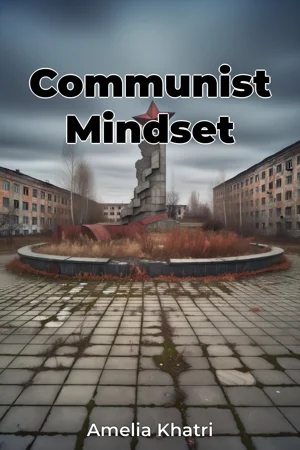
About This Book
"Is the communist mindset still relevant in today's world?" This provocative question forms the cornerstone of "Communist Mindset," a comprehensive exploration of the ideological foundations that shaped much of the 20th century and continue to influence global politics today. The book delves into three key topics: the historical development of communist ideology, its psychological impact on individuals and societies, and its lasting legacy in contemporary political discourse. These themes are crucial for understanding not only the past but also the present geopolitical landscape and the ongoing debates surrounding economic systems and social equality. To fully grasp the complexities of the communist mindset, readers are provided with essential historical context, starting from the writings of Karl Marx and Friedrich Engels through the Russian Revolution and the Cold War era. The book also offers a primer on key economic concepts and political theories, ensuring that readers from various backgrounds can engage with the material effectively. The central argument of "Communist Mindset" posits that while communism as a governing system has largely fallen out of favor, its core ideas and the psychological patterns it fostered continue to shape political thought and social movements worldwide. This thesis is particularly significant in an era of rising inequality and renewed interest in socialist policies among younger generations in Western democracies. Structured in three parts, the book first introduces the fundamental concepts of communist ideology and its historical evolution. The second section examines the psychological aspects of living under communist regimes, exploring topics such as collective thinking, state control, and the impact on individual identity. The final part analyzes the modern-day remnants of communist thought in various political movements and economic policies. To support its arguments, "Communist Mindset" draws upon a wide range of evidence, including historical documents, psychological studies, economic data, and first-hand accounts from those who lived under communist regimes. The authors have also conducted original interviews with former communist party members, providing unique insights into the mindset of true believers. The book makes interdisciplinary connections, linking political science with psychology to explain the enduring appeal of communist ideas. It also explores the intersection of economics and sociology, examining how communist policies affected social structures and continue to influence economic debates today. Additionally, it touches on the field of media studies, analyzing the role of propaganda in shaping the communist mindset. What sets "Communist Mindset" apart is its balanced approach, avoiding both nostalgia for communist regimes and outright condemnation. Instead, it offers a nuanced analysis of the ideology's strengths and weaknesses, and its complex legacy in the modern world. This even-handed treatment allows readers to form their own conclusions based on the presented evidence. Written in an accessible academic style, the book combines rigorous research with clear explanations, making it suitable for both scholars and general readers interested in political history and contemporary affairs. It targets a diverse audience, including students of political science and history, policymakers, and anyone seeking to understand the origins of current political divisions and economic debates. As a work in the genres of politics and history, "Communist Mindset" adheres to high standards of factual accuracy and objectivity. It provides extensive footnotes and a comprehensive bibliography, allowing readers to verify claims and delve deeper into specific topics. While the book offers a broad overview of communist ideology and its impact, it acknowledges its limitations. It focuses primarily on the experiences of Eastern European and Asian communist states, with less emphasis on variations in Latin America or Africa. This scope allows for a more in-depth analysis of the core communist mindset as it developed in its most influential forms. Readers will find practical applications for the knowledge gained from this book, particularly in understanding current political rhetoric and policy proposals. It provides tools for critically analyzing claims of both proponents and opponents of socialist-inspired policies in contemporary debates. "Communist Mindset" also addresses ongoing controversies, such as the debate over whether true communism has ever been achieved and the role of communist parties in modern democratic systems. It presents various viewpoints on these issues, encouraging readers to engage critically with the material. By offering a clear-eyed examination of the communist mindset, this book provides valuable insights into one of the most influential ideologies of the modern era, its lasting impact, and its continued relevance in shaping our political and economic future.
"Is the communist mindset still relevant in today's world?" This provocative question forms the cornerstone of "Communist Mindset," a comprehensive exploration of the ideological foundations that shaped much of the 20th century and continue to influence global politics today. The book delves into three key topics: the historical development of communist ideology, its psychological impact on individuals and societies, and its lasting legacy in contemporary political discourse. These themes are crucial for understanding not only the past but also the present geopolitical landscape and the ongoing debates surrounding economic systems and social equality. To fully grasp the complexities of the communist mindset, readers are provided with essential historical context, starting from the writings of Karl Marx and Friedrich Engels through the Russian Revolution and the Cold War era. The book also offers a primer on key economic concepts and political theories, ensuring that readers from various backgrounds can engage with the material effectively. The central argument of "Communist Mindset" posits that while communism as a governing system has largely fallen out of favor, its core ideas and the psychological patterns it fostered continue to shape political thought and social movements worldwide. This thesis is particularly significant in an era of rising inequality and renewed interest in socialist policies among younger generations in Western democracies. Structured in three parts, the book first introduces the fundamental concepts of communist ideology and its historical evolution. The second section examines the psychological aspects of living under communist regimes, exploring topics such as collective thinking, state control, and the impact on individual identity. The final part analyzes the modern-day remnants of communist thought in various political movements and economic policies. To support its arguments, "Communist Mindset" draws upon a wide range of evidence, including historical documents, psychological studies, economic data, and first-hand accounts from those who lived under communist regimes. The authors have also conducted original interviews with former communist party members, providing unique insights into the mindset of true believers. The book makes interdisciplinary connections, linking political science with psychology to explain the enduring appeal of communist ideas. It also explores the intersection of economics and sociology, examining how communist policies affected social structures and continue to influence economic debates today. Additionally, it touches on the field of media studies, analyzing the role of propaganda in shaping the communist mindset. What sets "Communist Mindset" apart is its balanced approach, avoiding both nostalgia for communist regimes and outright condemnation. Instead, it offers a nuanced analysis of the ideology's strengths and weaknesses, and its complex legacy in the modern world. This even-handed treatment allows readers to form their own conclusions based on the presented evidence. Written in an accessible academic style, the book combines rigorous research with clear explanations, making it suitable for both scholars and general readers interested in political history and contemporary affairs. It targets a diverse audience, including students of political science and history, policymakers, and anyone seeking to understand the origins of current political divisions and economic debates. As a work in the genres of politics and history, "Communist Mindset" adheres to high standards of factual accuracy and objectivity. It provides extensive footnotes and a comprehensive bibliography, allowing readers to verify claims and delve deeper into specific topics. While the book offers a broad overview of communist ideology and its impact, it acknowledges its limitations. It focuses primarily on the experiences of Eastern European and Asian communist states, with less emphasis on variations in Latin America or Africa. This scope allows for a more in-depth analysis of the core communist mindset as it developed in its most influential forms. Readers will find practical applications for the knowledge gained from this book, particularly in understanding current political rhetoric and policy proposals. It provides tools for critically analyzing claims of both proponents and opponents of socialist-inspired policies in contemporary debates. "Communist Mindset" also addresses ongoing controversies, such as the debate over whether true communism has ever been achieved and the role of communist parties in modern democratic systems. It presents various viewpoints on these issues, encouraging readers to engage critically with the material. By offering a clear-eyed examination of the communist mindset, this book provides valuable insights into one of the most influential ideologies of the modern era, its lasting impact, and its continued relevance in shaping our political and economic future.
"Communist Mindset" explores the enduring influence of communist ideology on modern politics and society. This comprehensive book examines the historical development, psychological impact, and contemporary legacy of communism, challenging readers to consider its relevance in today's world. The authors provide essential historical context, from Marx's writings to the Cold War, making complex concepts accessible to a general audience interested in politics and history. The book's unique approach lies in its balanced analysis, avoiding both nostalgia and outright condemnation of communist regimes. It draws upon a wide range of evidence, including historical documents, psychological studies, and original interviews with former communist party members. This interdisciplinary perspective links political science with psychology to explain the enduring appeal of communist ideas and their impact on economic debates and social structures. Structured in three parts, "Communist Mindset" progresses from foundational concepts to the psychological aspects of living under communist regimes, and finally to the modern-day remnants of communist thought. By examining topics such as collective thinking, state control, and the role of propaganda, the book offers readers valuable insights into one of the most influential ideologies of the modern era and its continued relevance in shaping our political and economic future.
Book Details
ISBN
9788233933494
Publisher
Publifye AS
Your Licenses
You don't own any licenses for this book
Purchase a license below to unlock this book and download the EPUB.
Purchase License
Select a tier to unlock this book
Need bulk licensing?
Contact us for enterprise agreements.