
About This Book
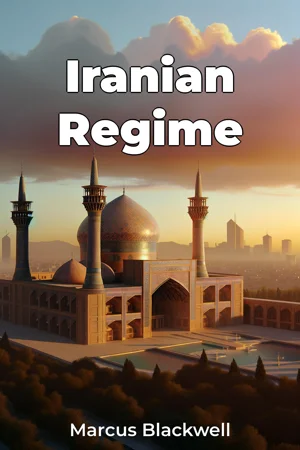
How does a nation transition from a modernizing monarchy to a theocratic state in less than a year? "Iranian Regime" delves into the tumultuous events of 1979 that reshaped Iran and continue to influence global geopolitics today. This book examines the rise of Ayatollah Ruhollah Khomeini, the establishment of the Islamic Republic, and the subsequent treatment of religious minorities under the new regime. The narrative begins with the final days of Mohammad Reza Shah Pahlavi's rule, setting the stage for understanding the complex socio-political landscape that allowed Khomeini to seize power. The book explores three key topics: the factors leading to the Iranian Revolution, the mechanics of Khomeini's ascent to supreme leader, and the systematic oppression of religious minorities, particularly Christians, under the new Islamic government. These topics are crucial for readers to grasp the modern Middle East's political dynamics and the ongoing tensions between Iran and Western nations. The book provides essential historical context, tracing the roots of Iranian discontent back to the 1953 coup d'état that reinstalled the Shah, and the subsequent decades of his rule. It also examines the role of various factions in the revolution, including leftist groups, moderate Islamists, and Khomeini's hardline supporters. The central argument posits that Khomeini's rise to power was not inevitable, but rather the result of a unique confluence of factors and strategic maneuvering. The book contends that understanding this process is key to comprehending the nature of the current Iranian regime and its policies towards both its own citizens and the international community. Structured chronologically, the book first introduces the main concepts and historical background. It then develops its argument through three major sections: the fall of the Shah, Khomeini's return and consolidation of power, and the establishment of the Islamic Republic. The narrative culminates in an analysis of the regime's treatment of religious minorities, with a focus on the Christian community. To support its arguments, the book draws on a wide range of primary and secondary sources, including declassified government documents, interviews with former revolutionaries and regime insiders, and accounts from religious minorities who experienced the transition firsthand. The author also utilizes recent scholarship on the Iranian Revolution, providing a comprehensive and up-to-date analysis. The book makes interdisciplinary connections to fields such as political science, religious studies, and human rights law. It examines how religious ideology can shape governance structures, explores the intersection of faith and politics in revolutionary movements, and discusses the challenges of protecting minority rights in theocratic states. What sets this book apart is its focus on the often-overlooked experiences of religious minorities during and after the revolution. By centering these narratives, the author provides a unique perspective on the broader implications of Iran's political transformation. Written in a scholarly yet accessible style, the book balances academic rigor with engaging storytelling. It is primarily aimed at students, researchers, and policymakers interested in Middle Eastern politics, revolutionary movements, and religious freedom. However, its clear prose and compelling narrative make it accessible to general readers seeking to understand Iran's recent history and current political landscape. As a work of world history and current events, the book pays careful attention to the global context of the Iranian Revolution, including the Cold War dynamics that influenced Western responses to the unfolding crisis. It also draws connections between past events and current geopolitical tensions, demonstrating the enduring impact of the 1979 revolution. While the book provides a comprehensive overview of the revolution and its aftermath, it acknowledges its limitations in scope. It focuses primarily on the period from 1978 to the early 1980s, with a briefer discussion of subsequent developments and their implications for contemporary Iran. The information presented in the book has practical applications for diplomats, human rights advocates, and anyone seeking to engage with or understand modern Iran. It offers insights into the ideological foundations of the current regime, which can inform strategies for international negotiations and efforts to promote religious freedom. The book addresses ongoing debates about the nature of the Iranian regime, its potential for reform, and the appropriate international response to its policies. It presents a nuanced view of these complex issues, avoiding simplistic characterizations while not shying away from critiquing the regime's human rights record. By providing a detailed examination of Khomeini's rise to power and the subsequent transformation of Iranian society, "Iranian Regime" offers readers a thorough understanding of one of the most significant political shifts of the 20th century and its continuing repercussions in the 21st.
How does a nation transition from a modernizing monarchy to a theocratic state in less than a year? "Iranian Regime" delves into the tumultuous events of 1979 that reshaped Iran and continue to influence global geopolitics today. This book examines the rise of Ayatollah Ruhollah Khomeini, the establishment of the Islamic Republic, and the subsequent treatment of religious minorities under the new regime. The narrative begins with the final days of Mohammad Reza Shah Pahlavi's rule, setting the stage for understanding the complex socio-political landscape that allowed Khomeini to seize power. The book explores three key topics: the factors leading to the Iranian Revolution, the mechanics of Khomeini's ascent to supreme leader, and the systematic oppression of religious minorities, particularly Christians, under the new Islamic government. These topics are crucial for readers to grasp the modern Middle East's political dynamics and the ongoing tensions between Iran and Western nations. The book provides essential historical context, tracing the roots of Iranian discontent back to the 1953 coup d'état that reinstalled the Shah, and the subsequent decades of his rule. It also examines the role of various factions in the revolution, including leftist groups, moderate Islamists, and Khomeini's hardline supporters. The central argument posits that Khomeini's rise to power was not inevitable, but rather the result of a unique confluence of factors and strategic maneuvering. The book contends that understanding this process is key to comprehending the nature of the current Iranian regime and its policies towards both its own citizens and the international community. Structured chronologically, the book first introduces the main concepts and historical background. It then develops its argument through three major sections: the fall of the Shah, Khomeini's return and consolidation of power, and the establishment of the Islamic Republic. The narrative culminates in an analysis of the regime's treatment of religious minorities, with a focus on the Christian community. To support its arguments, the book draws on a wide range of primary and secondary sources, including declassified government documents, interviews with former revolutionaries and regime insiders, and accounts from religious minorities who experienced the transition firsthand. The author also utilizes recent scholarship on the Iranian Revolution, providing a comprehensive and up-to-date analysis. The book makes interdisciplinary connections to fields such as political science, religious studies, and human rights law. It examines how religious ideology can shape governance structures, explores the intersection of faith and politics in revolutionary movements, and discusses the challenges of protecting minority rights in theocratic states. What sets this book apart is its focus on the often-overlooked experiences of religious minorities during and after the revolution. By centering these narratives, the author provides a unique perspective on the broader implications of Iran's political transformation. Written in a scholarly yet accessible style, the book balances academic rigor with engaging storytelling. It is primarily aimed at students, researchers, and policymakers interested in Middle Eastern politics, revolutionary movements, and religious freedom. However, its clear prose and compelling narrative make it accessible to general readers seeking to understand Iran's recent history and current political landscape. As a work of world history and current events, the book pays careful attention to the global context of the Iranian Revolution, including the Cold War dynamics that influenced Western responses to the unfolding crisis. It also draws connections between past events and current geopolitical tensions, demonstrating the enduring impact of the 1979 revolution. While the book provides a comprehensive overview of the revolution and its aftermath, it acknowledges its limitations in scope. It focuses primarily on the period from 1978 to the early 1980s, with a briefer discussion of subsequent developments and their implications for contemporary Iran. The information presented in the book has practical applications for diplomats, human rights advocates, and anyone seeking to engage with or understand modern Iran. It offers insights into the ideological foundations of the current regime, which can inform strategies for international negotiations and efforts to promote religious freedom. The book addresses ongoing debates about the nature of the Iranian regime, its potential for reform, and the appropriate international response to its policies. It presents a nuanced view of these complex issues, avoiding simplistic characterizations while not shying away from critiquing the regime's human rights record. By providing a detailed examination of Khomeini's rise to power and the subsequent transformation of Iranian society, "Iranian Regime" offers readers a thorough understanding of one of the most significant political shifts of the 20th century and its continuing repercussions in the 21st.
"Iranian Regime" explores the dramatic transformation of Iran from a modernizing monarchy to a theocratic state in 1979, a pivotal moment that continues to shape global politics. The book delves into the complex factors that led to the Iranian Revolution, examining the fall of Shah Pahlavi, the rise of Ayatollah Khomeini, and the establishment of the Islamic Republic. It highlights the unique confluence of events that allowed Khomeini to seize power, arguing that his ascent was not inevitable but the result of strategic maneuvering and sociopolitical circumstances. Central to the book's narrative is the often-overlooked experience of religious minorities, particularly Christians, under the new regime. This focus provides a distinctive lens through which to understand the broader implications of Iran's political transformation. The author draws on a wide range of primary and secondary sources, including declassified documents and firsthand accounts, to present a comprehensive analysis of this tumultuous period. Structured chronologically, the book progresses from the final days of the Shah's rule through Khomeini's return and the consolidation of the Islamic Republic. It contextualizes these events within the Cold War era, illustrating how global dynamics influenced the revolution and its aftermath. By blending scholarly rigor with engaging storytelling, "Iranian Regime" offers valuable insights for academics, policymakers, and general readers seeking to understand Iran's recent history and its enduring impact on current geopolitics.
Book Details
ISBN
9788233933203
Publisher
Publifye AS
Your Licenses
You don't own any licenses for this book
Purchase a license below to unlock this book and download the EPUB.
Purchase License
Select a tier to unlock this book
Need bulk licensing?
Contact us for enterprise agreements.