
About This Book
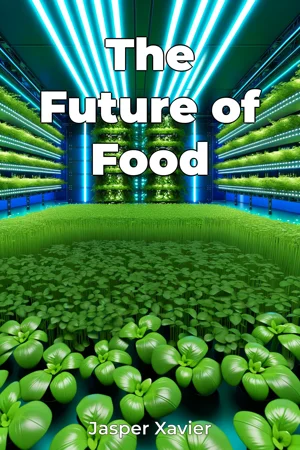
"The Future of Food" opens with a provocative question: "What if the next revolution in human history isn't about politics or technology, but about the very essence of how we sustain ourselves?" This groundbreaking book delves into the cutting-edge world of food production and consumption, exploring how emerging trends and technologies are reshaping our relationship with what we eat. The book focuses on three main topics: lab-grown meat and alternative proteins, innovative farming techniques like vertical farming, and the concept of personalized nutrition. These subjects are crucial as they address pressing global issues such as food security, environmental sustainability, and public health. As climate change continues to threaten traditional agricultural practices, understanding these new approaches to food production becomes increasingly vital. To provide context, the book traces the history of human food systems from hunter-gatherer societies through the agricultural revolution and into the industrial age. This background helps readers understand the magnitude of the changes currently underway and their potential impact on society, economy, and the environment. The central argument of "The Future of Food" is that we are on the cusp of a paradigm shift in how we produce, distribute, and consume food. This transformation has the potential to address many of the challenges facing our current food systems, from reducing environmental impact to improving nutritional outcomes. However, it also raises important ethical, economic, and social questions that must be carefully considered. The book is structured to guide readers through this complex landscape. It begins by introducing the main concepts and technologies driving change in the food industry. Subsequent chapters explore each major trend in depth, examining the science behind lab-grown meat, the logistics of vertical farming, and the potential of personalized nutrition based on individual genetic profiles. The final section of the book considers the broader implications of these changes, including their potential impact on global food security, economic systems, and cultural practices surrounding food. To support its arguments, "The Future of Food" draws on a wide range of evidence, including cutting-edge scientific research, industry reports, and interviews with leading experts in fields such as cellular agriculture, nutrition science, and climate modeling. The book also features case studies of innovative companies and projects at the forefront of food technology. Interdisciplinary connections are a key strength of this work. The book explores links between food science and fields such as biotechnology, environmental science, and data analytics. It also examines the intersection of food systems with public health policy and global economics, highlighting the far-reaching implications of changes in how we produce and consume food. What sets "The Future of Food" apart is its balanced approach to these often controversial topics. While the book is generally optimistic about the potential of new food technologies, it also critically examines potential drawbacks and ethical concerns. This nuanced perspective provides readers with a comprehensive understanding of the complex issues at play. The writing style is accessible yet authoritative, blending scientific explanations with engaging narratives and real-world examples. This approach makes the book suitable for a wide audience, from policymakers and industry professionals to environmentally conscious consumers and anyone interested in the future of food and agriculture. "The Future of Food" is particularly relevant for readers concerned about climate change, sustainability, and global health. It offers practical insights into how individuals can make more informed food choices and how businesses and policymakers can navigate the changing landscape of food production. While the book provides a broad overview of global trends, it acknowledges that the future of food will likely vary significantly across different regions and cultures. It also recognizes that many of the technologies discussed are still in development, and their long-term impacts remain uncertain. Throughout the book, readers will find discussions of ongoing debates in the field, such as the environmental impact of lab-grown meat compared to traditional animal agriculture, and the potential risks and benefits of genetically modified crops in addressing food security. By the end of "The Future of Food," readers will have gained a comprehensive understanding of the forces shaping the future of our food systems. They will be equipped with the knowledge to engage in informed discussions about food policy and make more conscious decisions about their own food choices. This book is not just about predicting the future of food – it's about empowering readers to actively participate in shaping that future.
"The Future of Food" opens with a provocative question: "What if the next revolution in human history isn't about politics or technology, but about the very essence of how we sustain ourselves?" This groundbreaking book delves into the cutting-edge world of food production and consumption, exploring how emerging trends and technologies are reshaping our relationship with what we eat. The book focuses on three main topics: lab-grown meat and alternative proteins, innovative farming techniques like vertical farming, and the concept of personalized nutrition. These subjects are crucial as they address pressing global issues such as food security, environmental sustainability, and public health. As climate change continues to threaten traditional agricultural practices, understanding these new approaches to food production becomes increasingly vital. To provide context, the book traces the history of human food systems from hunter-gatherer societies through the agricultural revolution and into the industrial age. This background helps readers understand the magnitude of the changes currently underway and their potential impact on society, economy, and the environment. The central argument of "The Future of Food" is that we are on the cusp of a paradigm shift in how we produce, distribute, and consume food. This transformation has the potential to address many of the challenges facing our current food systems, from reducing environmental impact to improving nutritional outcomes. However, it also raises important ethical, economic, and social questions that must be carefully considered. The book is structured to guide readers through this complex landscape. It begins by introducing the main concepts and technologies driving change in the food industry. Subsequent chapters explore each major trend in depth, examining the science behind lab-grown meat, the logistics of vertical farming, and the potential of personalized nutrition based on individual genetic profiles. The final section of the book considers the broader implications of these changes, including their potential impact on global food security, economic systems, and cultural practices surrounding food. To support its arguments, "The Future of Food" draws on a wide range of evidence, including cutting-edge scientific research, industry reports, and interviews with leading experts in fields such as cellular agriculture, nutrition science, and climate modeling. The book also features case studies of innovative companies and projects at the forefront of food technology. Interdisciplinary connections are a key strength of this work. The book explores links between food science and fields such as biotechnology, environmental science, and data analytics. It also examines the intersection of food systems with public health policy and global economics, highlighting the far-reaching implications of changes in how we produce and consume food. What sets "The Future of Food" apart is its balanced approach to these often controversial topics. While the book is generally optimistic about the potential of new food technologies, it also critically examines potential drawbacks and ethical concerns. This nuanced perspective provides readers with a comprehensive understanding of the complex issues at play. The writing style is accessible yet authoritative, blending scientific explanations with engaging narratives and real-world examples. This approach makes the book suitable for a wide audience, from policymakers and industry professionals to environmentally conscious consumers and anyone interested in the future of food and agriculture. "The Future of Food" is particularly relevant for readers concerned about climate change, sustainability, and global health. It offers practical insights into how individuals can make more informed food choices and how businesses and policymakers can navigate the changing landscape of food production. While the book provides a broad overview of global trends, it acknowledges that the future of food will likely vary significantly across different regions and cultures. It also recognizes that many of the technologies discussed are still in development, and their long-term impacts remain uncertain. Throughout the book, readers will find discussions of ongoing debates in the field, such as the environmental impact of lab-grown meat compared to traditional animal agriculture, and the potential risks and benefits of genetically modified crops in addressing food security. By the end of "The Future of Food," readers will have gained a comprehensive understanding of the forces shaping the future of our food systems. They will be equipped with the knowledge to engage in informed discussions about food policy and make more conscious decisions about their own food choices. This book is not just about predicting the future of food – it's about empowering readers to actively participate in shaping that future.
"The Future of Food" explores the revolutionary changes reshaping our food systems, focusing on lab-grown meat, vertical farming, and personalized nutrition. This timely book delves into how these emerging technologies address critical issues like food security, environmental sustainability, and public health. From tracing the history of human food systems to examining cutting-edge scientific research, the book offers a comprehensive look at the potential paradigm shift in food production and consumption. The book's strength lies in its balanced approach, presenting both the promising aspects and potential drawbacks of new food technologies. It explores fascinating developments such as meat grown in laboratories and crops cultivated in urban vertical farms, highlighting their potential to reduce environmental impact and improve nutritional outcomes. The concept of personalized nutrition based on individual genetic profiles is also examined, offering a glimpse into a future where diet could be tailored to each person's unique needs. Through accessible language and engaging narratives, "The Future of Food" guides readers through the complex landscape of food technology and its broader implications. By connecting food science with biotechnology, environmental science, and public health policy, the book provides a holistic view of the challenges and opportunities ahead. This interdisciplinary approach makes it a valuable resource for anyone interested in the future of agriculture, nutrition, and sustainable food production.
Book Details
ISBN
9788233933005
Publisher
Publifye AS
Your Licenses
You don't own any licenses for this book
Purchase a license below to unlock this book and download the EPUB.
Purchase License
Select a tier to unlock this book
Need bulk licensing?
Contact us for enterprise agreements.