
About This Book
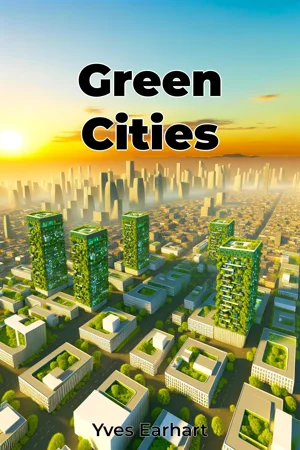
"Green Cities" opens with a provocative question: Can our urban centers become the solution to climate change rather than its primary contributor? This book examines innovative urban planning strategies that not only combat climate change but also enhance livability and create sustainable, resilient cities for future generations. The book focuses on three key topics: climate-responsive urban design, green infrastructure integration, and sustainable transportation systems. These topics are crucial as cities currently account for over 70% of global carbon emissions, making urban areas both the epicenter of the climate crisis and the potential catalyst for positive change. To provide context, the book traces the evolution of urban planning from the Industrial Revolution to the present day, highlighting how past decisions have contributed to current environmental challenges. It also introduces readers to fundamental concepts in urban ecology and climatology, establishing a foundation for understanding the complex interplay between cities and their environments. The central argument of "Green Cities" is that through holistic, nature-inspired urban planning, cities can transform from environmental burdens into regenerative ecosystems that actively mitigate climate change while improving quality of life for residents. This thesis challenges the traditional view of cities as inherently unsustainable and presents a compelling case for urban areas as potential environmental saviors. The book is structured in three main parts. The first introduces the concept of biomimicry in urban design, exploring how cities can emulate natural systems to become more efficient and resilient. The second part delves into specific strategies for implementing green infrastructure, such as urban forests, green roofs, and sustainable water management systems. The final section focuses on reimagining urban mobility, discussing the integration of public transit, cycling infrastructure, and pedestrian-friendly design to reduce carbon emissions and enhance city livability. To support its arguments, "Green Cities" draws on a wide range of evidence, including case studies of successful urban transformation projects, climate models, and economic analyses. The book also incorporates cutting-edge research from fields such as urban climatology, environmental psychology, and sustainable engineering. The interdisciplinary nature of "Green Cities" is evident in its connections to fields beyond urban planning and architecture. It explores the psychological benefits of green spaces on mental health, the economic advantages of sustainable urban design, and the sociological impacts of creating more equitable and accessible cities. What sets this book apart is its systems-thinking approach, viewing cities as complex, interconnected organisms rather than collections of isolated buildings and infrastructure. This perspective allows for innovative solutions that address multiple urban challenges simultaneously. Written in an accessible yet authoritative tone, "Green Cities" balances academic rigor with practical insights, making it suitable for urban planners, policymakers, architects, and engaged citizens alike. The book uses clear language, informative graphics, and real-world examples to illustrate complex concepts. While the book provides a comprehensive overview of sustainable urban planning, it acknowledges the challenges of implementation, including political obstacles, funding constraints, and the need for behavioral change among urban populations. It addresses these limitations honestly, offering potential strategies for overcoming them. "Green Cities" offers practical applications for professionals in urban planning and design, providing a toolkit of strategies that can be adapted to various urban contexts. For general readers, it offers insights into how they can advocate for and participate in creating more sustainable communities. The book engages with ongoing debates in the field, such as the tension between densification and green space preservation, and the role of technology versus nature-based solutions in urban sustainability. By presenting a vision of cities as potential environmental heroes rather than villains, "Green Cities" offers a hopeful and actionable blueprint for urban transformation in the face of climate change. It challenges readers to reimagine their urban environments and provides the knowledge and tools to turn that vision into reality.
"Green Cities" opens with a provocative question: Can our urban centers become the solution to climate change rather than its primary contributor? This book examines innovative urban planning strategies that not only combat climate change but also enhance livability and create sustainable, resilient cities for future generations. The book focuses on three key topics: climate-responsive urban design, green infrastructure integration, and sustainable transportation systems. These topics are crucial as cities currently account for over 70% of global carbon emissions, making urban areas both the epicenter of the climate crisis and the potential catalyst for positive change. To provide context, the book traces the evolution of urban planning from the Industrial Revolution to the present day, highlighting how past decisions have contributed to current environmental challenges. It also introduces readers to fundamental concepts in urban ecology and climatology, establishing a foundation for understanding the complex interplay between cities and their environments. The central argument of "Green Cities" is that through holistic, nature-inspired urban planning, cities can transform from environmental burdens into regenerative ecosystems that actively mitigate climate change while improving quality of life for residents. This thesis challenges the traditional view of cities as inherently unsustainable and presents a compelling case for urban areas as potential environmental saviors. The book is structured in three main parts. The first introduces the concept of biomimicry in urban design, exploring how cities can emulate natural systems to become more efficient and resilient. The second part delves into specific strategies for implementing green infrastructure, such as urban forests, green roofs, and sustainable water management systems. The final section focuses on reimagining urban mobility, discussing the integration of public transit, cycling infrastructure, and pedestrian-friendly design to reduce carbon emissions and enhance city livability. To support its arguments, "Green Cities" draws on a wide range of evidence, including case studies of successful urban transformation projects, climate models, and economic analyses. The book also incorporates cutting-edge research from fields such as urban climatology, environmental psychology, and sustainable engineering. The interdisciplinary nature of "Green Cities" is evident in its connections to fields beyond urban planning and architecture. It explores the psychological benefits of green spaces on mental health, the economic advantages of sustainable urban design, and the sociological impacts of creating more equitable and accessible cities. What sets this book apart is its systems-thinking approach, viewing cities as complex, interconnected organisms rather than collections of isolated buildings and infrastructure. This perspective allows for innovative solutions that address multiple urban challenges simultaneously. Written in an accessible yet authoritative tone, "Green Cities" balances academic rigor with practical insights, making it suitable for urban planners, policymakers, architects, and engaged citizens alike. The book uses clear language, informative graphics, and real-world examples to illustrate complex concepts. While the book provides a comprehensive overview of sustainable urban planning, it acknowledges the challenges of implementation, including political obstacles, funding constraints, and the need for behavioral change among urban populations. It addresses these limitations honestly, offering potential strategies for overcoming them. "Green Cities" offers practical applications for professionals in urban planning and design, providing a toolkit of strategies that can be adapted to various urban contexts. For general readers, it offers insights into how they can advocate for and participate in creating more sustainable communities. The book engages with ongoing debates in the field, such as the tension between densification and green space preservation, and the role of technology versus nature-based solutions in urban sustainability. By presenting a vision of cities as potential environmental heroes rather than villains, "Green Cities" offers a hopeful and actionable blueprint for urban transformation in the face of climate change. It challenges readers to reimagine their urban environments and provides the knowledge and tools to turn that vision into reality.
"Green Cities" explores the transformative potential of urban areas in combating climate change, challenging the notion that cities are inherently unsustainable. The book delves into climate-responsive urban design, green infrastructure integration, and sustainable transportation systems, presenting a vision of cities as regenerative ecosystems rather than environmental burdens. With over 70% of global carbon emissions originating from urban centers, the book argues that cities hold the key to mitigating climate change while enhancing livability. The book's approach combines historical context with cutting-edge research, utilizing case studies, climate models, and economic analyses to support its arguments. It introduces readers to concepts like biomimicry in urban design, exploring how cities can emulate natural systems to become more efficient and resilient. The book progresses through three main sections, covering nature-inspired urban planning, green infrastructure implementation, and reimagining urban mobility. What sets "Green Cities" apart is its systems-thinking approach, viewing cities as complex, interconnected organisms. This perspective allows for innovative solutions that address multiple urban challenges simultaneously, making the book valuable for urban planners, policymakers, architects, and engaged citizens alike. By presenting practical strategies and acknowledging implementation challenges, the book offers a hopeful and actionable blueprint for urban transformation in the face of climate change.
Book Details
ISBN
9788233932923
Publisher
Publifye AS
Your Licenses
You don't own any licenses for this book
Purchase a license below to unlock this book and download the EPUB.
Purchase License
Select a tier to unlock this book
Need bulk licensing?
Contact us for enterprise agreements.